
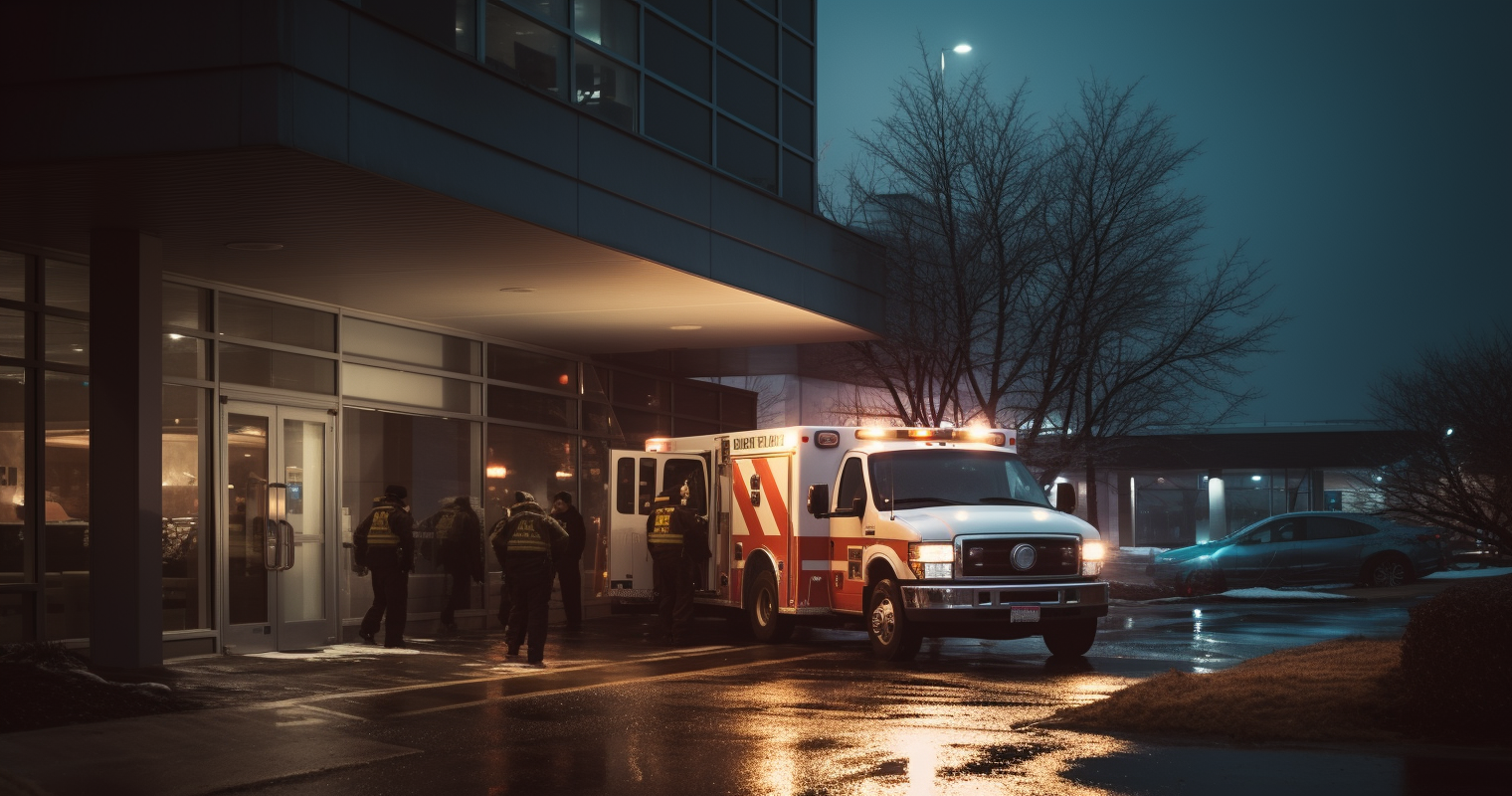
Morocco does not rely on a single catch-all emergency number. The country instead maintains distinct numbers for each service: police (190 or 19), ambulance (150), and fire brigade (15), while mobile phone users can dial 112 to reach police. Foreign nationals cannot generally count on free emergency medical care at public hospitals — charges are almost always applied upfront, which makes comprehensive health insurance an absolute necessity for anyone living in or visiting Morocco.
| Item | Details |
|---|---|
| Police (urban) | 190 (landline) or 112 (mobile) — as of 2025; verify with official sources |
| Ambulance | 150 — as of 2025; verify with official sources |
| Fire brigade | 15 — as of 2025; verify with official sources |
| Gendarmerie Royale (rural) | 177 — as of 2025; verify with official sources |
| Emergency treatment costs | Not free for most foreign nationals; upfront payment typically required |
| Private hospital stay (approx.) | From approx. 1,000–3,000 MAD per night (as of 2025); check current rates |
| Medical evacuation (approx.) | From approx. £22,000 / €25,000+ depending on destination |
| Earthquake risk | Significant — major 6.8-magnitude earthquake struck in September 2023 |
What is the single emergency number in Morocco, and are there separate numbers for each service?
In contrast to countries that have unified all emergency services under one number — such as 999 in the United Kingdom or 112 throughout the European Union — Morocco maintains individual numbers for each of its emergency services. Familiarising yourself with these before you need them is crucial, because the number you would automatically reach for at home may simply not connect you to assistance here.
The core emergency numbers in Morocco are: Police (19), Police from a mobile phone (112), Fire brigade (15), Royal Gendarmerie (177), and Ambulance/emergency medical services (150). The three principal services — 15, 19, and 177 — operate in close coordination with one another, and calls you make may be relayed or replayed to ensure the most appropriate response is dispatched.
Unlike in North America, 911 has no function in Morocco. The primary number for police, fire, and ambulance is 19, or 112 when dialling from a mobile. Visitors and expats alike are advised to save these numbers to their phones well in advance of any emergency. It should also be noted that official emergency numbers (19, 150, 15, 177) require a telephone call — they cannot be contacted through messaging platforms such as WhatsApp.
A round-the-clock medical helpline called SOS Médecins operates across several of Morocco’s main cities. This service can be reached on 05 22 98 98 98 and is intended for medical concerns that are urgent but not life-threatening, outside of standard hospital hours — though you should confirm the number remains current before relying on it. For poisoning incidents — including bites from snakes or scorpions — the Anti-Poison Centre is available on 081 00 01 80. All contact numbers should be verified through official channels before you travel or relocate, as they are subject to change.
How do you call for emergency medical assistance in Morocco, and what should you expect when you call?
To summon an ambulance or emergency medical help, dial 150 from any telephone. If you are in a rural location or experience difficulty getting through on 150, try 15 (Civil Protection/Fire Department, which also coordinates medical emergency response) or 19 (police), since the services are interconnected and can relay your call.
When speaking to the dispatcher, be calm, structured, and precise — they cannot see your situation, and the quality of the details you provide will directly determine how quickly and effectively help arrives. Give your name and the phone number you are calling from, describe your exact location using nearby landmarks if you do not know the address, explain how emergency services can reach the scene, and outline the nature of the incident including the number and condition of anyone injured or unwell.
Response times differ considerably depending on where you are. All emergency lines are staffed continuously, but certain areas — particularly remote or mountainous regions — face real constraints in terms of doctors and equipment, and there are marked disparities in health infrastructure between major urban centres and the countryside. In cities such as Casablanca, Rabat, and Marrakech, emergency response is generally far more reliable than in outlying or rural areas.
According to figures published by the Moroccan Ministry of Health, 118 of the country’s 142 public hospitals had round-the-clock emergency departments, staffed by general practitioners with some specialist support. Where it is safe to do so, travelling directly to a hospital emergency department yourself — rather than waiting for an ambulance — is frequently a more practical course of action in urban settings.
What should you do in a mental health crisis in Morocco — is there a dedicated mental health emergency line?
Morocco does not currently have a dedicated national mental health emergency telephone line comparable to the Samaritans in Ireland and the UK, or Crisis Text Line services found in other countries. Mental health provision, particularly in emergency contexts, remains underdeveloped, and at the time of writing there is no single widely publicised crisis number accessible to the general public — always contact your embassy or a local health authority to check for the most up-to-date information.
During a mental health crisis, the most direct route to immediate professional support is the emergency department of a public or private hospital. You can also call the main emergency numbers (150 for ambulance, 190/19 for police) and explain clearly that you or someone else is experiencing a mental health emergency — operators are able to coordinate an appropriate response. Emergency departments at CHU public university hospitals are open to everyone and can handle urgent presentations.
If you hold expat health insurance, your provider’s 24-hour helpline may be able to offer immediate telephone assistance or guide you to suitable care. Major international providers such as Cigna Global, AXA International, and Foyer Global typically include global coverage encompassing evacuation, which may be relevant if a mental health crisis requires repatriation. Given that stigma surrounding mental health persists in some communities in Morocco, expats may find that seeking care through a private clinic or insurer’s network is a more straightforward route than engaging the public system during a crisis.
Where can you go for emergency medical treatment in Morocco?
Morocco operates both public and private healthcare sectors. The public network encompasses just over 2,500 health centres and nearly 144 hospitals, while the private sector comprises approximately 7,000 private practices and 450 clinics. Both sectors are accessible in an emergency, though the experience and financial implications can vary considerably between them.
Public hospitals (CHU) are present in all major cities and their emergency departments are obliged to accept patients irrespective of nationality or insurance. However, public facilities can be dated, and — while a 2021 action plan targeted the rebuilding of Ibn Sina Hospital in Rabat and the construction of additional provincial and regional hospitals — standards remain uneven. Facilities in major cities are generally better equipped and more capable of providing an acceptable level of care.
Private healthcare in Morocco, particularly in Casablanca and Marrakech, is of a considerably higher standard. Many physicians are French-trained, and a number of specialists completed residencies in Europe. Casablanca has the strongest hospital infrastructure in the country — Clinique Badr, Clinique du Parc, and CHU Ibn Rochd are all well regarded by residents and visitors alike.
Emergency contacts, police stations, hospitals, and tourist information are available for major Moroccan cities including Agadir, Marrakech, Casablanca, Fez, Tangier, Rabat, Chefchaouen, Essaouira, and Ouarzazate, among others — consult city-specific guides and your embassy’s website to identify the nearest appropriate facility before any emergency occurs. For non-urgent medical matters, local pharmacies are a sensible first port of call, as pharmacists in Morocco are well placed to advise and can dispense many medications without a prescription.
Is emergency medical treatment free in Morocco, or is there a charge?
Emergency medical treatment in Morocco is not free for the overwhelming majority of foreign nationals. While public hospital emergency departments are broadly expected to provide immediate stabilising care, any subsequent treatment — including diagnostic investigations, medication, surgical procedures, and inpatient stays — attracts charges for almost all visitors and expats.
Both public and private hospitals require upfront payment, with the sole exception of those covered by Morocco’s RAMED social security scheme. RAMED is a subsidised programme for low-income Moroccan residents and is unavailable to most foreign nationals. Foreigners on tourist visas or holding a Carte de Séjour are not automatically enrolled in any public health insurance arrangement — private coverage is therefore essential.
As a rough guide based on 2025 figures: a night in intensive care costs around 3,000 dirhams (approximately £205 / €278), and a night in a sterile treatment room around 1,000 dirhams (approximately £68 / €93). These are approximate and will vary by facility — always confirm costs directly with the hospital concerned. If your condition requires care that cannot be provided within Morocco, a medical evacuation can cost upwards of £22,000, and potentially far more depending on the destination country.
Hospital and doctor fees are typically collected in cash, as credit card payment is not always accepted. Having cash on hand is strongly advisable. Ambulance services may similarly require advance payment. This stands in stark contrast to systems that provide emergency care free at the point of use, and serves as a compelling reason to arrange adequate insurance coverage before you arrive.
Do expats in Morocco need travel or health insurance to access emergency care?
Unequivocally, yes — health or travel insurance is strongly advised and, for those residing in Morocco over the longer term, effectively indispensable. Without it, you will be required to pay upfront for all treatment, including emergency care, and costs can mount rapidly if hospitalisation, surgery, or medical evacuation becomes necessary.
Moroccan insurers such as CNOPS, Saham, AXA Maroc, and Allianz Maroc offer competitively priced local plans, while international expat providers including Cigna Global, AXA International, and Foyer Global deliver global coverage that encompasses medical evacuation. Local Moroccan private insurance typically runs to $50–$100 per month for a comprehensive plan, while an international expat policy with global coverage costs roughly $100–$200 per month (as of 2025 — request current quotes directly from providers).
Arriving at a hospital without insurance or the means to pay may result in stabilising emergency care being provided, but staff are likely to request a financial guarantee before proceeding further. In practice, patients who are uninsured and without available funds may face substantial delays or be redirected to a public facility. When you are insured and admitted to hospital for more than 24 hours, your insurer will generally arrange direct payment to the treating facility. Routine medical and dental expenses, however, usually require you to pay upfront and then submit a claim for reimbursement.
Comprehensive travel insurance is highly recommended for all Morocco visits and should include at a minimum $100,000 of medical coverage, incorporating COVID-19 treatment. Anyone planning desert travel, hiking, or other adventure activities should also confirm that these are covered. Verify that your policy applies specifically to Morocco and examine the terms carefully regarding adventure activities and any pre-existing medical conditions.
Are there bilateral health agreements between Morocco and other countries?
Morocco is not party to the broad multilateral reciprocal healthcare arrangements that exist within the European Economic Area — such as the European Health Insurance Card (EHIC) — nor does it participate in Commonwealth health reciprocity schemes. No foreign national has a general entitlement to free or subsidised emergency treatment in Morocco simply by virtue of their nationality or the passport they carry.
France maintains a historically close relationship with Morocco, and French nationals living and working there may in certain circumstances access coverage through the Caisse des Français de l’Étranger (CFE), a voluntary French social security scheme available to French citizens residing abroad. CFE health coverage reimburses a range of costs including medical, surgical, hospital, dental, optical, and laboratory expenses — for example, 65% of pharmacy costs are reimbursed, and 100% of hospitalisation costs are covered for members who have not taken out a complementary policy. This scheme requires active enrolment by the French national — it is not an automatic bilateral entitlement. Always confirm the current terms directly with the CFE at cfe.fr.
For nationals of other countries, no verified bilateral health treaty providing automatic free or discounted emergency treatment in Morocco has been identified at the time of writing. All foreign nationals planning to visit or live in Morocco should arrange comprehensive health insurance prior to arrival. Consult your own government’s travel advice pages and your embassy in Rabat for any country-specific arrangements that may apply to you.
How does Morocco’s emergency healthcare system compare to systems expats may be familiar with?
Morocco operates a mixed public-private healthcare model, but it functions in a fundamentally different way from fully public systems such as the NHS in the United Kingdom or Canada’s provincial health programmes, where emergency treatment is provided free at the point of use to all residents. It also differs markedly from the tightly regulated social insurance models found across much of continental Europe, where residents contribute to a national fund that covers the bulk of their healthcare costs.
Morocco does have a public healthcare framework — the Régime d’Assurance Maladie Obligatoire (RAMO) and the RAMED scheme for low-income uninsured residents — but it is under-resourced and subject to significant demand pressures. For those enrolled in the system, the state meets between 70% and 90% of treatment costs depending on the type of care, and coverage applies only within the public sector. Foreign residents who are not enrolled in AMO, and visitors generally, fall outside this framework entirely.
In practical terms, the Moroccan system most closely resembles countries where upfront payment or insurance is the norm — it shares more in character with the US model or healthcare in many developing nations than with universally free systems. Expats tend to favour the private sector because it offers more physicians relative to patient numbers, better access to diagnostic and treatment equipment, and a standard of care closer to Western expectations. Private care costs remain lower than equivalent treatment in France, even though prices reflect the quality on offer. For interventions requiring highly specialised or sustained treatment, seeking care in Europe may be worth considering if circumstances allow.
What emergency services exist beyond medical — how do police and fire services work in Morocco?
Morocco has two principal police forces. The Police Nationale (DGSN) is responsible for urban areas and is the force you would ordinarily contact in any city-based emergency. The Gendarmerie Royale covers everything beyond the cities — rural areas, major highways, and smaller towns. The police number is 190, the Gendarmerie (military police) is 177, and mobile phone users can dial 112 to reach police.
For any fire emergency, dial 15. In certain cities, local fire service numbers may vary — Agadir, for instance, uses 1300 for fire emergencies. If you are confronted with a fire or building emergency, call the fire service and begin evacuation immediately. Always confirm the specific emergency numbers applicable to the city or region where you are based.
Tourist Police (Police Touristique) are specialist officers deployed to assist visitors and are able to communicate in several languages. Identifiable by their “Police Touristique” badges, they are stationed in tourist zones throughout major cities. In popular destinations such as Marrakech, Fez, and Agadir, these officers are a helpful first point of contact for any incident involving visitors. Whatever the nature of an incident — however apparently minor — always insist on an official police report (PV), since this will be required for any subsequent insurance claim.
One practical point worth noting: interactions with Moroccan police are typically conducted in Arabic or French. If you are not proficient in either language, having a translation application ready or a list of key phrases prepared in advance could prove genuinely valuable. In any serious incident, reach out to your embassy or consulate at the earliest opportunity, as they can provide consular support and, where needed, assist with translation or referrals to legal assistance.
Are there country-specific emergency risks in Morocco — such as natural disasters or extreme weather?
Morocco is exposed to a number of distinct natural hazards that every expat should understand and factor into their emergency planning. Seismic activity is the most significant of these.
On 8 September 2023, a magnitude 6.8 earthquake and subsequent aftershocks killed 2,946 people and injured close to 5,700 others in central Morocco, with the heaviest casualties recorded in Al Haouz Province in the Marrakech-Safi Region and Taroudant Province in the Souss-Massa Region. It was the most powerful earthquake Morocco had experienced in over a century and the deadliest since 1960. This event was a sobering reminder that seismic risk — particularly in the Atlas Mountain region — is very much a present reality and must be incorporated into any expat’s emergency planning.
Heavy snowfall periodically affects the High Atlas and Middle Atlas mountain ranges down to altitudes of around 900 metres above sea level, with temperatures falling as low as -5°C in some years. Rain, flooding, strong winds, and severely low temperatures in mountainous terrain have caused economic losses and infrastructure damage on a number of occasions. Flash flooding — particularly in the south and in dry riverbeds (oueds) that can fill rapidly after rain — is also a recurring seasonal hazard.
In terms of health risks, newcomers to Morocco should be aware that the country has endemic diseases including hepatitis A and typhoid, and rabies risk exists in certain areas. Ensure all routine vaccinations — including diphtheria, tetanus, and polio — are current before you arrive. Hepatitis A and B, typhoid, and rabies vaccinations are additionally recommended. The Anti-Poison Centre (081 00 01 80, available around the clock) should be called immediately in the event of a snakebite, scorpion sting, or any other toxic exposure — these incidents are not uncommon in rural and desert environments.
Morocco is broadly politically stable, but periodic tensions can arise. Keeping track of your home government’s travel advisories is advisable. Morocco’s civil protection and disaster coordination falls under the Ministry of Interior. For real-time hazard monitoring, the Global Disaster Alert and Coordination System (GDACS) tracks major events worldwide, and your own government’s travel advisory service remains the most authoritative source for up-to-date guidance.
What should expats do to prepare for emergencies before they arise in Morocco?
Taking action before an emergency happens is by far the most effective way to protect yourself and those around you. The steps below outline what every expat or long-term visitor in Morocco should complete.
- Register with your embassy or consulate. Most governments offer voluntary registration programmes for citizens living abroad — examples include the UK’s FCDO travel registration and the US STEP (Smart Traveler Enrollment Program). Being registered means your government can reach you during a crisis, natural disaster, or civil emergency, and can facilitate evacuation if necessary.
- Store all key emergency numbers. Programme police (190 / 112), ambulance (150), fire (15), Gendarmerie (177), your insurer’s 24-hour emergency line, and your embassy’s emergency contact into your phone — and keep a written copy somewhere accessible at home in case your phone is lost or runs out of power.
- Arrange comprehensive health insurance before you arrive. Confirm your policy covers emergency hospitalisation, surgery, evacuation, and repatriation. Medical evacuation to your home country or a third country can cost tens of thousands of pounds or euros — having the right coverage is not optional.
- Locate your nearest hospital and private clinic in advance. Identify the closest CHU public hospital and a reputable private clinic before you ever need them. Knowing where to go in advance saves precious time when it matters most.
- Learn essential Arabic or French emergency phrases. Even a handful of phrases — “I need an ambulance”, “There is a fire”, “Where is the hospital?” — can meaningfully reduce delays in a crisis where language barriers might otherwise slow things down.
- Assemble a home emergency kit. Maintain a supply of drinking water, non-perishable food, a first-aid kit, a torch with spare batteries, copies of key documents (passport, insurance policy, residence card), and emergency cash at home. This is particularly important given Morocco’s earthquake risk and the possibility of utility disruption.
- Familiarise yourself with local evacuation routes. If you are based in an earthquake-prone area or near a wadi susceptible to flash flooding, identify safe exit routes from your neighbourhood and agree on a meeting point with family members in advance.
- Keep embassy contact details readily accessible. Should you lose your passport, contact your embassy or consulate as well as the local police, and secure a police report for the purposes of replacement. Your embassy can also assist across a wide range of other emergency situations.
Where can expats get official and up-to-date emergency information for Morocco?
For information you can trust, always go directly to official government and international sources rather than relying on travel forums or guides that may be out of date. The most useful sources include:
- Morocco Ministry of Interior — responsible for civil protection and emergency coordination in Morocco: mieunz.gov.ma (verify the current URL via a search engine, as official Moroccan government web addresses occasionally change)
- Morocco Ministry of Health (Ministère de la Santé) — for hospital information and public health guidance: sante.gov.ma
- UK Foreign, Commonwealth & Development Office (FCDO) — Morocco travel advice including emergency numbers and health information: gov.uk/foreign-travel-advice/morocco
- US Department of State — Morocco country information and Smart Traveler Enrollment: ma.usembassy.gov
- Global Disaster Alert and Coordination System (GDACS) — real-time natural disaster tracking: gdacs.org
- Anti-Poison Centre of Morocco (CAPM) — for poisoning emergencies: capm.ma
- Your own government’s embassy in Rabat — consular services, emergency assistance, and registration schemes
Travel advisories issued by major governments are updated regularly and reflect the most current picture on security, health risks, and entry conditions. Bookmark these pages and revisit them before travelling and at regular intervals while you are living in Morocco.
Frequently asked questions
What is the most important emergency number to know in Morocco?
The most broadly useful number is 112, which functions on any mobile phone and connects you to police. For a medical emergency, dial 150. For fire emergencies, dial 15. To reach police on a landline, dial 190 (or 19 in some cities). Save all of these before you need them, since no single number covers every service. Always verify current numbers through official sources, as they may change.
Will I be turned away from a Moroccan hospital if I have no insurance or money?
Moroccan public hospital emergency departments are generally obliged to provide immediate stabilising care regardless of a patient’s ability to pay. However, anything beyond that — investigations, medication, surgery, and overnight stays — typically requires upfront payment. In reality, an uninsured patient without available funds may encounter serious obstacles in accessing anything more than immediate life-saving intervention. Arranging travel or health insurance before you arrive is strongly advisable.
Do I need vaccinations before moving to Morocco?
Yes. Routine vaccinations including diphtheria, tetanus, and polio should be up to date before you relocate. Vaccination against hepatitis A and B, typhoid, and potentially rabies is also recommended. Seek advice from your GP or a travel health clinic ahead of your departure. The Moroccan Anti-Poison Centre (081 00 01 80) operates around the clock for toxic exposures including animal bites.
Is Morocco at risk of earthquakes?
Yes. Morocco experiences significant seismic activity, especially in the Atlas Mountain region. The Al Haouz earthquake of September 2023 registered 6.8 on the Richter scale and was the deadliest earthquake Morocco had seen in decades, killing close to 3,000 people and injuring thousands more. Expats in or near mountainous areas should include earthquake preparedness in their emergency planning, including maintaining a home emergency kit and knowing their local evacuation routes.
Can Tourist Police help me in an emergency?
Yes. Tourist Police (Police Touristique) are present in Morocco’s major tourist cities and are trained to assist visitors in a range of languages. They can respond to crimes, help with lost documents, and direct you to the right emergency services. Look for officers wearing “Police Touristique” badges in tourist districts. For any incident, always obtain a formal police report (PV) — this document is required when making an insurance claim.
Is there a mental health crisis line in Morocco?
Morocco does not currently operate a widely publicised national mental health emergency telephone line. In a mental health crisis, the most accessible routes to professional assistance are the emergency department of a public or private hospital, calling 150 (ambulance) and explaining the nature of the situation, or reaching out to your health insurer’s 24-hour helpline. Provision in this area remains limited — confirm what services are currently available with your embassy or a local health authority.
Does the European Health Insurance Card (EHIC) work in Morocco?
No. Morocco is not a member of the European Economic Area and plays no part in the EHIC scheme. Holding an EHIC — or its post-Brexit successor, the GHIC for UK nationals — confers no entitlement to free or reduced-cost medical care in Morocco. All foreign nationals visiting or residing in Morocco must arrange separate travel or international health insurance.
What should I do if I need medical care in a rural area of Morocco?
Healthcare infrastructure in rural Morocco is considerably less developed than in the main cities. If you find yourself in a remote location, dial 150 for an ambulance and 177 for the Gendarmerie Royale, which has jurisdiction over rural regions. Response times may be significantly longer, and the nearest clinic or hospital may have limited facilities. Anyone who lives in or regularly visits rural areas should ensure their health insurance policy includes medical evacuation coverage, as serious cases may need to be transferred to a city hospital or even abroad for appropriate treatment.