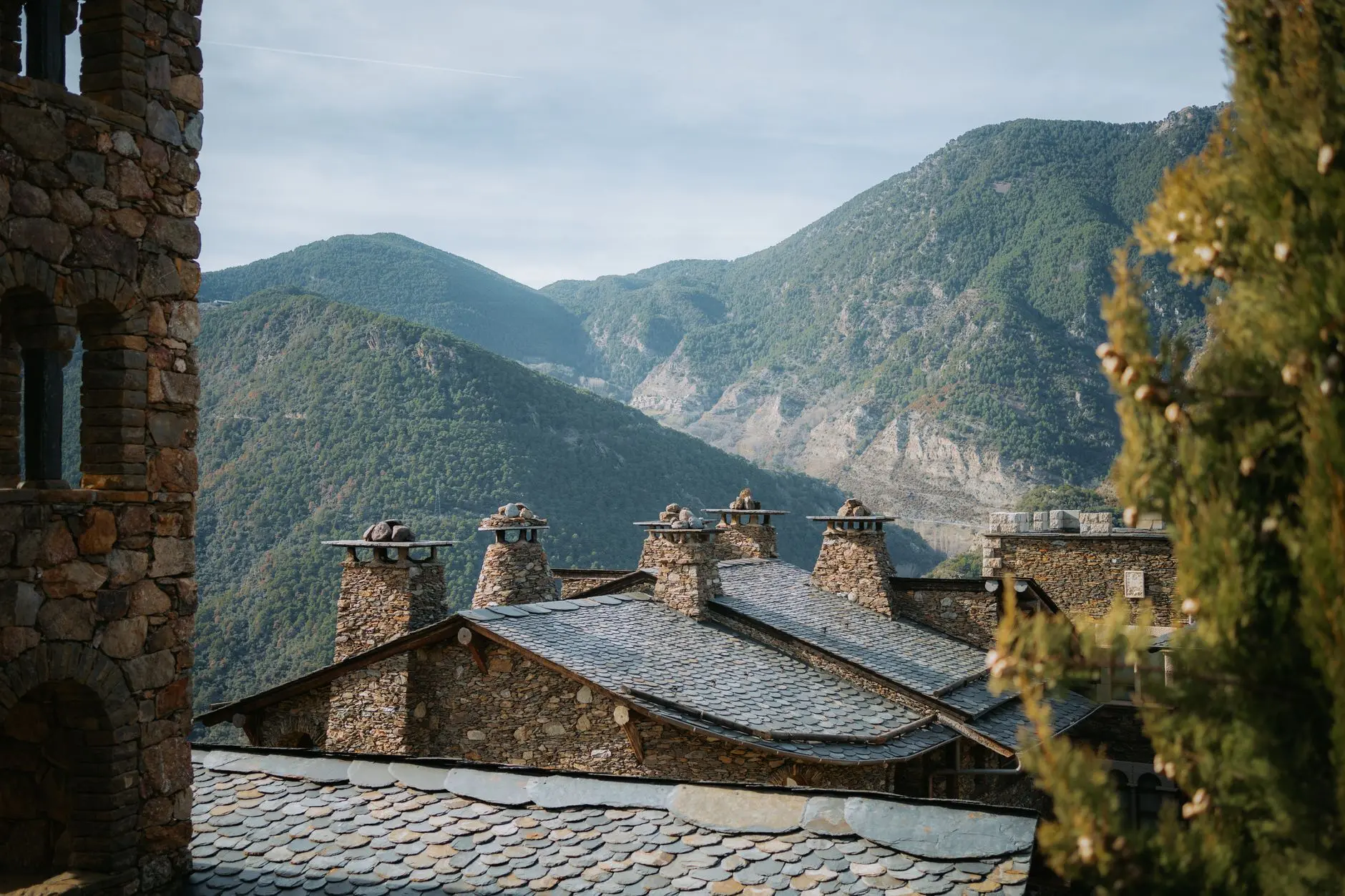
Construction and renovation in Andorra are tightly regulated, with oversight shared between the national government and each of the country’s seven administrative parishes (parròquies). Planning permission is obligatory for virtually all new builds and for most substantial renovation work, with applications directed to the appropriate parish council (Comú). The construction sector is subject to dedicated licensing requirements, and anyone contemplating a development project must also grapple with increasingly restrictive foreign investment rules introduced between 2023 and 2025 — regulations that have materially changed the landscape for overseas buyers.
| Item | Details |
|---|---|
| Planning permission authority | Parish council (Comú) of the relevant parròquia |
| Foreign investment tax (as of 2024) | Up to 10% of property value for qualifying foreign investors (Law 3/2024) |
| Property transfer tax (as of 2024) | 4% of sale price (1.5% commune; 2.5% government) |
| Foreign investor property limits (as of 2025) | Maximum two apartments per foreign individual; developments must allocate ≥50% units as affordable housing |
| Key language requirement | Official language is Catalan; planning documents must be in Catalan (sworn translations required for other languages) |
| Architect referral body | Col·legi d’Arquitectes d’Andorra — check official website for current register |
01Do you need planning permission to build or renovate a property in Andorra?
Yes — planning permission is mandatory for any new build, substantial extension, or major renovation in Andorra. Whether you intend to construct from scratch or carry out significant works on an existing property, formal approval will be required before work can begin. Even modifications that affect only the external appearance or load-bearing elements of a building commonly trigger a requirement for some category of authorisation, so consulting your local Comú before initiating any works is always the prudent first move.
Strategic planning and land-use controls are administered primarily at the parish level, though the national government establishes the overarching legislative framework. Andorra’s seven parishes — Andorra la Vella, Canillo, Encamp, Escaldes-Engordany, La Massana, Ordino, and Sant Julià de Lòria — each operate their own planning authority, which means that applicable rules and fees can differ considerably from one parish to another. You must always verify requirements with the specific Comú that has jurisdiction over your plot.
The principal legislative instrument governing land and urban planning across the Principality is the Llei General d’Ordenació del Territori i Urbanisme. Beneath that national framework, each parish issues its own Plan and Master Plan of Urban Planning and Development (Pla d’Ordenació i Urbanisme Parroquial — POUP), which sets out permitted uses, building densities, height restrictions, and architectural character requirements for every zone within its territory. Reviewing the POUP for your chosen parish is therefore an indispensable early step in any project.
A significant procedural requirement introduced in recent years means that applications for new construction permits, partial urban plans, or development projects must secure a favourable report from the competent national ministries for both urban planning and the environment, in addition to parish-level approval. Those accustomed to planning systems in countries such as Canada or Australia — where municipal consent alone typically suffices for residential projects — may find this dual-track approval process unfamiliar and should allow for it in their project timetables.
The step-by-step process for obtaining planning permission in Andorra is as follows:
- Commission an architect or technical designer. Any real estate project in Andorra — whether a new build, renovation, or change of use — demands strong architectural expertise and a detailed working knowledge of local planning rules. Your architect will produce the full body of technical documentation required to support the application.
- Prepare a complete technical project. The submission package must include architectural drawings, structural calculations, and a demonstration of how the proposed works comply with the applicable POUP. All documents submitted to the parish must be in Catalan, the official language of Andorra.
- Submit to the parish council (Comú). The full project dossier is lodged with the relevant parish council for assessment. The Comú evaluates conformity with zoning designations, permitted heights, setback requirements, and local aesthetic standards.
- Obtain the favourable ministerial report. For new construction or significant works, a positive assessment must also be received from the national ministries with responsibility for urban planning and environmental matters, as described above.
- Await the building licence (llicència d’obra). Once both parish and any required ministerial sign-offs are secured, the formal building licence is granted. Processing periods differ by parish and by project complexity — confirm current timescales directly with the relevant Comú, since these figures change regularly.
- Begin construction. All works must adhere strictly to the approved drawings. Any substantive modifications to the approved scheme require a formal variation application to be submitted and approved before the changed works may proceed.
- Obtain the occupancy certificate (cèdula d’habitabilitat). Upon completion, you must obtain an occupancy certificate confirming the building satisfies all applicable technical and safety standards before it may be legally inhabited.
All communications and submissions to planning authorities must be made in Catalan. Documents in languages other than Catalan should be accompanied by sworn translations, though translations may not be necessary for documents in Spanish, French, or English — always confirm the current language requirements with the relevant Comú before submitting your application. Planning application fees vary by parish and by the scale of the project; check current figures with the appropriate parish council when drawing up your budget.
It is also worth noting that some parishes have imposed temporary halts on new construction permits. A June 2024 resolution in one parish suspended certain new-build permits in order to review its Parish Urban Planning Plan and better align growth with local needs. The national government and individual parishes continue to regulate the volume of construction licences issued, and moratoriums on new-build permits remain in effect in various parishes — this is a critical consideration for anyone purchasing a plot of land. Always verify whether permits are currently being issued in your target parish before exchanging contracts on any land purchase.
02What are the rules around listed buildings, conservation areas, and heritage protection in Andorra?
Andorra maintains formal statutory protections for buildings and areas of historical, cultural, or architectural importance, broadly analogous to listed building and conservation area regimes found elsewhere in Europe. If a property carries a listed designation, or sits within a conservation area or preservation zone, an additional layer of rules and consents applies. Work on listed structures requires authorisation from the Ministry of Culture, and properties located within conservation or preservation areas may be subject to restrictions governing changes to their external appearance and character.
Both national and parish authorities have powers to create and administer heritage protections. Parish councils are competent to adopt general master plans and special plans, as well as protection, sanitation, and internal reform programmes (programes de reforma interior, de protecció i de sanejament). Protection designations may therefore originate at either the national or the local level, and it is important to check both layers when assessing a property’s status.
At the national level, the Ministry of Culture (Ministeri de Cultura) is the primary authority for heritage matters, while the relevant parish council (Comú) administers locally originating designations. Before buying any older property or commencing works in a historic area, you should take the following steps:
- Request a written heritage status report from the relevant Comú.
- Establish with the Ministry of Culture whether the building or site is entered on any national heritage register.
- Review the parish POUP for special protection zones, historic character areas, or any other overlay that might restrict works.
- Engage a locally qualified architect with specific experience of heritage requirements in the parish in question.
Breaching heritage protection rules in Andorra can carry serious consequences: enforcement action may compel the owner to reinstate the original appearance of the building at their own expense, financial penalties can be levied, and in the most serious cases criminal proceedings may follow. Andorra’s compact scale and closely knit regulatory community mean that unauthorised works on protected structures are very unlikely to go unnoticed — unlike some larger jurisdictions where enforcement can be patchy. Always secure written confirmation of a property’s heritage status and obtain all necessary consents before settling on the scope of any renovation.
The official website of the Government of Andorra is www.govern.ad. The Ministry of Culture may be contacted through the government portal. Each Comú operates its own website where planning and heritage enquiries can be directed — links to all seven parish councils are available at www.comuns.ad.
03What permits and licences are required when building or renovating in Andorra?
The building licence is only one component of the approvals typically needed to complete a construction project in Andorra. Depending on the nature and location of the works, a project may also require an occupancy certificate before the finished building can be inhabited, a construction licence where works affect public space, and an environmental licence where there is potential impact on the natural environment.
The main categories of permit and approval to consider are:
- Building licence (llicència d’obra major or llicència d’obra menor): Issued by the parish council. Major works demand a full architectural project submission; minor works may qualify for a simplified licence procedure. Confirm which category applies to your project with the relevant Comú before preparing your documentation.
- Environmental permit (llicència ambiental): Required where construction may have an impact on the natural environment, drainage systems, or local ecology. Given that the vast majority of Andorra’s 468 km² consists of protected mountain terrain, environmental sensitivity carries considerable weight in planning decisions across the Principality.
- Occupancy certificate (cèdula d’habitabilitat): Issued on completion, this document certifies that the building is safe and fit for human habitation. It is required before a property may be legally occupied, connected to residential utility tariffs, or marketed as a habitable dwelling.
- Utility connection permits: Separate authorisations must be obtained to connect a newly completed building to the electricity network managed by FEDA (Forces Elèctriques d’Andorra) and to the water supply and sewerage infrastructure administered by the relevant Comú. These applications are handled independently from the main building licence and typically require the occupancy certificate or a completion certificate to have been issued first.
- Road or footpath access permits: Where construction requires access to, or temporary occupation of, a public road or path, permission must be obtained from the relevant Comú.
- Fire safety sign-off: For larger buildings or multi-unit residential developments, fire safety compliance must be verified. The Cos de Bombers (Andorran Fire Service) may be consulted during the design stage on projects of significant scale.
The sequencing of these approvals broadly tracks the project lifecycle: the building licence must be in place before works begin; environmental permits are addressed at design stage for applicable projects; and the occupancy certificate is sought on completion. Fees and processing times are determined by each parish council and the relevant national ministries — always confirm current figures directly with the issuing authority, as these are subject to revision. For most building and planning matters, your parish council (Comú) is the primary point of contact; the Government of Andorra’s portal at www.govern.ad provides access to national ministries and regulatory bodies.
04How do you find a reliable, trustworthy builder in Andorra?
Identifying a dependable contractor is one of the most important steps in any Andorran building project. A useful starting point is to look for builders affiliated with a recognised professional body. The Andorran Association of Builders and Contractors (AEC) is the professional organisation representing contractors operating in Andorra and can be reached at [email protected] or +376 808 080. Membership of the AEC provides a degree of assurance that a firm works within the established professional framework, though it does not substitute for your own diligence.
Successful construction in Andorra requires not only technical competence but also a thorough familiarity with local planning regulations and the particular engineering challenges posed by mountainous terrain. A reputable contractor should be able to demonstrate practical knowledge of the POUP requirements of the parish where your project is located, the material standards in use locally, and the construction approaches best suited to high-altitude conditions.
When evaluating potential contractors, work through the following practical steps:
- Verify registration and licences. Request evidence of the contractor’s current business registration in Andorra and any sector-specific trade licences. The Registre de Comerç i Indústria (Commerce and Industry Register) can be checked via the Government of Andorra portal at www.govern.ad.
- Confirm adequate insurance. Ensure that the builder holds valid public liability insurance and, for larger projects, contractor’s all-risk cover. Ask to see the current policy certificate and verify its validity.
- Obtain references. Request details of at least three recently completed projects of comparable size and scope, and speak with those clients directly. Where feasible, visit completed works before making your decision.
- Insist on a written contract. Never proceed without a detailed written agreement that specifies the full scope of works, materials to be used, programme, payment schedule, and mechanism for resolving disputes. Have the contract reviewed by a locally qualified Andorran lawyer (advocat) before signing.
- Structure staged payments. Paying the entire contract sum in advance leaves you with very little recourse if performance falls short. Link payment milestones to verified completion of defined stages, and consider retaining a percentage of the final payment for an agreed defects liability period after practical completion.
- Avoid cash-only or unregistered operators. Foreign property owners are sometimes approached by informal contractors offering lower prices but providing no contractual protection, no insurance, and no legal recourse in the event of problems. Always require a registered Andorran business entity and a formal written agreement.
With a total land area of only 468 km², much of it protected mountain terrain, Andorra faces a persistent shortage of developable land and residential property. Strict building codes and limited buildable plots naturally constrain supply. Qualified builders are therefore in high demand, and timelines can stretch beyond what those familiar with larger markets might expect — budget adequate time to identify the right contractor rather than simply accepting the first quote available.
05How do you find a qualified local architect in Andorra?
Architects practising in Andorra must hold recognised professional qualifications and register with the Col·legi d’Arquitectes d’Andorra, the Principality’s professional body for the discipline. For those seeking an architect to lead a design project, the Col·legi is the natural starting point; they can be contacted at [email protected] or +376 869 505. The Col·legi maintains a current register of practising members and is the definitive source for verifying that an individual holds the credentials necessary to sign off on planning submissions in Andorra.
Architects active in Andorra bring a range of approaches — from traditional vernacular styles to contemporary design — with a particular emphasis on the integration of buildings into the landscape, energy performance, and comprehensive client service throughout the project lifecycle. When selecting an architect for a project in a particular parish, ask whether they have direct experience of submitting applications to that specific Comú; familiarity with local officers and procedures can meaningfully accelerate the approval process.
Key considerations when engaging an architect in Andorra include:
- Language: All planning submissions must be made in Catalan, and documents in other languages must be accompanied by sworn translations, though translations may not be necessary for documents in Spanish, French, or English. Your architect must be fully proficient in Catalan. Many Andorran architects also work in Spanish and French; proficiency in other languages varies by individual — clarify language capabilities from the outset if this is relevant to your project communications.
- Local registration: Qualifications obtained in Spain, France, or other countries may be accepted in Andorra in principle, but practitioners must be registered with the Col·legi d’Arquitectes d’Andorra in order to certify planning submissions. Never assume that a foreign qualification automatically confers the right to practise in Andorra — always confirm current registration status with the Col·legi.
- Experience with international clients: A number of architects in Andorra have substantial experience working with overseas clients and are well placed to explain the local planning system in several languages. Ask specifically about this when making initial enquiries.
- Scope of engagement: In Andorra it is standard practice for architects to assume the role of construction supervisor (director d’obra) throughout the build, in addition to providing design services. Clarify from the outset whether your architect will fulfil this function, as it provides an important layer of quality control during the construction phase.
To locate a registered architect, contact the Col·legi d’Arquitectes d’Andorra at [email protected] or +376 869 505, or consult their official website for a current membership directory. You may also ask your parish council for a list of architects who regularly submit applications in the area, or seek personal recommendations from other property owners who have completed similar projects.
06What are the common pitfalls when buying land to build on in Andorra?
Purchasing land with the intention of building in Andorra carries a distinct set of risks that differ from simply buying an existing property. Andorra’s strict regime of land-use controls and development regulation means that a plot that appears suitable at first glance may turn out to be subject to restrictions that render your intended project impossible or uneconomic. Comprehensive due diligence before signing any purchase contract is the most effective way to avoid costly mistakes.
The principal pitfalls to investigate before committing to a land purchase include:
- Establish buildability before exchange. Never assume that a plot classified as land is also classified as buildable. The zoning status assigned under the relevant parish POUP may designate a parcel as non-developable, or restrict it in ways that are incompatible with your intentions. Request written confirmation of the land’s planning classification and the permitted buildable area from the parish council before exchanging contracts.
- Verify boundaries against the cadastral register. Confirm that the physical boundaries of the land correspond precisely with the entries in the land registry and cadastral records. Engage a local notary (notari) to conduct a full title search and boundary verification before purchase.
- Understand zoning classifications in detail. Land in Andorra is categorised under the zoning framework of the relevant parish POUP, with residential, commercial, agricultural, and protected designations each carrying different development rights. Agricultural land is primarily reserved for Andorran citizens, and there are restrictions on its acquisition by foreign purchasers.
- Assess environmental and topographical constraints. The mountain character of Andorra means that the physical configuration of a plot can present serious construction challenges. Investigate flood risk, avalanche exposure, and any environmental protection designations that may apply. A soil stability survey is strongly recommended before purchase — ground conditions on challenging terrain can add substantially to construction costs compared to flat land.
- Confirm utility availability and connection costs. Check with the relevant Comú and the utility providers whether the plot can be connected to mains water, electricity (FEDA), and sewerage at realistic cost. Remote plots in mountain locations can involve disproportionately high infrastructure connection costs that must be factored into the overall project budget.
- Check for permit freezes. As noted elsewhere in this guide, several parishes have at various times imposed temporary halts on new construction licences. A permit moratorium in your chosen parish could mean that a technically buildable plot cannot in practice be developed for an indeterminate period. Verify the current status of permit issuance before purchasing any land.
- Engage a qualified local notary. The land purchase process involves a formal purchase agreement that sets out the terms and conditions of the transaction. Retaining an Andorran notary is not merely advisable — it plays a central role in completing the transaction legally. Unlike in some other systems where a notary acts purely in an administrative capacity, the Andorran notary has a duty to advise both parties on the legality of the transaction and to confirm title before completion.
07What are the rules around foreign ownership and financing for construction projects in Andorra?
The regulatory framework governing foreign property ownership in Andorra has undergone substantial change between 2023 and 2025, and the legal landscape is still evolving. Any foreign national — or recent resident — considering a land or property purchase should obtain current, tailored legal advice before proceeding, because the rules are genuinely complex and have been subject to repeated amendment in a short period.
Legislation commonly referred to as the “Omnibus Law”, adopted in early 2025, constitutes a significant legislative package for the Principality, aimed principally at addressing acute socio-economic pressures — in particular the housing shortage — and at more rigorously controlling the flow of foreign capital into the Andorran real estate sector.
Under the new framework, property acquisitions by individuals who cannot demonstrate at least three years of effective residence in Andorra within the preceding ten years are treated as foreign investment. The entry into force of Law 05/2025 also amends Law 3/2024, which governs the taxation of foreign real estate investment in the Principality, reinforcing oversight of such transactions and introducing new fiscal obligations for property deals carried out by foreign individuals and entities.
Law 3/2024, of 1 February, on the tax on foreign real estate investment in the Principality of Andorra introduced a levy of up to 10% of the value of qualifying foreign real estate investments. This tax is payable in addition to the standard property transfer tax and must be incorporated into any financial modelling of a project.
For those contemplating development and construction activity specifically, the restrictions are more onerous still. Any residential development undertaken by a foreign investor must set aside at least 50% of the units constructed as affordable housing for use as a principal residence. Foreign investment directed at urban or real estate development is otherwise prohibited, with a narrow exception for residential rental developments intended for habitual and permanent occupancy, provided the investor retains ownership for a minimum period of ten years.
In terms of individual acquisition limits, foreign individuals may purchase no more than two apartments per person. These caps apply exclusively to acquisitions made on or after the law’s entry into force on 29 February 2024; previously held properties do not count towards this ceiling.
In order to legally acquire real estate in Andorra, non-residents must obtain Prior Authorisation for Foreign Investment by submitting an application — together with the requisite supporting documentation — to the Ministry of Economy and Finance. Any transaction that requires prior authorisation under the foreign direct investment legislation is void until the relevant approval has been granted by the Registry.
In terms of financing, Andorran banks do offer mortgage products for property purchases, including to foreign nationals and qualifying residents. Lending criteria tend to be conservative, however, and mortgage availability for non-residents or those formally classified as foreign investors is generally more constrained than for established residents. Borrowers should approach the major Andorran institutions — including Crèdit Andorrà, MoraBanc, and Andorra Banc Agrícol Reig (BancSabadell d’Andorra) — directly for current mortgage terms, as loan-to-value ratios and interest rate conditions change frequently.
The competent body for foreign investment authorisation is the Ministry of Economy and Finance of the Government of Andorra, accessible via www.govern.ad. Given the pace of legislative change in this area, professional advice from a locally qualified Andorran lawyer before any transaction is strongly recommended.
08What official sources should you consult when planning to build or renovate in Andorra?
The bodies and resources listed below are the authoritative reference points for anyone planning a construction or renovation project in Andorra. Because rules, fees, and procedures have been changing rapidly since 2023, always verify information directly with the relevant authority rather than relying solely on secondary sources, including this guide.
| Body / Resource | Role | Website / Contact |
|---|---|---|
| Government of Andorra (Govern d’Andorra) | Central government portal; access to ministries, legislation, and official gazette (BOPA) | www.govern.ad |
| Parish Councils (Comuns) | Planning permission, local POUP, building licences, heritage designations | www.comuns.ad (links to all seven parishes) |
| Ministry of Urban Planning and Housing (Ministeri d’Ordenament Territorial i Habitatge) | National urban planning policy, ministerial reports for building permits | Via www.govern.ad |
| Ministry of Culture (Ministeri de Cultura) | Heritage protection, listed buildings, cultural designations | Via www.govern.ad |
| Ministry of Economy and Finance | Foreign investment authorisation, business registration | Via www.govern.ad |
| Col·legi d’Arquitectes d’Andorra | Register of qualified architects, professional standards | [email protected] | +376 869 505 |
| Andorran Association of Builders and Contractors (AEC) | Register of contractors, professional trade body | [email protected] | +376 808 080 |
| FEDA (Forces Elèctriques d’Andorra) | Electricity connections and infrastructure | www.feda.ad |
| Official Gazette of Andorra (BOPA) | Published laws, regulations, and official notices | www.bopa.ad |
In addition to consulting official sources, always retain a locally qualified notary (notari) for any land or property transaction, and consider engaging an Andorran lawyer (advocat) to advise on planning matters, foreign investment obligations, and contract terms. The Association of Andorran Notaries can be contacted through the Government of Andorra portal, and the Bar Association of Andorra (Col·legi d’Advocats d’Andorra) can refer you to qualified practitioners with specialist experience in property and construction law.
09Frequently asked questions: building and renovating in Andorra
How long does it typically take to get planning permission in Andorra?
Timescales depend on the parish, the complexity of the project, and the current volume of applications being processed by the relevant Comú. A minor works licence (llicència d’obra menor) for straightforward renovation work may be issued within a matter of weeks, whereas a new construction project calling for a full architectural project, a major works licence, and a ministerial report may take several months. Permit moratoriums in certain parishes can extend timelines further still. Ask the specific parish council for an indicative processing period at the very start of your project and incorporate a reasonable buffer when drawing up your build programme.
How much does building or renovating a property in Andorra typically cost?
Construction costs in Andorra are generally elevated compared with lowland European markets, a reflection of the mountainous terrain, constrained local supply chains, and robust demand generated by a buoyant property market. The sector is kept busy by a steady flow of off-plan developments, high-rise apartment schemes, and premium chalets, which puts upward pressure on contractor rates and can extend lead times for specialist materials. Obtain a minimum of three competitive tenders, include a contingency allowance of at least 15–20%, and check current construction cost benchmarks with a local quantity surveyor or architect before committing to a budget. Planning fees, notary charges, transfer taxes, and any applicable foreign investment tax should all be incorporated into your total project cost estimate.
Do I need to speak Catalan to navigate the planning and building process?
Planning submissions in Andorra must be in Catalan, the official language, and documents submitted in other languages must be accompanied by sworn translations, though translations may not be necessary for documents in Spanish, French, or English. In practice, many officials, architects, and legal professionals in Andorra are also fluent in Spanish and French, and some work in additional languages. Nevertheless, all official documentation, planning applications, and formal contracts will be drafted in Catalan — making it essential to be represented by a locally qualified architect or lawyer with full command of the language. For those who do not themselves speak Catalan, professional representation is not merely advisable; it is practically indispensable.
What happens if I carry out building work without planning permission in Andorra?
Proceeding without the necessary permits can result in stop notices, financial penalties, and — where unauthorised works cannot be brought into compliance — orders to demolish the offending construction at the owner’s expense. The Comú holds enforcement powers to halt works, require alterations, or mandate reinstatement, with all associated costs falling on the property owner. Additional penalties from the Ministry of Culture apply in cases involving heritage breaches. Given Andorra’s small size and tightly connected regulatory community, unauthorised construction is very difficult to conceal, and enforcement tends to be swift and effective. There is no equivalent of a tolerated unauthorised-use period — securing all required permissions before breaking ground is non-negotiable.
Are building qualifications or standards from other countries recognised in Andorra?
Andorra maintains its own building standards and planning regulations, and professional qualifications obtained in Spain, France, or elsewhere do not automatically entitle practitioners to certify planning submissions or sign compliance documents in the Principality. Architects are required to hold current registration with the Col·legi d’Arquitectes d’Andorra. Equally, construction standards and materials certifications applicable in other jurisdictions may not satisfy Andorran technical requirements, which are calibrated to the specific demands of high-altitude, seismically sensitive, and mountainous construction conditions. Always appoint a locally registered architect and confirm that your chosen contractor is conversant with the technical standards applied in Andorra.
What should I do if I have a dispute with my builder or contractor?
In the event of a disagreement with a contractor, begin by consulting the written contract and following whatever dispute resolution procedure it prescribes. If the contractor belongs to the Andorran Association of Builders and Contractors (AEC — [email protected], +376 808 080), the association may be able to facilitate mediation. Where informal resolution proves impossible, you may need to bring a claim before the Andorran courts, and retaining a locally qualified lawyer (advocat) at the first sign of a serious dispute is highly advisable. This reinforces the importance of putting in place a thorough written contract, staged payment arrangements, and a retained defects liability sum from the outset — preventing disputes is significantly less costly than resolving them through litigation.
Can I get a mortgage in Andorra to finance a self-build or renovation project?
Andorran banks do provide mortgage and construction finance products, but terms and availability vary — particularly for foreign nationals or those who fall within the definition of a foreign investor under the 2024–2025 legislation. Non-residents in Andorra, as well as residents who cannot demonstrate at least three years of uninterrupted residence, are subject to the foreign real estate investment tax, which alters the financial arithmetic of any funded project. Contact the major Andorran banking institutions directly for current lending conditions, as criteria differ between banks and are updated frequently. Presenting a well-documented project plan, confirmed planning permission, and a team of locally registered professionals will generally strengthen a mortgage application.
Are there any restrictions on how many properties a foreign national can build or own in Andorra?
Under legislation in force from 2024–2025, foreign individuals are limited to acquiring a maximum of two apartments, with no more than three parking spaces and three storerooms per apartment. These restrictions apply only to acquisitions completed after the law’s entry into force on 29 February 2024; properties already held at that date do not count towards the limit. In addition, residential developments carried out by foreign investors must designate at least 50% of the units constructed as affordable housing intended for use as a principal residence. The rules are layered, actively evolving, and carry significant penalties for non-compliance — always seek specific, current legal advice from a qualified Andorran lawyer before structuring any property investment or development project.