
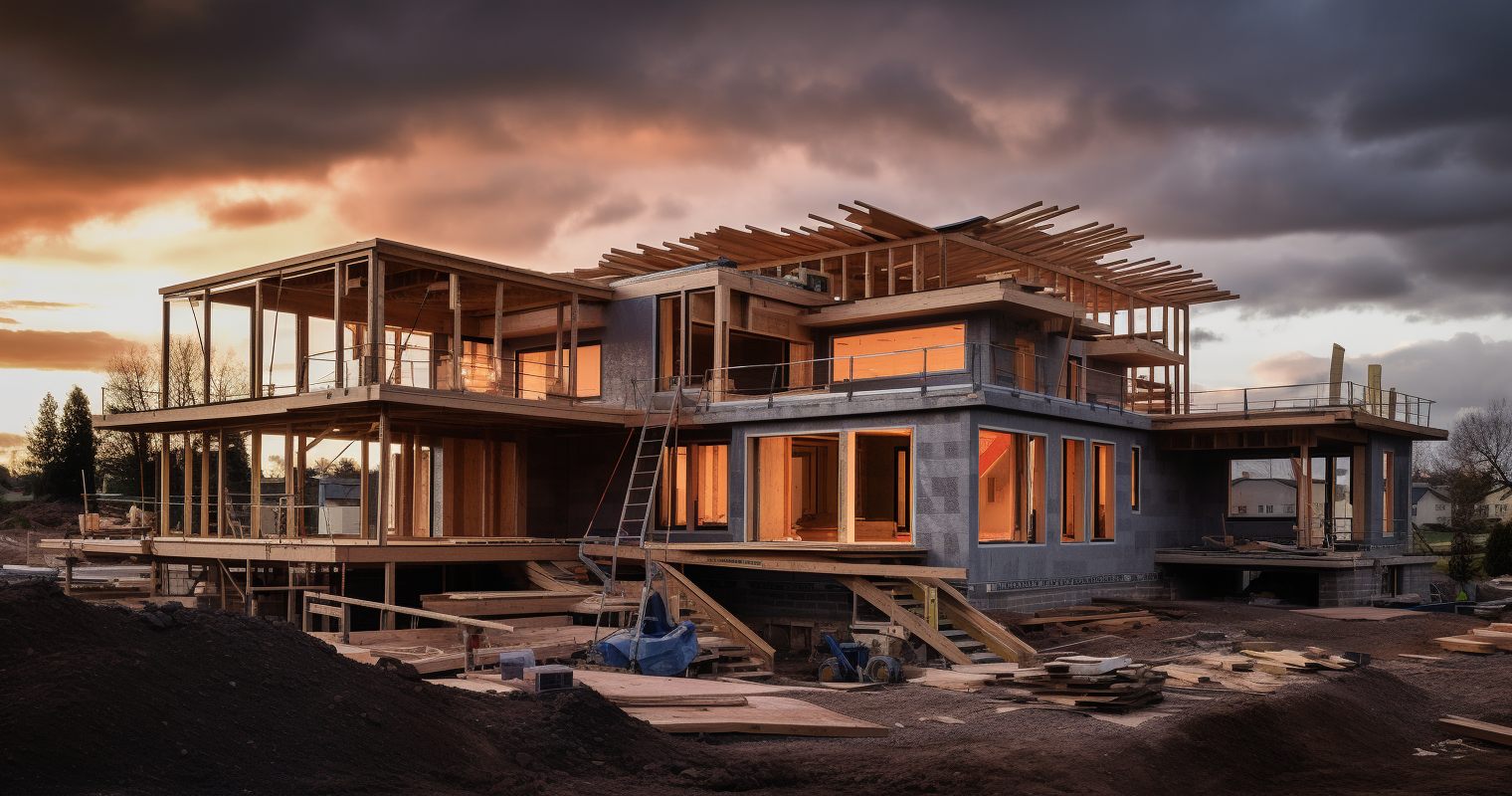
Foreign nationals have the legal right to build or renovate property in Colombia, enjoying broadly equivalent ownership and construction rights to Colombian citizens. That said, virtually all significant construction and renovation activity requires a formal licencia de construcción (building licence), issued either by a local urban curatorship or a municipal planning authority. The sector is governed by national building codes, municipal zoning frameworks, and heritage protection legislation — all of which carry substantial penalties for non-compliance.
| Item | Details |
|---|---|
| Licence required? | Yes — a licencia de construcción is mandatory for all new builds, extensions, major renovations, and demolitions (as of 2025) |
| Who issues the licence? | Urban curatorships (Curadurías Urbanas) in cities; municipal planning secretariats (Secretarías de Planeación) in smaller towns |
| Application form | Formulario Único Nacional (FUN) — updated template required from 16 March 2026 |
| Penalty for unlicensed work | Fines of 70–400 monthly minimum wages; work suspension; possible demolition (as of 2025) |
| Foreign ownership restrictions | None for standard property; border zone exception within 100 km of national borders |
| Investment visa threshold | ~350 × monthly minimum wage (~USD $110,000–$120,000 as of 2025) for an M-10 investor visa |
| Seismic code | NSR-10 (Norma Sismo Resistente) is mandatory for all construction |
| Heritage designations | Bienes de Interés Cultural (BIC) — searchable via SIPA register (Ministerio de las Culturas) |
Do you need planning permission to build or renovate in Colombia?
Colombian law requires that all new construction obtain a licencia de construcción before work commences. This official authorisation confirms that a proposed development meets urban planning requirements and applicable safety standards. The system functions similarly to building permit frameworks in countries such as Canada or Australia, though in Colombia it is administered by specialist local bodies called Curadurías Urbanas rather than by a single national agency.
A licencia de construcción is an advance authorisation granted by urban curatorships (curadores urbanos) or municipal planning departments, and it is compulsory for construction works, extensions, modifications, adaptations, or demolition on any parcel of land. Before any project is designed, you must confirm the permitted uses of your land under your city’s Plan de Ordenamiento Territorial (POT) — the urban master plan that specifies what may be built in each zone, covering categories such as residential or commercial use, maximum building height, and protected areas.
A building licence is not, however, required for minor localised repair works — such as bathroom or kitchen refurbishments, interior repainting, electrical, plumbing or gas maintenance, or the replacement of floor finishes. Any work that alters a structure’s load-bearing elements, increases its gross floor area, changes its designated use, or involves full or partial demolition will trigger the licence requirement.
Decree 1469 of 2010 establishes several distinct categories of building licence in Colombia, each tailored to the nature and scope of the proposed works:
- Obra nueva — authorises construction on vacant or cleared land.
- Ampliación — permits alterations to an existing structure that result in an increase in its gross floor area.
- Adecuación — covers internal or external modifications that do not alter a building’s primary use or principal structure.
- Modificación — covers changes to the architectural or structural design of an existing building without any increase in built area.
- Restauración — required for the conservation and repair of facades or structures considered to form part of the cultural or historic heritage.
- Demolición — required for the partial or total removal of an existing structure.
The process for securing a building licence in Colombia proceeds as follows:
- Confirm your POT zoning and permitted uses. Visit the urban curatorship office or the municipal planning department before drawing up your project to establish precisely what types of building and what dimensions are lawfully permissible on your specific plot.
- Appoint a qualified architect or engineer. Unless you have direct professional connections in the construction sector, engaging a licensed civil engineer or architect is strongly advisable — they bring detailed knowledge of the licence application process and current local regulations.
- Assemble your application documentation. Essential documents include the Formulario Único Nacional (FUN), a recent certificado de libertad y tradición (title deed extract dated no more than one month prior), architectural and structural drawings, proof of identity, and a soil study where the authority deems it necessary. Note that the Ministerio de Vivienda revised the visual identity of the FUN and associated forms with effect from March 2026.
- Lodge your application with the appropriate authority. The body responsible for granting the licence depends on where your project is located — this will be the planning secretariat of the relevant municipality or, in specific circumstances, INVIAS (the National Roads Institute).
- Pay the applicable licence fee. Fees are set locally and depend on factors including location, socioeconomic stratum, total square meterage, and the type of construction. Confirm the current fee schedule directly with your curatorship or planning authority before submission.
- Allow time for review and approval. The competent authority will evaluate your application and supporting documents to check compliance with all applicable standards. It may request revisions or adjustments to your project before issuing a decision.
- Receive the licence and commence construction. Once your application is confirmed as compliant with all regulatory requirements, the authority issues the licence. This document may specify conditions including completion deadlines and adherence to technical standards.
- Obtain an occupancy certificate upon completion. When construction is finished, you must secure the occupancy certificate (certificado de habitabilidad) from the issuing curatorship or planning office. This document confirms that the completed building conforms to the approved licence and is fit for use.
Any person who constructs, extends, modifies, adapts, or demolishes a structure without the required building and urban licences faces sanctions that may include demolition of the illegal works and monetary penalties ranging from 70 to 400 monthly minimum wages. Under no circumstances should you begin work before your licence has been formally issued.
What are the rules around listed buildings, conservation areas, and heritage protection in Colombia?
Colombia operates a formal and legally rigorous framework for the protection of historic structures and areas — broadly analogous to listed building and conservation area regimes found elsewhere, though administered through Colombia’s own institutional structures. Gaining a thorough understanding of this system before acquiring any older property is indispensable.
Culturally and historically significant assets in Colombia are classified as Bienes de Interés Cultural (BIC — Cultural Interest Assets). BICs are tangible assets that competent authorities have declared to be monuments, areas of historical, archaeological, or architectural significance, or historic complexes. They may be registered at national, departmental, district, municipal, indigenous territory, or Afro-Colombian community level.
Governance of the BIC framework involves municipalities, districts, departments, indigenous authorities, Afro-Colombian communities, the National Council of Cultural Heritage, and departmental and district councils of cultural heritage. The relevant legislation sets out criteria and procedures for declaring tangible cultural heritage assets and specifies the general content required in Special Management and Protection Plans (PEMPs).
A PEMP (Plan Especial de Manejo y Protección) is the management instrument that defines what may and may not be done to or in the vicinity of a BIC. If you are purchasing a property that is itself a BIC, or that falls within a BIC-designated zone, you must obtain and comply strictly with the applicable PEMP before planning any construction or renovation work. Interventions on BIC properties require a Licencia de Restauración and will typically need approval from the Ministerio de las Culturas, las Artes y los Saberes (Ministry of Cultures, Arts and Knowledge), the national body with oversight of cultural heritage.
The complete inventory of BICs can be searched through the Cultural Heritage Property Inventories (Inventarios Patrimonio Cultural Inmueble) held in the Heritage and Memory Information System (SIPA — Sistema de Información de Patrimonio y Memoria). Always search the SIPA database before purchasing any property, and particularly before considering anything located in historic city centres such as Cartagena, Mompox, Barichara, or Popayán.
Colombia has nine UNESCO World Heritage Sites, comprising six cultural, two natural, and one mixed designation. Properties situated near or within these areas are subject to further restrictions. In recent years, real estate development activity, tourism growth, and gentrification pressures have been identified as material threats to the outstanding universal value of sites including Cartagena, where existing management and planning frameworks have at times proved insufficient to resist development pressures. Particular caution is warranted when acquiring property close to any UNESCO-designated zone.
The General Law of Culture (Law 397 of 1997, as amended by Law 1185 of 2009) prohibits all excavations or other archaeological interventions without a licence from the Colombian Institute of Anthropology and History (ICANH), and this prohibition is actively enforced. Should any construction work reveal archaeological remains, all activity must cease immediately and ICANH must be notified without delay. Breaches of heritage protection rules can result in criminal liability in addition to substantial fines and demolition orders.
For authoritative guidance on BIC designations and heritage regulations, contact the Ministerio de las Culturas, las Artes y los Saberes at www.mincultura.gov.co. The SIPA register is available at sipa.culturaenlinea.co.
What permits and licences are required when building or renovating in Colombia?
In addition to the principal building licence, a Colombian construction project may require a variety of supplementary permits and approvals, depending on its scale, location, and character. Failure to secure any required permit can expose you to fines, work stoppages, or demolition orders.
Seismic Resistance Compliance (NSR-10). Compliance with Colombia’s Seismic Resistance Code (NSR-10) is obligatory for all construction. Structural plans must be reviewed and certified by a qualified structural engineer confirming NSR-10 compliance before the building licence will be issued.
Environmental permits. Certain projects require dedicated environmental permits prior to construction, intended to safeguard the natural environment. This requirement is triggered where a project may generate significant impacts — for example, water abstraction (requiring a water concession), wastewater discharge, air emissions, the removal of trees, or interventions affecting rivers or watercourses. The precise requirements depend on the project’s location and specific characteristics. Consult your Regional Environmental Authority (CAR — Corporación Autónoma Regional) or local environmental office to establish whether your project requires an Environmental Impact Assessment or specific environmental permits.
Tree removal permits. Depending on the location and type of project, permits for the felling of trees may be required separately. These are generally issued by the local CAR or the municipal environmental authority.
Utility connection permits. Connecting to water, sewerage, gas, and electricity networks requires individual approvals from the relevant service provider or municipal utility company (empresa de servicios públicos). In rural areas where mains connections may be unavailable, you may also require permits for well-drilling, septic systems, or off-grid energy installations. Verify the availability of all utilities and their connection costs before purchasing land or committing to any project.
Urban subdivision and parcelling licences. If your project involves creating new public or private spaces, public roads, or public service infrastructure on urban land in preparation for future construction, an urbanisation licence will be required before building work can begin.
Occupancy certificate. On completion of any licensed work, an occupancy or habitability certificate must be obtained from the issuing curatorship or planning authority before the property may be legally occupied or transferred. This step must not be omitted — without it, the property may be impossible to sell and could create complications with insurers or mortgage lenders.
All fees and processing timescales for these permits are determined locally and are subject to revision. Always verify current requirements and costs directly with the relevant municipal authority, the local CAR, or your curatorship before initiating any project.
How do you find a reliable, trustworthy builder in Colombia?
Identifying a dependable contractor is among the most critical — and most demanding — tasks in any Colombian building project, particularly for those new to the local market. The construction industry is regulated at national level, but the practical enforcement of standards varies considerably, and thorough due diligence on your part is non-negotiable.
Colombia imposes no requirement to work with a licensed real estate professional, and neither real estate agents nor building contractors are subject to the same levels of training and licensing as their counterparts in more heavily regulated markets. This makes it all the more important to work exclusively with vetted, reputable professionals.
Credible construction companies and individual contractors should ideally be registered with the Cámara de Comercio (Chamber of Commerce) in their city, which verifies their legal existence and business registration. Larger firms engaged in formal residential or commercial developments may also hold membership of the Cámara Colombiana de la Construcción (CAMACOL), the national industry body for the construction sector:
- CAMACOL — camacol.co | Carrera 7 No. 73-55, Piso 11, Bogotá | Tel: +57 (601) 743 0265
For projects requiring the involvement of licensed professional engineers, check their registration status with the Consejo Profesional Nacional de Ingeniería (COPNIA), the national body that registers and disciplines civil, structural, and construction engineers in Colombia:
- COPNIA — www.copnia.gov.co | Carrera 16 No. 95-38, Bogotá | Tel: +57 (601) 742 3342
Practical measures for vetting a contractor include the following:
- Request references and, where possible, physically inspect completed projects they have delivered previously.
- Insist on a written contract (contrato de obra) that clearly specifies scope of work, materials, payment schedule, project timelines, and penalty provisions for delays. Use only firm, written agreements with unambiguous contingency and penalty clauses.
- Confirm insurance coverage. Reputable contractors should hold liability insurance. Ask to see the policy documentation before signing any agreement.
- Structure payments in stages. There is no universal escrow payment mechanism in Colombia, so arrange payment in tranches tied to independently verified completion milestones rather than disbursing large sums in advance.
- Never pay the entire amount upfront. A prevalent fraud targeting foreign property owners involves contractors disappearing after receiving a substantial initial payment. Retain a meaningful proportion — typically 10–20% — until full and satisfactory completion of all works.
- Engage a local bilingual lawyer to review all contracts before you sign, particularly if your Spanish is not fluent.
Expats are also encouraged to connect with established expat communities in cities such as Medellín, Bogotá, or Cartagena, where personal recommendations for reliable tradespeople and contractors are routinely exchanged through online forums and social groups.
How do you find a qualified local architect in Colombia?
Architects in Colombia must hold a valid professional licence to practise lawfully. The licensing, registration, and professional discipline of architects falls under the remit of the Consejo Profesional Nacional de Arquitectura y sus Profesiones Auxiliares (CPNAA). This body is broadly equivalent to an architect registration board elsewhere — for example, the ARB in the United Kingdom or the AACA in Australia.
- CPNAA — www.cpnaa.gov.co | Calle 26 No. 69B-53, Bogotá | Tel: +57 (601) 295 7721
You can confirm whether an architect holds a current, valid professional licence through the CPNAA’s online register. Only engage an architect whose registration is confirmed as active. Practitioners without a valid licence cannot legally sign the structural and architectural drawings required as part of a building licence application.
The principal voluntary professional association for the architecture profession is the Sociedad Colombiana de Arquitectos (SCA), which represents architectural professionals nationwide and maintains regional chapters throughout the country:
- SCA — www.arquitecturasca.com | Carrera 6 No. 26B-85, Bogotá | Tel: +57 (601) 283 3852 | Email: [email protected]
For expats, several practical considerations apply when selecting an architect:
- Language. There is no legal obligation for architects to communicate in any language other than Spanish. However, in cities with significant expat populations — including Medellín, Cartagena, and Bogotá — it is increasingly feasible to find licensed architects with conversational or professional-level English. Raise this explicitly when making initial contact.
- Experience working with international clients. Architects who regularly serve foreign clients will usually be well-acquainted with the additional documentation requirements and international bank transfer procedures that apply to non-resident developers and purchasers.
- Current knowledge of the local POT. Each municipality operates its own POT, with distinct rules governing height limits, building setbacks, and permitted densities. An architect with up-to-date working knowledge of your specific city or town’s plan is a considerable asset.
- Foreign qualifications are not automatically recognised. Overseas architectural credentials do not carry automatic validity in Colombia. Any foreign national wishing to practise as an architect in Colombia must first have their qualifications formally validated and must register with the CPNAA.
What are the common pitfalls when buying land to build on in Colombia?
Acquiring land for development in Colombia demands rigorous legal and technical due diligence. A number of issues regularly catch foreign buyers off guard, particularly those accustomed to property markets with centralised title registries, mandatory agent regulation, or standardised conveyancing procedures.
Confirm buildability before any money changes hands. You must satisfy yourself that your intended project is consistent with the applicable POT and any partial plans in force, since licences are granted on the basis of those local regulations. Critically, confirm with the local curatorship that your proposed development can actually be licensed on the specific plot you are considering — do this before making any financial commitment.
Scrutinise title and ownership history with care. Title histories in Colombia can be incomplete or contain inaccuracies, and encumbrances such as unpaid debts may pass with the property on transfer. Obtain a current certificado de libertad y tradición from the Superintendencia de Notariado y Registro (SNR) — Colombia’s national land registry — and have a qualified local lawyer examine it in detail. This document sets out the chain of ownership and any registered charges or encumbrances affecting the property.
Understand zoning and land-use classifications thoroughly. The POT determines what may be built in each area, covering residential and commercial uses, maximum height, and environmentally or heritage-protected zones. Agricultural, rural, and environmentally sensitive land is subject to strict building restrictions. Always obtain a certificado de uso del suelo (land-use certificate) from the municipal planning authority before committing to a purchase.
Border zone restrictions. Properties situated within 100 kilometres of a national border are subject to a border zone exception, under which foreign buyers require special authorisation before proceeding. If you are considering land in a border region, take specific legal advice before making any commitment.
Coastal and environmental constraints. Coastal properties are governed by specific regulations, including prohibitions on construction within defined distances from the shoreline. Flood risk, contamination, and environmental sensitivity are particularly prevalent concerns in coastal, riverside, and mountainous areas. Consult the local CAR for an environmental assessment before purchasing land in any such location.
Utility connections are not guaranteed. Unlike many European or North American markets, utility connections cannot be taken for granted for rural or peri-urban plots. Obtain written confirmation that water, sewerage, electricity, and gas connections are achievable, and secure cost estimates for those connections before proceeding with any purchase.
Engage a qualified notary and independent lawyer. All documentation will be in Spanish, so if you are not fully fluent, a reputable attorney capable of guiding you through the legal framework, reviewing contracts, and conducting due diligence is indispensable. Property transfers in Colombia are concluded before a Notario Público (public notary), who formalises the conveyance deed. Always appoint your own independent notary and lawyer — never rely solely on professionals introduced by the seller.
Colombian conveyancing differs from other markets. Purchasing property in Colombia is a materially different experience from doing so in the United States or Europe. There is no centralised MLS, no universal professional standard for agents, and no escrow payment mechanism. Property listings are dispersed across agencies, online platforms, and private sellers. Working with a trusted local agent and an independent real estate lawyer is therefore essential.
What are the rules around foreign ownership and financing for construction projects in Colombia?
Foreign nationals are permitted to purchase property in Colombia on the same basis as Colombian citizens. There are no broad restrictions on foreign ownership, meaning non-residents may acquire land, houses, apartments, and commercial properties outright. This represents a meaningful advantage over several other Latin American countries that impose limitations on foreign landholding.
Colombia’s real estate framework for international buyers is broadly straightforward: foreigners generally hold the same rights and bear the same obligations as Colombian nationals when buying, holding, and selling property, and may own land and buildings outright without any requirement to engage a local partner or to incorporate a Colombian company in most circumstances.
Non-residents and tourist-visa holders may legally purchase property in Colombia without satisfying any residency requirement, making it one of the more accessible markets for international buyers who do not yet live in the country.
Border zone exception. A border zone exception applies to properties situated within 100 km of a national border, where foreign buyers require special authorisation before purchasing. Specific rules also govern beachfront and coastal properties. Take legal advice before acquiring land in any of these areas.
Corporate ownership structures. Many foreign investors choose to hold Colombian property through a Simplified Stock Company (S.A.S. — Sociedad por Acciones Simplificada). This structure is highly flexible, relatively straightforward to establish, and may offer advantages in terms of tax planning, liability protection, and facilitating future sales or transfers of the property without requiring a direct conveyance of the underlying real estate. However, holding property through a locally registered company also generates ongoing corporate maintenance costs, tax filing obligations, and potential complications for future sales or banking relationships.
Financing and mortgages. Foreign nationals may apply for mortgage finance from Colombian banks, though lenders typically require a Colombian tax identification number (NIT or RUT), evidence of income, and in some cases Colombian residency. Lending conditions and interest rates differ considerably between institutions. It is worth approaching major lenders such as Bancolombia, Davivienda, and Banco de Bogotá to understand their current criteria for non-resident applicants. Many expats prefer to fund construction projects through overseas financing or personal capital rather than through local mortgages, particularly for smaller-scale builds.
Investment visa pathway. A notable route for foreign investors is the Migrant Visa (M-10), available to those who acquire property in Colombia to the value of approximately 350 times the monthly minimum wage — roughly USD $110,000–$120,000 as of 2025. This visa confers temporary residency for an initial period of three years and is renewable.
Registering foreign investment. Where funds are being transferred from abroad to finance a property purchase or construction project, you are required to register the investment with the Banco de la República (Colombia’s central bank) in order to preserve your right to repatriate capital or profits at a later date. This is an important obligation that is frequently overlooked by first-time foreign buyers. For further guidance, visit www.banrep.gov.co and consult the national investment promotion agency ProColombia at procolombia.co.
What official sources should you consult when planning to build or renovate in Colombia?
Regulations, fees, and procedures in Colombia change frequently, and requirements differ significantly between municipalities. Always consult official sources directly before acting on any third-party guidance, including the content of this article. The principal bodies to contact are listed below:
| Body | Role | Website |
|---|---|---|
| Ministerio de Vivienda, Ciudad y Territorio | National authority for housing policy, urban planning regulations, and the building licence framework | minvivienda.gov.co |
| Curaduría Urbana (local) | Issues building licences in cities — search for your city’s curatorship online | Varies by city |
| Secretaría de Planeación Municipal | Issues building licences in smaller municipalities without a curatorship | Varies by municipality |
| Superintendencia de Notariado y Registro (SNR) | National land registry and title registration authority | supernotariado.gov.co |
| Instituto Geográfico Agustín Codazzi (IGAC) | National cadastral and mapping authority — land parcel identification and boundaries | igac.gov.co |
| Ministerio de las Culturas, las Artes y los Saberes | Heritage protection, BIC designations, and PEMP management plans | mincultura.gov.co |
| SIPA Heritage Register | Searchable database of all BIC (Bienes de Interés Cultural) designations | sipa.culturaenlinea.co |
| ICANH | Archaeological heritage protection and excavation licence authority | icanh.gov.co |
| CAR (Corporación Autónoma Regional) | Regional environmental authority — environmental permits, tree removal, water concessions | Varies by region |
| CPNAA | Architect registration and licensing authority | cpnaa.gov.co |
| COPNIA | Engineering professional registration and licensing authority | copnia.gov.co |
| ProColombia | National investment promotion agency for foreign investors | procolombia.co |
| Banco de la República | Foreign investment registration and capital repatriation | banrep.gov.co |
Before committing to any land purchase or construction project, appoint a qualified bilingual lawyer and, where appropriate, a licensed architect. Given how substantially requirements can differ between cities and municipalities — and how quickly they are subject to change — professional local guidance is not a discretionary extra; it is a fundamental necessity.
Frequently asked questions
How long does it typically take to get a building licence in Colombia?
Timescales vary considerably depending on the municipality, the complexity of the project, and whether the application is submitted with all required documentation complete. In major cities served by active curatorships — such as Bogotá or Medellín — uncomplicated residential applications can be processed in anywhere from one to three months, while projects involving heritage constraints or unusual complexity may take substantially longer. Incomplete submissions are among the most common causes of delay, so ensure all documentation is properly prepared before lodging an application. Always verify current processing times directly with your local curatorship or planning authority, as these can fluctuate.
How much does it cost to build a house in Colombia?
Construction costs across Colombia differ enormously depending on region, choice of materials, and specification level. As a broad indication (as of 2025), basic residential construction in secondary cities may begin at around COP 1,200,000–1,800,000 per square metre, while higher-quality builds in Bogotá, Cartagena, or Medellín can surpass COP 3,000,000–5,000,000 per square metre. These figures are illustrative only — obtain detailed, itemised written quotations from a minimum of three contractors before making any commitment, and allow for an additional contingency of 15–20% to cover unforeseen costs.
What happens if I carry out construction work without a licence in Colombia?
Commencing construction without a licence, or exceeding the scope of an approved plan, constitutes a serious urban planning violation. The authorities may levy substantial fines — reaching up to 200 monthly minimum wages per illegally constructed square metre — and may order immediate suspension of works or the demolition of any unauthorised structures. In the most serious cases, where enforcement orders go unheeded, the property itself could be forfeited to the State. Always ensure your licence is formally in place before any work begins.
Is there a language barrier when dealing with Colombian planning authorities?
All official processes, application forms, and correspondence with Colombian planning authorities are conducted exclusively in Spanish. There is no legal entitlement to engage in any other language. If your Spanish is not fully fluent, it is essential to appoint a bilingual lawyer or architect to manage applications, official correspondence, and meetings with authorities on your behalf. While many professionals in larger cities have working knowledge of English, this cannot be assumed — always confirm language capability at the outset of any engagement.
Are overseas building qualifications or standards recognised in Colombia?
Foreign architectural and engineering credentials are not automatically valid in Colombia. Any professional with overseas qualifications who wishes to practise in Colombia must have those qualifications formally validated through the relevant Colombian professional council — the CPNAA for architects and COPNIA for engineers — and must then obtain a Colombian professional licence. For property owners rather than practitioners, this means that every architect or engineer engaged to certify plans must hold valid Colombian professional registration, regardless of where they originally qualified.
Can I get a mortgage from a Colombian bank as a foreign national?
In principle, yes — though in practice most Colombian banks require applicants to hold a Colombian tax registration number (NIT or RUT), provide a verifiable income history, and in some cases hold Colombian residency. Lending terms, interest rates, and maximum loan-to-value ratios vary between institutions and change over time. It is advisable to approach a number of major lenders — including Bancolombia, Davivienda, and Banco de Bogotá — to understand their current criteria for non-resident borrowers. Many expats find it simpler to fund construction projects through overseas financing rather than local mortgage products, particularly for smaller developments.
What should I do if I have a dispute with a contractor in Colombia?
Colombian courts are generally impartial when adjudicating property disputes involving foreign parties, though the World Justice Project’s 2025 Rule of Law Index places Colombia in the mid-range globally for civil justice, meaning that outcomes depend heavily on the quality of the documentation and the strength of legal representation. A property dispute resolved through the Colombian court system can typically take between one and three years and generate legal and court costs of anywhere from 10 to 50 million Colombian pesos, depending on the complexity of the matter. The most effective protection is prevention: use detailed written contracts from the start, structure all payments in stages, and retain a bilingual lawyer throughout the life of your project. For lower-value disputes, mediation through the local Cámara de Comercio offers a considerably faster and more economical route than formal litigation.
Do I need to be resident in Colombia to manage a construction project there?
Non-residents and holders of tourist visas can legally purchase property in Colombia without any residency requirement, and can commission and supervise construction on that basis. However, overseeing a building project remotely from abroad carries significant risks unless you have a trusted local representative — whether a lawyer, independent project manager, or architect — who can visit the site on a regular basis on your behalf. If you intend to spend extended periods in Colombia in order to supervise the project personally, check current visa requirements with the Colombian Ministry of Foreign Affairs at cancilleria.gov.co to ensure that you are lawfully present throughout the period of construction.