
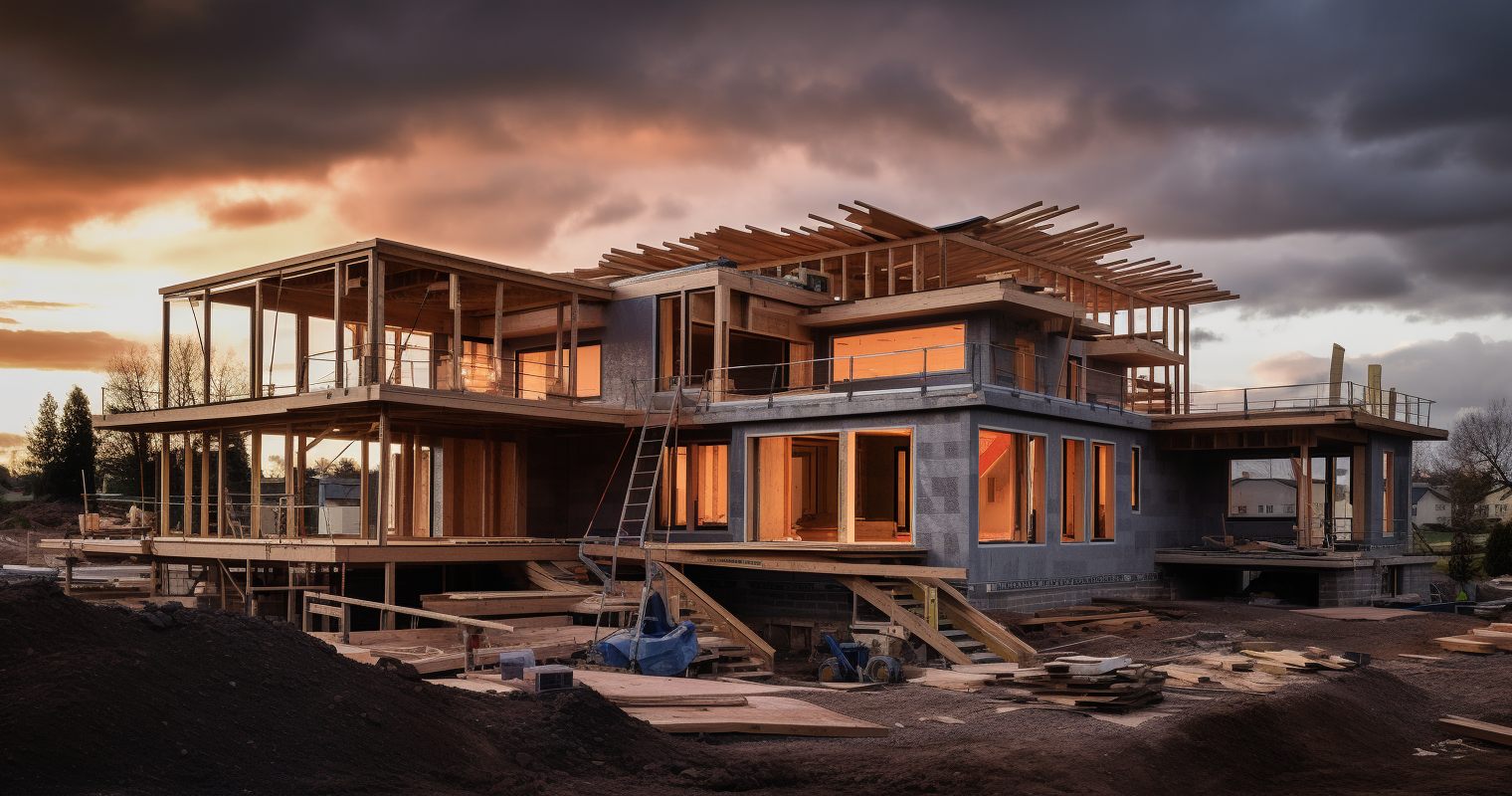
Constructing or renovating property in Hong Kong is a tightly controlled undertaking governed principally by the Buildings Ordinance (Cap. 123) and administered by the Buildings Department. Written approval and formal consent must be obtained before almost any construction activity can legally commence. While overseas nationals face no blanket prohibition on owning property here, they must work through an intricate web of planning, heritage, and building permit requirements — and should engage a locally registered Authorized Person before any project gets underway.
| Item | Details |
|---|---|
| Primary legislation | Buildings Ordinance (Cap. 123), Town Planning Ordinance (Cap. 131) |
| Approval authority | Buildings Department (Building Authority); Town Planning Board for rezoning |
| Plan approval timescale | Approximately 2 months (as of 2024); verify with Buildings Department |
| Planning permission validity | Generally 4 years from grant (as of 2024) |
| Declared monuments (as of Dec 2024) | 136 declared monuments; 900+ graded historic buildings |
| Occupation Permit | Required before any new building may be occupied |
Do you need planning permission to build or renovate a property in Hong Kong?
Every category of building activity — whether construction, repair, demolition, alteration, or addition — requires written approval and consent from the Building Authority before it can proceed. This represents a considerably stricter baseline than many comparable jurisdictions. In places such as the UK or Australia, minor internal alterations are routinely exempt from formal consent requirements; Hong Kong’s default position is that the overwhelming majority of works demand some level of official authorisation.
Minor works are frequently exempt from the standard approval pathway, though they remain subject to control under the Minor Works Control System, which allows such works to be carried out lawfully through streamlined procedures. The Hong Kong SAR Government put this system in place because the full requirements of the Buildings Ordinance are disproportionately demanding for small-scale, lower-risk works. The Building (Minor Works) (Amendment) Regulation 2020, which took effect on 1 September 2020, broadened the scope of the Minor Works Control System to encompass a wider range of small-scale building works.
The Town Planning Board (TPB) holds overall responsibility for statutory planning across Hong Kong. Where a developer seeks to rezone land or expand the area of a plot, an application for planning permission must be made to the Town Planning Board — a subcommittee operating independently within the Planning Department that assesses applications on their merits. Where a proposed new development falls squarely within a use expressly permitted under the applicable statutory town plan, separate TPB permission is not ordinarily required.
The land use zoning applying to any given site or premises is set out in the relevant Outline Zoning Plans and divided into permitted uses on the one hand, and uses that require Town Planning Board permission on the other. Any establishment of a new use, or change to an existing one, must either comply with the permitted land use for that zone or be subject to a formal permission application.
The step-by-step process for a standard new building project is as follows:
- Check the Outline Zoning Plan. Before committing to any purchase or design work, confirm the site’s land use zoning through the Planning Department’s website. Establish whether the intended use is permitted as of right or requires a formal TPB application.
- Appoint an Authorized Person (AP). The Buildings Ordinance requires anyone intending to carry out building works to appoint an Authorized Person — and, where the works demand it, a Registered Structural Engineer (RSE) and a Registered Geotechnical Engineer (RGE) for geotechnical elements — to prepare and submit plans to the Building Authority for approval.
- Submit building plans. A building development project requires the submission of various prescribed plan types, including general building plans, foundation plans, superstructure plans, site formation plans, drainage plans, demolition plans, and excavation and lateral support plans.
- Await plan approval. As of 2024, plan approval takes approximately two months from submission. A centralised processing arrangement is used to ensure all relevant government departments are consulted and their comments consolidated by the Building Authority within prescribed timeframes.
- Obtain consent to commence works. The Building Authority’s consent to begin building works must be secured before any construction activity starts on site.
- Appoint a Registered Contractor. The party commissioning the works is also required to appoint a Registered Contractor to carry out the physical construction.
- Carry out works under supervision. The appointed Authorized Person bears responsibility for supervising the execution of building works and must notify the Building Authority of any deviation from the approved plans or any breach of building regulations.
- Apply for an Occupation Permit (OP). Under the Buildings Ordinance, no new building may be occupied until an Occupation Permit has been issued. The application must be submitted by the AP, RSE, RGE, and Registered Contractor, each of whom must certify that the building has been completed in accordance with the Ordinance and the approved plans and is structurally sound. On receipt of the application, the Buildings Department will conduct an OP inspection and review all required documentation.
Planning permissions granted by the Town Planning Board are generally valid for four years. Unless the permitted development has commenced before the specified expiry date, or an extension of time has been obtained, the permission will lapse. Always verify current fee schedules and precise timescales directly with the Buildings Department and the Planning Department, as these figures are subject to regular revision.
What are the rules around listed buildings, conservation areas, and heritage protection in Hong Kong?
Hong Kong does not employ terminology identical to the UK’s “listed building” or “conservation area” designations, but it operates a robust heritage framework with genuine legal authority. The fundamental distinction lies between Declared Monuments, which enjoy full statutory protection, and Graded Historic Buildings (Grades I, II, and III), which carry administrative recognition that is not always backed by legally enforceable obligations.
The concept of monument protection in Hong Kong was established by the Antiquities and Monuments Ordinance (Cap. 53), enacted in 1976. Under that legislation, places, buildings, sites, and structures of historical or archaeological significance may be recognised as Declared Monuments. Once declared, such buildings are protected against demolition, building works, and alterations, even where those changes are proposed by the landowner.
As of December 2024, Hong Kong has 136 declared monuments in total — 58 on Hong Kong Island, 55 in the New Territories, 14 in Kowloon, and 9 on the Outlying Islands. Declared monuments are legally designated structures receiving the highest tier of protection available. The declaration process requires consultation with the Antiquities Advisory Board, the approval of the Chief Executive of Hong Kong, and publication of a notice in the Hong Kong Government Gazette.
In addition to the monument framework, a grading system was introduced in 1980 to identify other buildings of historical significance that fall short of monument status. By categorising historic buildings into three tiers, the system serves both as a marker of Hong Kong’s architectural heritage and as an incentive for property owners to pursue preservation. The grades are defined as follows:
| Grade | Definition |
|---|---|
| Grade I | Buildings of outstanding merit, which every effort should be made to preserve if possible. |
| Grade II | Buildings of special merit; efforts should be made to selectively preserve them. |
| Grade III | Buildings of some merit; preservation in some form would be desirable and alternative means could be considered if preservation is not practicable. |
Responsibility for the grading of historic buildings and associated heritage matters rests with two organisations: the Antiquities and Monuments Office (AMO) and the Antiquities Advisory Board (AAB). The AMO is the government unit tasked with functions ranging from archival development and research to the organisation of restoration and maintenance works. The AAB draws together specialists in heritage management, architecture, and surveying to advise the government on heritage conservation policy.
The Government undertakes repair and restoration works for declared monuments and, since 2008, has extended its assistance scheme to help owners of privately held graded historic buildings carry out repairs and routine maintenance. Applications are assessed individually, subject to technical review by an inter-departmental vetting panel and to the availability of funding. As a condition of receiving financial assistance, owners must agree to certain obligations — among them allowing reasonable public access to the building.
Before purchasing any property in Hong Kong, check both the Antiquities and Monuments Office website and the Commissioner for Heritage’s Office website to determine whether the building is a Declared Monument or holds a heritage grade. The Central Enforcement and Prosecution Section of the Planning Department is responsible for enforcement and prosecution actions against unauthorised developments. Penalties for non-compliance include fines and mandatory reinstatement of the land; where a developer fails to comply, the Director of Planning may enter the land and take all steps necessary to remove or discontinue the unauthorised development or use.
What permits and licences are required when building or renovating in Hong Kong?
Beyond the central approval and consent from the Building Authority, construction projects in Hong Kong typically require engagement with numerous government departments, each responsible for a distinct aspect of the development. This multi-agency model bears some resemblance to the approaches used in Canada or Australia, where building consent, environmental permits, and utility connections are administered by separate bodies operating in parallel.
The additional permits required depend entirely on the nature of the development and can only be identified on a case-by-case basis. They may include various environmental licences or permits — for example, a road excavation work permit from the Highways Department, and separate permission from the Highways Department to open roads for the installation of cables.
Developers must also liaise closely with agencies such as the Water Supplies Department, Drainage Services Department, Civil Engineering and Development Department, and the Buildings Department in relation to roads and associated drainage infrastructure. Coordinating across all of these bodies simultaneously ranks among the most demanding aspects of construction project management in Hong Kong, and is a central reason why appointing an experienced local AP is so important.
Key permits and approvals to be aware of include:
- Building Authority approval and consent: Under section 14(1) of the Buildings Ordinance (Cap. 123), no building works or street works may commence without the Building Authority’s written approval of documents submitted in accordance with the relevant regulations and commencement of building works as shown in the approved plan.
- Occupation Permit: All newly constructed buildings must obtain an Occupation Permit before they can be occupied. To secure one, the Registered Contractor must provide the Authorized Person with a signed declaration confirming that the building has been constructed in compliance with the Buildings Ordinance and the approved plans. Inspections will be arranged, and the Building Authority will determine whether an OP can be issued.
- Road and excavation permits: These are required from the Highways Department for any works that affect public roads or require road openings. Check current application requirements at the Highways Department website.
- Drainage approvals: Drainage plans must be submitted as part of the building plan package. Applicants must liaise with the Drainage Services Department regarding connection to public drainage services.
- Water supply connections: Contact the Water Supplies Department for connection approval.
- Environmental permits: Where construction carries potential environmental impact, permits may be required under the Environmental Impact Assessment Ordinance. Contact the Environmental Protection Department for guidance.
- Fire safety sign-off: The Fire Services Department must be consulted to ensure compliance with fire safety requirements, particularly for commercial or mixed-use buildings.
The Building (Minor Works) (Amendment) Regulation 2020 came into operation on 1 September 2020, extending the scope of the Minor Works Control System to cover more small-scale building works and offering greater convenience to property owners and the industry alike. For works falling within this system, simplified notification or registration procedures apply rather than full plan submission. Always confirm current fee schedules and timescales with the Buildings Department before starting any project, as these are periodically updated.
How do you find a reliable, trustworthy builder in Hong Kong?
All private building developments in Hong Kong fall under the control of the Buildings Ordinance and its subsidiary legislation. This means that any contractor engaged on a regulated project must hold the status of a Registered Contractor under the Buildings Department’s registration framework. Verifying registration is the single most critical due diligence step you can take before engaging any builder.
Under the Buildings Ordinance (Cap. 123 of the Laws of Hong Kong), both large-scale building works and simpler construction activities are governed by the same set of controls, including requirements to appoint registered professionals to design and oversee the works, and registered contractors to carry them out. This uniformity — unlike the tiered or exemption-heavy systems found in some other jurisdictions — means there is no lawful shortcut to using a contractor who is not on the register.
You can confirm a contractor’s registration status through the Buildings Department’s online register at www.bd.gov.hk. Clients may also ask contractors to produce a valid business registration certificate and financial statements at the tendering stage — a standard practice that provides additional financial due diligence beyond registration alone.
The Construction Industry Council (CIC) is the industry body that oversees workforce training, registration, and professional standards in Hong Kong. Contact details are:
- Website: www.cic.hk
- Address: 38/F, COS Centre, 56 Tsun Yip Street, Kwun Tong, Kowloon, Hong Kong
- Phone: +852 2100 9000
- Email: [email protected]
Practical vetting steps for any prospective contractor include:
- Verify Buildings Department registration: Confirm the contractor appears on the official register before executing any contract.
- Request references: Ask for verifiable references from at least two recent projects of comparable scope and follow up with those clients directly.
- Use written contracts: Ensure all scope of works, payment milestones, timescales, and defects liability provisions are clearly set out in a formal written contract. Every contract should include an adequate mechanism for determining what payments fall due, when they become payable, and a final date for payment. Parties are entitled to payment by instalments, stage payments, or other periodic arrangements; they also hold the right to suspend performance for non-payment.
- Staged payments: Never pay the full contract sum in advance. Structure payments against verified milestones and retain a proportion until the defects liability period has run its course.
- Verify insurance: Before works begin, confirm that the contractor holds valid public liability insurance and employer’s liability insurance.
- Beware of unlicensed subcontracting: Main contractors rarely employ large permanent workforces; instead, they typically subcontract discrete elements of the works to specialist subcontractors. Ensure your contract requires all subcontractors to be appropriately registered and insured.
A common trap for those unfamiliar with Hong Kong is interpreting an unusually low tender price as a sign of efficiency rather than as an indication of corner-cutting on materials or labour quality. Bids that stand well below the market rate should be treated as a warning sign, and any contractor who resists providing a written contract or proof of registration should be avoided without exception.
How do you find a qualified local architect in Hong Kong?
Any person in Hong Kong who is involved in the design, construction, or fit-out of buildings and who uses the title ‘architect’, ‘registered architect’, or ‘RA’ must be registered under the Architects Registration Ordinance (Cap. 408 of the Laws of Hong Kong). Registration is a statutory obligation rather than a voluntary professional designation, which means you can have confidence that anyone using these protected titles meets the required local qualification standard.
Beyond responsibility for the ongoing design of a project, the architect is commonly appointed under many standard forms of building contract as contract administrator. In many cases, the architect also serves as the Authorized Person who bears responsibility for ensuring compliance with planning requirements and building regulations, as well as for supervising and monitoring the execution of works on site.
The regulatory and professional body for architects in Hong Kong is the Hong Kong Institute of Architects (HKIA), which maintains a publicly accessible directory of registered members. Contact details are:
- Website: www.hkia.net
- Address: 5/F, 21 Pak Fuk Road, North Point, Hong Kong
- Phone: +852 2511 6323
- Email: [email protected]
Statutory registration of architects is administered by the Architects Registration Board (ARB):
- Website: www.arb.org.hk
- Address: 16/F, 3 Lockhart Road, Wanchai, Hong Kong
- Phone: +852 2527 8399
- Email: [email protected]
For expats, it is worth seeking an architect with demonstrable experience working alongside international clients and the ability to communicate in your preferred language as well as in Cantonese and Mandarin, which dominate the local industry. Many larger practices in Hong Kong operate multilingually, but this should be confirmed at the outset rather than assumed. Where your project involves a heritage-graded building or a site with a complex planning history, seek specifically an architect with conservation or planning expertise, as these areas constitute a specialist sub-discipline within the profession.
What are the common pitfalls when buying land to build on in Hong Kong?
Purchasing land for development in Hong Kong is considerably more involved than in many other markets, in part because of the city’s distinctive land tenure system — nearly all land in Hong Kong is government-owned and held under leasehold rather than freehold. This represents a fundamental departure from the freehold land ownership prevalent in countries such as the US, Canada, or Australia, and has profound implications for how land is acquired, financed, and developed.
Leasehold tenure and government grants: Property owners in Hong Kong must comply with the covenants contained in their Government Grants. Illegal structures place an owner in breach of those covenants — the most common of which requires that any building erected or to be erected on the lot must comply in all respects with the Buildings Ordinance. Review Government Grant conditions thoroughly before purchase, as they can impose use restrictions that go beyond anything the Outline Zoning Plan alone might suggest.
Zoning and land-use verification: Strategic planning and zoning in Hong Kong is governed by a combination of law and policy, anchored in the Town Planning Ordinance (Cap. 131 of the Laws of Hong Kong) and its subsidiary regulations, and supplemented by territorial development strategies and various statutory and departmental plans at the district or local level. Always obtain a copy of the relevant Outline Zoning Plan from the Planning Department before exchanging contracts, and establish precisely what uses and densities are permitted on the specific lot.
Title and boundary issues: Engage a qualified Hong Kong solicitor to conduct thorough due diligence on title deeds, land boundaries, and ownership history. The Land Registry holds records of all registered instruments affecting land in Hong Kong and should be searched before any purchase commitment is made.
Lease conditions and development submissions: The most common categories of approval required under leases include Master Layout Plans, Design and Disposition, Car Parking Layout, Landscape Plans, and Tree Preservation and Removal Proposals. The specific approvals required vary considerably from lease to lease, and you must review the individual lease conditions applicable to any lot under consideration.
New Territories considerations: Buildings in the New Territories, the more rural expanse of Hong Kong, are subject to the Buildings Ordinance (Application to the New Territories) Ordinance (Cap. 121 of the Laws of Hong Kong). More stringent statutory specifications govern the construction of Small Houses, which are built under the Small House Policy — a concession allowing male indigenous villagers aged at least 18 in the New Territories to build a house on Government land upon payment of a concessionary premium, or on their own land. This policy does not extend to non-indigenous persons, and land in the New Territories can carry specific use restrictions that make development particularly challenging.
Unauthorized building works (UBWs): Unauthorized building works have been a persistent issue across Hong Kong. Works carried out without prior approval from the Building Authority can be ordered demolished at the developer’s cost and may give rise to a defective title on the affected land. Always commission a building survey or inspection to identify any pre-existing UBWs before completing a purchase, as you may otherwise inherit responsibility for their removal.
Utility availability: In rural areas and on outlying islands, water mains, electricity connections, and sewerage infrastructure may not be readily accessible or may require significant capital investment to connect. Confirm availability and estimated connection costs with the relevant utility providers before committing to a purchase.
What are the rules around foreign ownership and financing for construction projects in Hong Kong?
Hong Kong maintains one of the most accessible property markets in Asia for overseas nationals. There are no general prohibitions on foreign individuals or companies acquiring land or property in Hong Kong, and no requirement to partner with a local entity or establish a local joint venture for private residential construction. This stands in marked contrast to several other regional jurisdictions, where foreign land ownership is restricted or requires prior government approval.
Nevertheless, foreign buyers should be aware of several important considerations:
Stamp Duty: Non-permanent residents and companies — regardless of where they are incorporated — are subject to the Buyer’s Stamp Duty (BSD) in addition to the standard Ad Valorem Stamp Duty when acquiring residential property. As of 2024, the BSD rate and the combined stamp duty rates applicable to non-permanent residents have been subject to policy adjustments. Always check the current rates with the Inland Revenue Department before exchanging contracts, as these figures change with government policy.
Mortgage and construction financing: Foreign nationals can generally access mortgage financing from Hong Kong banks, though lending conditions may differ from those available to permanent residents. Lenders typically require a higher deposit from non-permanent residents, and loan-to-value ratios for land purchases or construction projects are often more conservative than for completed residential properties. Specialist construction loans are available but are primarily offered by major banks to developers with an established track record. Contact the Hong Kong Monetary Authority (HKMA) for guidance on the regulatory framework governing mortgage lending.
Corporate ownership structures: Many overseas investors choose to acquire Hong Kong property through a locally incorporated company, which can offer administrative and succession planning advantages. Corporate ownership carries its own stamp duty implications, however, and does not exempt the buyer from compliance with planning or building regulations. Seek advice from a Hong Kong solicitor before settling on the most appropriate ownership structure for your circumstances.
Land Registry searches: The Land Registry of Hong Kong maintains a public register of all land and property transactions and encumbrances. Any prospective purchaser should carry out a thorough land search before committing to a purchase. Contact details:
- Website: www.landreg.gov.hk
- Address: Queensway Government Offices, Low Block, Ground Floor, 66 Queensway, Hong Kong
- Phone: +852 2867 2873
Investment facilitation: Expats considering larger-scale development projects may seek guidance from InvestHK, the government body responsible for supporting inward investment in Hong Kong. InvestHK provides advisory services and can connect investors with relevant regulatory authorities.
What official sources should you consult when planning to build or renovate in Hong Kong?
Hong Kong’s regulatory environment for construction spans multiple government departments, each maintaining its own online resources and guidance. The table below sets out the key authorities and their respective roles:
| Authority | Role | Website |
|---|---|---|
| Buildings Department (BD) | Approval and consent for all building works; Registered Contractors and APs register; Occupation Permits | www.bd.gov.hk |
| Planning Department | Outline Zoning Plans; Town Planning Board applications; planning enforcement | www.pland.gov.hk |
| Lands Department (LandsD) | Land lease conditions; development submissions under lease; land administration | www.landsd.gov.hk |
| Land Registry | Title deeds; land searches; registered instruments | www.landreg.gov.hk |
| Antiquities and Monuments Office (AMO) | Declared Monuments register; graded historic buildings database | www.amo.gov.hk |
| Commissioner for Heritage’s Office | Heritage conservation policy; financial assistance for graded buildings | www.heritage.gov.hk |
| Environmental Protection Department (EPD) | Environmental permits; Environmental Impact Assessment | www.epd.gov.hk |
| Water Supplies Department (WSD) | Water connection approvals | www.wsd.gov.hk |
| Drainage Services Department | Drainage connection and approval | www.dsd.gov.hk |
| Highways Department | Road excavation and opening permits | www.hyd.gov.hk |
| Architects Registration Board (ARB) | Statutory register of architects authorised to practise in Hong Kong | www.arb.org.hk |
| Construction Industry Council (CIC) | Contractor registration; industry standards and training | www.cic.hk |
| Inland Revenue Department (IRD) | Stamp Duty rates and calculations for property transactions | www.ird.gov.hk |
| InvestHK | Foreign investment facilitation and advisory | www.investhk.gov.hk |
Regulations, fees, and procedures in Hong Kong are subject to frequent revision — particularly in the wake of government policy updates and budget announcements. Always consult official sources directly for the most current requirements before incurring any project expenditure or entering into contractual obligations. If in doubt, engage a locally qualified solicitor, architect, or surveyor who is equipped to navigate these systems on your behalf.
Frequently asked questions: building and renovating in Hong Kong
How much does it typically cost to build a house in Hong Kong?
Building costs in Hong Kong rank among the most expensive anywhere in the world, driven by land scarcity, the need to import many construction materials, and elevated labour costs. Broad estimates for private residential construction typically range from HK$15,000 to well over HK$30,000 per square metre, depending on specification, location, and site conditions — though these figures shift considerably over time. Always commission a detailed cost plan from a qualified Quantity Surveyor before setting a budget, and check current benchmarks with the Hong Kong Institute of Surveyors. Professional fees, site formation costs, and stamp duty must all be factored in separately on top of the core construction budget.
How long does a typical construction project take from planning to completion in Hong Kong?
Project durations vary considerably according to type and complexity. Plan approval alone takes approximately two months from the date of submission as of 2024. A straightforward residential renovation might run from six to twelve months between design commencement and practical completion, while a new-build house could take anywhere from two to four years or more, accounting for land acquisition, planning, construction, and the occupation permit process. Projects involving heritage considerations or Town Planning Board applications will generally take longer, given the additional consultation and approval stages involved.
What happens if I carry out building works without approval in Hong Kong?
The consequences of proceeding without approval are serious. Financial penalties apply, and the developer may be required to reinstate the land to its previous condition. Where a developer fails to comply, the Director of Planning has the authority to enter the land and take all measures deemed necessary to remove or discontinue the unauthorised development or use, including taking possession of, removing, detaining, and disposing of property found on the land. Unauthorised building works also risk creating a defective title, which can make the property extremely difficult to sell or mortgage. Compliance from the outset is invariably the more prudent and cost-effective course.
Are overseas building qualifications or standards (such as UK or US standards) recognised in Hong Kong?
Hong Kong operates its own distinct regulatory framework under the Buildings Ordinance, and all construction must meet local codes and practice notes regardless of any overseas credentials held by the designer or contractor. To practise legally in Hong Kong, architects must be registered under the Architects Registration Ordinance (Cap. 408). Overseas-qualified architects may apply to the Architects Registration Board for registration but must satisfy local requirements to do so. Overseas building standards — such as the UK Building Regulations or the US International Building Code — cannot be substituted for Hong Kong’s Buildings Ordinance requirements, though your appointed AP will manage that translation process as part of their professional remit.
Can I manage a construction project myself without appointing an Authorized Person?
No. Under the Buildings Ordinance, any person intending to carry out building works is legally required to appoint an Authorized Person — and where the works demand it, a Registered Structural Engineer and a Registered Geotechnical Engineer — to prepare and submit plans for the Buildings Department’s approval. This is a mandatory legal requirement for most regulated building works, not an optional convenience. Attempting to manage a project without an AP for works that require one is unlawful, and the Building Authority will refuse to accept plan submissions or grant consent to commence works.
What can I do if I have a dispute with a contractor in Hong Kong?
Hong Kong provides well-developed mechanisms for resolving construction disputes. Many standard construction contracts include provisions for mediation or arbitration. The Hong Kong International Arbitration Centre (HKIAC) offers arbitration services tailored to construction matters. For lower-value disputes, the Small Claims Tribunal can hear claims up to HK$75,000. Where a registered contractor is found to have behaved improperly, a formal complaint may be lodged with the Buildings Department, which holds powers to revoke or suspend that contractor’s registration. Having a comprehensive written contract in place before any works begin is essential — verbal agreements are extremely difficult to enforce through any of these channels.
Do I need to worry about language barriers when working with architects and builders in Hong Kong?
Cantonese is the dominant working language on the majority of Hong Kong construction sites, and many contractors operate primarily in Chinese. That said, a significant number of architectural firms — particularly those with an international client base — work fluently in both English and Chinese, and official documents submitted to the Buildings Department may be prepared in either language. Confirm your prospective architect’s or contractor’s language capabilities at the first meeting rather than assuming them. For substantial project communications, consider requesting bilingual documentation to reduce the risk of misunderstandings over scope or specifications.
Is it safe to buy a property with existing unauthorized building works already in place?
Unauthorized building works are by definition in breach of the Buildings Ordinance and, by extension, in breach of the Government Grant. Land covenants are particularly significant given their capacity to bind successors in title — courts have shown a consistent reluctance to treat these covenants as spent once an initial breach has occurred, meaning that a subsequent purchaser may inherit full liability. In practice, some older buildings with minor UBWs are tolerated by enforcement authorities, but buyers should obtain an independent building survey and take legal advice before proceeding with any purchase. Clarify with your solicitor precisely what liability you would assume and whether the vendor is obliged to remedy identified UBWs before completion.