
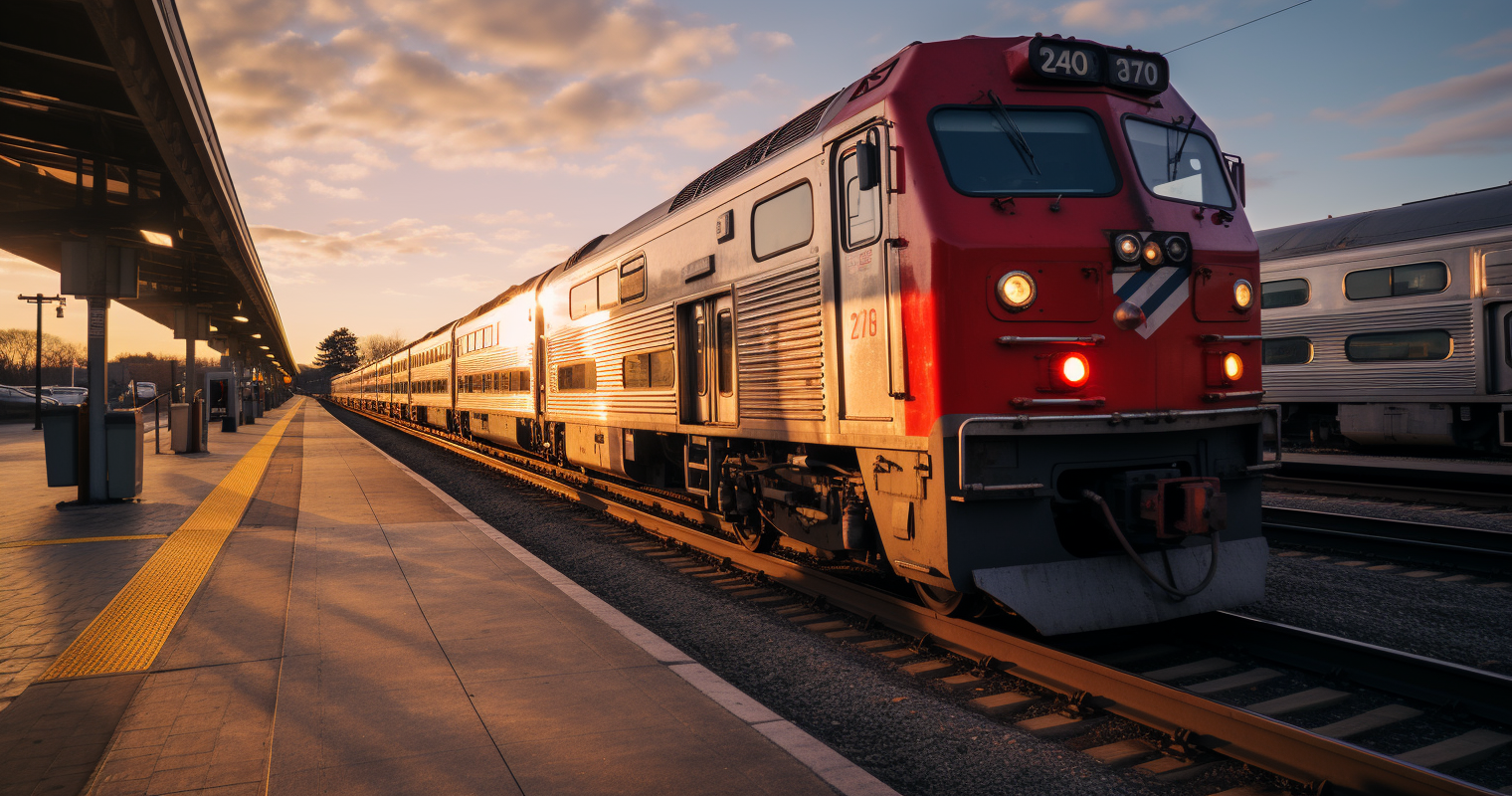
Egypt’s national railway, run by Egyptian National Railways (ENR), ranks among the oldest and most intensively used rail systems on the African continent, transporting well over a million travellers each day along routes that run primarily through the Nile Valley and Delta. Though fares are genuinely cheap and coverage reaches much of the population, the network is in the midst of far-reaching modernisation — a work in progress that offers real utility for residents while still presenting familiar challenges around punctuality and safety.
| Item | Details |
|---|---|
| National rail operator | Egyptian National Railways (ENR), managed by the Egyptian Railway Authority (ERA) |
| Network size | Approximately 5,085–10,000 km (varying by source, including suburban lines); concentrated in the Nile Delta and Nile Valley |
| Daily passengers (ENR) | Approximately 1.4 million weekday passengers (as of 2023) |
| Cairo Metro fare (as of 2025) | EGP 8 (up to 9 stops) — EGP 20 (more than 23 stops); check official sources for current fares |
| Main ticketing platform | ENR online booking portal and ENR mobile app (primarily for Egyptian nationals as of 2026); in-person at station for others |
| High-speed rail | Under construction; three-line Electric Express Train (EET) network of ~2,000 km planned, using Siemens Velaro trains |
What is the overall standard of rail travel in Egypt?
Egyptian National Railways (ENR) is the country’s national rail operator, administered by the parastatal Egyptian Railway Authority (ERA). It is a network of enormous reach and social significance — one that bears the visible signs of prolonged underinvestment but is now the focus of some of the most ambitious transport renewal efforts in the region.
Rail is a cornerstone of Egyptian mobility, shifting an average of 1.4 million passengers on each weekday. Prior to the pandemic, the network logged roughly 270 million journeys annually, placing it among the world’s busiest corridors in terms of traffic density. Unlike high-performing counterparts in Japan, Germany, or Switzerland — where punctuality and safety are closely managed — Egypt’s network has long grappled with both of these issues.
Approximately sixty percent of the 10,000-kilometre system is concentrated in the Delta region and along the Nile, bringing rail access to the bulk of Egypt’s population, including many medium-sized towns. The network fans outward from Cairo, making it genuinely practical for commuters and intercity travellers within the Nile corridor, though coverage in other regions remains thin.
Despite the network’s central place in Egyptian transport, two major shortcomings have persisted: passenger safety and freight capacity. Ageing infrastructure and outdated signalling have historically been behind frequent accidents. In response, the Egyptian government committed approximately LE142 billion ($4.6 billion) between 2014 and 2024 to overhaul railway infrastructure — covering new railcars, locomotive acquisitions, upgraded signalling, and station renovations.
In 2021, Egypt concluded a $4.5 billion agreement with Siemens Mobility, Orascom Construction, and Arab Contractors to build and maintain a 660 km high-speed electrified corridor connecting Ain Sokhna, Mersa Matruh, and Alexandria — a project sometimes called the “Green Line” or “Suez Canal on Rails,” intended to serve both passengers and freight. Siemens will provide Velaro high-speed trains, Desiro regional sets, and Vectron freight locomotives. The broader ambition is a three-line network spanning nearly 2,000 km, connecting governorates, major economic hubs, and cities across the country. This high-speed network remains under construction; Egypt has no operational high-speed rail service as of the time of writing.
For expats, the essential point is straightforward: rail is inexpensive and links the areas where most residents live and travel, but it rewards those who set realistic expectations around comfort and punctuality — especially on older rolling stock and regional routes. The premium intercity trains described below offer a meaningfully better experience than the general network.
What classes of rail travel are available in Egypt, and what are the differences between them?
The class structure on Egyptian trains varies considerably depending on the type of service and route in question. Knowing which category of train you are boarding is just as important as knowing which class you are seated in.
Air-conditioned passenger trains generally operate with first and second class, while non-air-conditioned services carry second and third class passengers. The quality of travel therefore depends heavily on which service type you choose before the class distinction even comes into play.
The finest intercity trains — listed as “Special Service OD” on the ENR website and commonly referred to as “VIP trains” on apps and third-party platforms, with “Special” printed on the ticket itself — run fully air-conditioned coaches in first class (AC1) and second class (AC2), and include a café counter. All passengers receive a specific allocated seat, and a refreshments trolley circulates with tea, coffee, and cold drinks. These trains operate on the Cairo–Alexandria and Cairo–Luxor–Aswan corridors and represent the best that ENR currently offers.
Among the most notable additions to the top tier are Talgo luxury trains, which operate between Cairo and Alexandria, bringing modern amenities and the smooth ride of Spanish-built tilting technology. These are among the most contemporary trains running on the ENR network and stand clearly apart from older rolling stock.
Express services occupy a lower tier: these are long-distance trains using non-air-conditioned coaches, running at reduced speeds and calling at mid-sized and larger cities on routes that overlap with intercity services. Express trains also reach areas within the Nile Delta, including Cairo–Damietta, Cairo–Port Said, Cairo–Suez, and Alexandria–Damietta.
The Alexandria–Cairo–Luxor–Aswan route is served each day in both directions by the air-conditioned sleeper trains of Abela Egypt. This is an especially popular option for travellers wanting to cover the distance between Cairo and Luxor while sleeping, with cabins available in single and double configurations — a well-established choice for overnight journeys.
Commuter trains and third-class carriages on non-air-conditioned services are priced deliberately low as a social measure, keeping rail accessible to lower-income passengers. However, third-class carriages can become extremely crowded, particularly during peak hours and public holidays, and are generally best avoided on long journeys if an alternative exists.
In rough order from most to least comfortable: Talgo and Special trains → Abela sleeper services → air-conditioned intercity (AC1/AC2) → ordinary intercity with first and second class → non-AC express services → local and commuter trains with third class. The price gap between the premium tier and ordinary services is noticeable in Egyptian terms, but the top-tier fares remain modest by international comparison. Always verify the latest fares via the official ENR website before travelling.
Where can you find rail timetables and ticket prices in Egypt?
Locating accurate, up-to-date timetable and fare information for Egyptian trains means knowing which sources to consult — and keeping in mind that some platforms are not always fully current.
The primary official reference is the Egyptian National Railways website (enr.gov.eg). ENR relaunched the site in January 2023 with a redesigned interface. As of 2026, online ticket purchasing through this platform is stated to be available to Egyptian nationals only, with booking for foreign passport holders described as still under development. You can, however, use the website to look up departure times, which will be more reliable than most other sources.
Tickets can be purchased through the dedicated booking portal at obs.enr.gov.eg. For timetable enquiries, the main ENR site is the most authoritative starting point, though cross-checking with the station ticket office is sensible for the most current schedules, since these can shift at relatively short notice.
Third-party platforms including Egytrains.com and international aggregators such as Bookaway can assist with journey planning, particularly for non-Egyptian residents who encounter barriers using the official system. That said, always verify fares and departure times against ENR’s own sources before setting off, as third-party data can fall behind official schedule changes.
For sleeper services, Abela Egypt operates the Alexandria–Cairo–Luxor–Aswan route with its own separate booking arrangements and pricing. Consult Abela Egypt directly for sleeper-specific details. Note that foreigner pricing on sleeper services may differ from domestic rates, so confirming costs through official channels is advisable.
During Eid and other major holidays, high passenger demand can create a shortage of available rolling stock and prompt timetable adjustments. Checking schedules closer to your intended travel date is always prudent during these periods.
How do you buy rail tickets in Egypt, and can you book in advance?
There are several routes to purchasing an ENR ticket, and the best approach will depend on your residency status, the route you are travelling, and how far ahead you are planning.
- Station ticket offices: The most universally reliable option for everyone. You can purchase directly from the counter at your departure station. Major stations — Cairo Ramsis, Alexandria Misr, and Luxor — have dedicated booking windows. Cairo Ramsis also maintains a separate foreigners’ reservation office specifically for non-Egyptian passport holders.
- Self-service ticket vending machines (TVMs): Available at major stations and convenient for straightforward journeys, though they may not cover every service or class.
- ENR official website: To buy online, visit the official railway authority website, register an account, enter your departure and arrival stations and travel date, select your seat, and pay by bank card. Your ticket can then be printed or stored digitally on a smartphone. As of 2026, this service is restricted to Egyptian nationals. Residents holding Egyptian national ID numbers will find the process most straightforward.
- ENR mobile app: The official ENR app is available for both iPhone and Android and can be used for ticket purchases. As of 2026, it is primarily designed for Egyptian users and does not function reliably for non-Egyptians when it comes to purchasing. It remains a useful tool for checking train times and availability even if you need to buy in person.
- Third-party booking platforms: International aggregators such as Bookaway allow foreign passport holders to book many intercity ENR services. Booking fees may apply. Always save or print your confirmation before you travel.
- Travel agents: Local agencies in Cairo and other major cities can arrange train bookings, including sleeper services, and are particularly helpful for complex itineraries.
Advance booking is strongly recommended for high-demand routes such as Cairo–Alexandria and Cairo–Luxor, particularly on weekends, public holidays, and during Eid. Modifications and cancellations are possible subject to ENR’s conditions — review the terms on the official website or ask at the station for details on fees and deadlines. In most cases, missing a train means forfeiting the ticket’s value.
For booking support and queries, ENR can be contacted directly via the ticketing support email listed on the booking portal: [email protected]. ENR’s head office is at 6 Ramsis Square, Cairo, and Cairo Ramsis Station is the natural first point of call for most long-distance rail enquiries in the capital.
What types of rail tickets are available in Egypt, and are there discount schemes?
ENR’s ticketing structure is relatively uncomplicated compared to the multi-layered fare systems common in European rail networks. The focus is on single-journey tickets with reserved seating on intercity services.
The principal ticket types are:
- Single-journey reserved seat tickets: The standard option for all intercity travel. On premium “Special” services, every passenger is assigned a specific reserved seat, included within the ticket price.
- Sleeper cabin tickets: Available on Abela Egypt’s overnight services along the Cairo–Luxor–Aswan route, in single or double cabin configurations. These are priced independently from standard ENR fares and warrant early booking.
- Commuter and local train tickets: Non-reserved, lower-cost tickets for ordinary and express services, particularly on shorter journeys within the Nile Delta.
Egypt does not have a national railcard or multi-journey pass comparable to those offered in some European countries — there is no direct equivalent to a British railcard or a German Deutschlandticket. Multi-journey or unlimited travel passes are not a current feature of the ENR offering.
Discount arrangements that do exist include:
- Student discounts: Reduced fares are available to students presenting valid identification. The current discount rate is applied at the point of purchase — enquire at the station ticket office for the latest details.
- Low-cost third-class fares: Third-class and commuter train fares are kept deliberately affordable as a social measure, ensuring the network remains accessible to lower-income travellers.
- Children’s fares: Reduced pricing applies for children; specific age thresholds and discount levels should be confirmed at the ticket office or via the ENR website, as these are subject to revision.
On foreigner pricing: ENR applies a separate fare structure for non-Egyptian passengers on certain services, particularly premium intercity routes. As a result, prices displayed on domestic booking platforms may not reflect what a foreign passport holder will actually pay. As of 2025–2026, the most reliable approach is to confirm current foreigner fares in person at the foreigners’ reservation office at Cairo Ramsis, or through a reputable booking agent. Always check the most up-to-date figures via the official ENR website, as fares are revised periodically.
How accessible is the rail network in Egypt for disabled passengers?
Accessibility across Egypt’s rail system is inconsistent, and it is important for residents with mobility needs or disabilities to have clear expectations before travelling. Provision on the main-line ENR network differs considerably from that on the newer urban transit systems.
On the intercity ENR network, step-free access, tactile paving, and designated wheelchair boarding facilities remain limited at most stations, particularly at older stops serving smaller towns and cities. Boarding typically requires stepping up or down, and there is no widespread staff-assisted boarding scheme akin to programmes such as the UK’s Passenger Assist or Germany’s DB Regio accessibility service. Passengers with significant mobility needs are advised to plan journeys with great care and, where possible, travel accompanied.
Newer rolling stock delivered through ENR’s modernisation programme has improved the quality of onboard facilities. The latest coach order includes air-conditioned first-class, second-class, and buffet cars built to more contemporary specifications, though achieving step-free boarding consistently across the whole network remains an ongoing challenge.
The picture is more encouraging on Cairo’s newer metro infrastructure. Particularly on Line 3, passengers will find lifts, ramps, and tactile paving to assist elderly travellers and those with disabilities. Lines 1 and 2, however, predate modern accessibility standards and offer considerably more limited provision.
The 22 trains of the Light Rail Transit (LRT) system linking Cairo with the New Administrative Capital include seating reserved for passengers with special needs, reflecting a more inclusive design philosophy that characterises Egypt’s newer transit projects.
The World Bank is actively supporting ENR in rethinking station and level crossing design with a focus on improving safety, security, and accessibility based on international best practice. This signals a positive direction for the medium term, but residents with accessibility requirements should currently plan on the basis of existing provision, which varies substantially by station and route.
For specific accessibility queries, contact ENR directly at 6 Ramsis Square, Cairo or via [email protected], and discuss your journey requirements ahead of time.
Are there metro or urban rail systems in Egypt’s cities?
Cairo possesses by far the most extensive urban rail network in Egypt, encompassing a metro, a Light Rail Transit system, and a monorail. No other Egyptian city currently operates a full metro network.
Cairo Metro
The Cairo Metro holds the distinction of being the first and busiest metro network in Africa, serving as a daily lifeline for vast numbers of the capital’s commuters. As of May 2024, the system comprises 84 stations — of which five are interchange stations — across a total route length of 106.8 kilometres, divided into three operational lines.
Phase 3B, from Kit Kat station to Rod El-Farag Corridor station, opened in January 2024, adding six stations and 6.6 kilometres to the network. Phase 3C, from Kit Kat to Cairo University, followed on 15 May 2024. Construction of Line 4 commenced in 2024 with a projected completion date of 2028.
Metro fares are calculated by distance. As of 2025, a ticket costs EGP 8 for up to 9 stops, EGP 10 for up to 16 stops, EGP 15 for up to 23 stops, and EGP 20 for journeys beyond 23 stops. Always consult the National Authority for Tunnels website (nat.gov.eg) for the most current fares, as these are subject to periodic revision. Two carriages in the middle of each train have been designated exclusively for women since 1989.
Smart cards are available for frequent travellers and offer better value than purchasing individual paper tickets each time. The metro runs from approximately 05:30 to midnight, with shorter operating hours on Fridays and during religious holidays.
Light Rail Transit (LRT)
Egypt’s Light Rail Transit system is designed to link Cairo with the New Administrative Capital, serving 19 stations along its route. The line originates at Adly Mansour station in Al-Salam and passes through stops including Obour, Mostaqbal, Al-Shorouk, New Heliopolis, Badr, Al-Roubiki, and the City of Arts and Culture. Functioning as a modern, electrified tram system, the LRT is faster and lighter than conventional rail, and its use of electricity rather than fuel makes it a more environmentally sustainable option.
Initial LRT fares announced in 2022 ranged from EGP 15 to EGP 35 depending on distance travelled. Check the National Authority for Tunnels for the most current pricing, as fares have undergone review since launch.
Cairo Monorail
A monorail line provides vital connectivity to Egypt’s New Administrative Capital and connects with Metro Line 3 at Stadium Station, enabling smooth transfers between the two systems. The West Nile Line runs 42 kilometres, joining 6th of October City with Giza via 12 stations. Operating on elevated tracks well above street-level congestion, the monorail offers air-conditioned carriages and faster journey times between outer suburbs and central Cairo.
The metro, LRT, and monorail systems are all operated or overseen by the National Authority for Tunnels (NAT), which is the appropriate point of contact for urban rail information and enquiries across Greater Cairo.
What should expats know about using the rail network day-to-day in Egypt?
Everyday train travel in Egypt has its own rhythms and practical realities, and being aware of these in advance makes for a far smoother experience than arriving at Cairo Ramsis with a large suitcase and a departure in twenty minutes.
Stations and finding your way: Cairo’s principal terminus is Ramsis — also known as Cairo Station or Masr Station — situated at Ramsis Square in central Cairo and directly accessible via the metro at Al-Shohadaa station. Significant intercity services also operate from Giza station. Signage at major hubs is typically displayed in both Arabic and English, which is a real help for orientation. Smaller regional stations may only display Arabic, so having the Arabic spelling of your destination saved on your phone is a sensible precaution.
On-board announcements: Announcements during intercity journeys are generally made in Arabic only, though some premium services and newer rolling stock may include English as well. On the Cairo Metro, station names and announcements on Lines 1–3 are provided in both Arabic and English, making the metro considerably more manageable for newly arrived residents.
Seat reservations: All premium and intercity services assign specific reserved seats — examine your ticket carefully for the carriage and seat number before boarding, as trains can be long and carriages are not always numbered in an obvious sequence. On local and ordinary services, seating is unreserved.
Luggage: ENR does not enforce formal luggage size or weight restrictions at station gates in the way some European high-speed networks do. That said, overhead storage is limited on older carriages, and bulky items are difficult to manoeuvre in busy trains. Travelling with manageable bags is strongly advisable, especially on crowded routes.
Punctuality and timing: Major holiday periods such as Eid bring very high passenger volumes, and a shortage of available rolling stock can result in delays or altered services. More broadly, delays are a routine feature of the network, and building buffer time into any journey plan is wise. Unlike rail cultures in Japan or Switzerland where schedules are treated with near-ceremonial precision, Egyptian trains are best planned around with flexibility in mind, particularly when making connections.
Social norms on board: Train travel in Egypt is an inherently social affair. Carriages can be animated, and fellow passengers are typically warm and welcoming to visitors. It is considered polite to offer your seat to elderly passengers when the train is crowded. Women travelling alone often find the designated women’s carriages — available on the Cairo Metro and on some long-distance services — more comfortable. Eating and drinking on board is entirely normal, and vendors frequently board at station stops selling snacks, bottled water, and tea.
Payment: Tickets must currently be purchased with cash or by card at station offices, or through the online booking system. On the Cairo Metro, purchasing individual journey tickets or topping up a smart card is currently a cash transaction, though digital payment options have been planned. Always carry small-denomination Egyptian pounds when using public transport.
Apps and digital tools: Even when the ENR app does not support ticket purchasing for your nationality, it remains a useful tool for checking departure times. For the Cairo Metro, the NAT website and various third-party transit apps offer reliable route planning assistance.
Frequently asked questions about rail travel in Egypt
Is it safe to travel by train in Egypt?
Egypt’s rail network carries an exceptionally large volume of passengers, but ageing signalling systems and infrastructure have historically been linked to accidents. Substantial investment is being directed at remedying this, including a $440 million World Bank loan focused on improving safety and service quality along the heavily used Alexandria–Cairo–Nag Hammadi corridor. The premium intercity services on major routes are generally considered both safe and dependable. As with any railway system, unforeseen incidents can happen, and keeping up with current conditions before travelling is always sensible.
Can non-Egyptian residents book train tickets online?
As of 2026, the ENR website states that online booking is restricted to Egyptian nationals, with an online booking facility for foreign passport holders still described as under development. The website remains useful for checking train times, but non-Egyptians will generally need to purchase tickets in person at the station or through a third-party platform such as Bookaway.
What is the best train for travelling between Cairo and Alexandria?
The most comfortable choice is a Special Service (VIP/OD) or Talgo train. These services are fully air-conditioned with reserved seating and a café counter on board. The Talgo luxury trains in particular offer modern amenities and the advantage of a smooth, tilting-rail ride. The fastest services cover the journey in approximately 2–2.5 hours. Booking ahead is strongly recommended, especially at weekends and over public holidays.
How do I travel by train from Cairo to Luxor or Aswan?
There are both daytime and overnight options for this corridor. The Alexandria–Cairo–Luxor–Aswan route is served daily in both directions by the air-conditioned sleeper trains of Abela Egypt, making the overnight leg from Cairo to Luxor particularly popular. Daytime Special Service trains also operate on this route. The trip from Cairo to Luxor takes roughly 10–11 hours on faster services; Cairo to Aswan is around 13–15 hours.
Does Cairo have an underground metro, and how do I use it?
As of May 2024, the Cairo Metro spans 84 stations and 106.8 kilometres across three operational lines. Purchase a single-journey token or obtain a smart card at the station, tap in and out at the barriers, and note that the two central carriages of every train are reserved for women. As of 2025, fares range from EGP 8 for up to 9 stops to EGP 20 for journeys exceeding 23 stops — always check the NAT website for the latest pricing.
Is there a student or senior discount available on Egyptian trains?
Student discounts are available to those presenting valid student identification and are applied at the time of purchase at the ticket office. Third-class and commuter fares are deliberately kept low as a social measure, keeping rail broadly affordable. There is no national railcard scheme equivalent to those found in some European countries. Confirm current discount rates at your station or via the ENR website, as these may change.
What is the Light Rail Transit (LRT) in Cairo and who is it for?
Egypt’s Light Rail Transit links Cairo with the New Administrative Capital through 19 stations, starting at Adly Mansour station in Al-Salam and passing through stops such as Obour, New Heliopolis, and Badr. Its primary purpose is to serve commuters travelling to the New Administrative Capital — in particular government employees and residents of Cairo’s eastern new towns. Running entirely on electricity, it offers a cleaner and more sustainable form of mass transit compared to fuel-dependent alternatives.
When will Egypt’s high-speed rail network open?
Egypt does not yet have any operational high-speed rail service at the time of writing. A consortium led by Siemens was awarded a $4.5 billion contract to construct the first 660 km line between Ain Sokhna and Marsa Matruh and Alexandria, with a target completion date of 2027. The full three-line network covering approximately 2,000 km is a longer-term undertaking. The Egyptian Ministry of Transport and ENR are the best sources for the latest updates as construction progresses.