

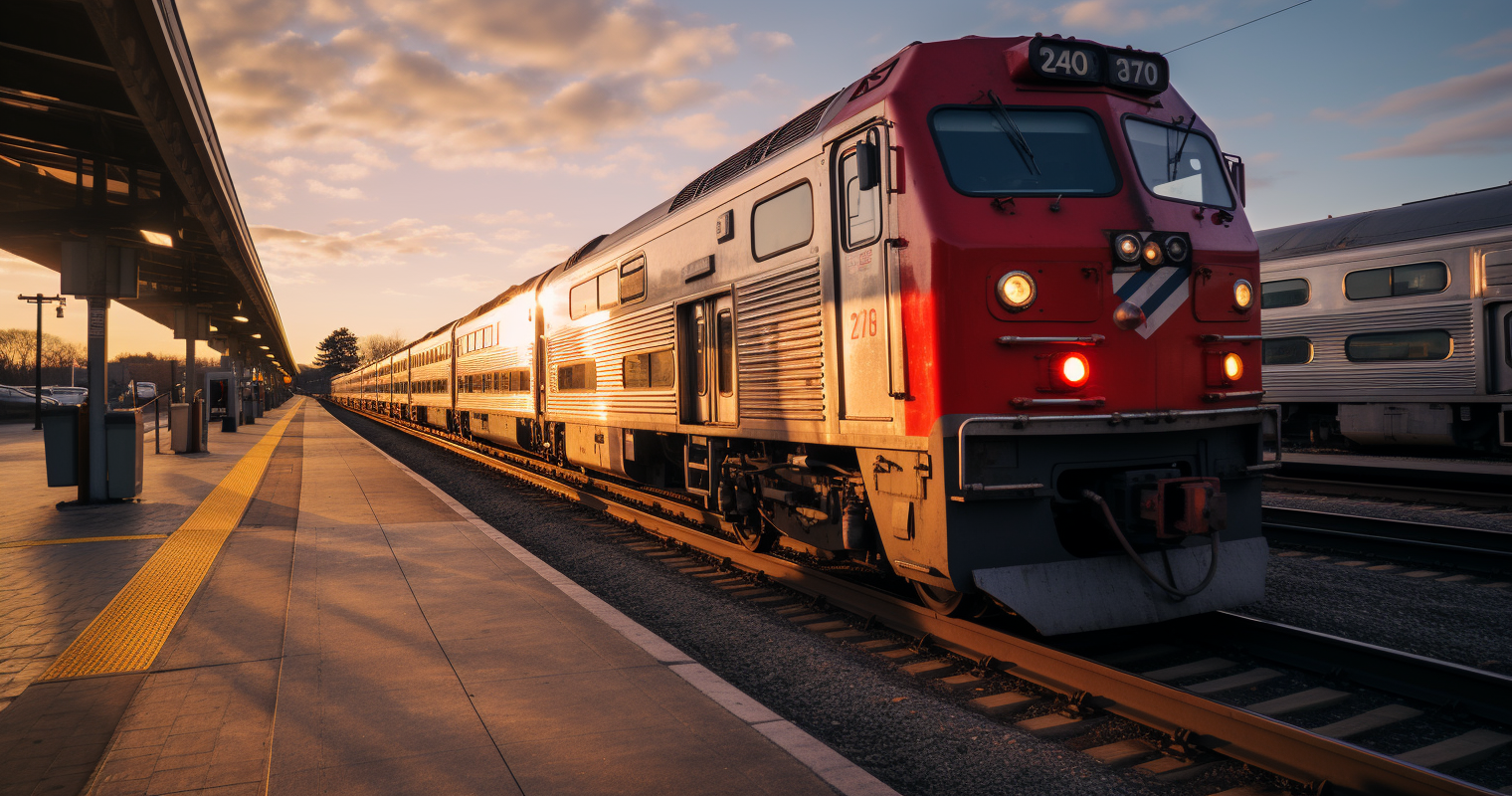
Russia’s railway network, run almost exclusively by the state-owned Russian Railways (RZD), ranks among the most expansive on the planet, covering more than 85,000 km and linking cities spread across eleven time zones. For expats, it provides an indispensable, cost-effective, and frequently impressive mode of travel — from the swift Sapsan high-speed service to time-honoured overnight sleepers — though quality differs depending on the route, carriage class, and train type, and the network contends with ongoing operational challenges.
| Item | Details |
|---|---|
| Network size (as of 2024) | 85,500 km — the world’s third-longest rail network |
| Primary operator | Russian Railways (RZD) — fully state-owned, near-monopoly on long-distance services |
| Main ticket booking window | Up to 90 days in advance (120 days for some Moscow–St. Petersburg services) |
| Ticket classes | Platzkart (3rd), Kupe (2nd), SV (1st), Lux/VIP — plus seated classes on high-speed trains |
| High-speed flagship service | Sapsan: Moscow–St. Petersburg in under 4 hours |
| Official RZD website | eng.rzd.ru (may require VPN from some countries) |
What is the standard of rail travel in Russia?
Russian Railways (RZD) is a wholly state-owned, vertically integrated company responsible for managing railway infrastructure while simultaneously operating both freight and passenger services, giving it an overwhelming monopoly over long-distance rail travel in the country. In contrast to the fragmented, franchise-based systems found in countries like the UK or Australia — where competing private companies share the same tracks — Russia’s approach is highly centralised, with one national authority determining standards, scheduling, and fares across virtually the entire network.
RZD controls the world’s third-longest railway network, which extended 85,500 km as of 31 December 2024. Given Russia’s enormous landmass and vast reserves of natural resources, rail is the dominant mode of transportation in the country — accounting for roughly 84% of total freight volume when pipelines are excluded. A large proportion of Russia’s natural wealth lies in remote, climatically harsh, and thinly populated stretches of Siberia and the Russian Far East, regions far distant from the country’s main population centres in European Russia.
Russia’s rail network is one of the most extensive in the world, providing wide-ranging passenger and freight coverage across multiple climate zones and eight time zones. Major urban centres enjoy frequent long-distance and overnight connections. By contrast, rural and regional areas — particularly across Siberia and the Far East — receive far fewer services, and in some isolated communities, the railway is the sole means of surface transport available.
High-speed trains operate at between 90 and 200 km/h and offer an efficient rail travel option, though they reach only a small fraction of Russia’s territory. The most modern and popular among them are named for birds — the Sapsan (Peregrine Falcon) and the Lastochka (Swallow). The Sapsan connects Moscow and St. Petersburg, offering a polished and punctual service aboard contemporary trains fitted with reclining seats, an onboard buffet, and complimentary entertainment including films and TV programmes. The Sapsan completes the journey between Russia’s two major cities in under four hours — a striking improvement over the eight hours required by the overnight sleeper.
It is worth noting that the network is currently under considerable strain. Russian Railways is wrestling with serious operational difficulties, including stationary wagons congesting the infrastructure, crew shortages causing train cancellations, and declining freight volumes. Approximately 200 trains are cancelled each day due to a shortfall of some 2,500 drivers and 3,000 locomotive crew members, many of whom have departed for higher-paying roles elsewhere. These difficulties predominantly affect freight services, but passengers using certain regional and rural routes may encounter delays. Expats are advised to consult current service information on the RZD website prior to travelling.
Are there different classes of rail travel in Russia, and what are the differences?
The majority of long-distance trains in Russia are sleeper services, allowing travellers to cover great distances overnight without sacrificing rest. There are three principal carriage categories: 1st class (SV), 2nd class (Kupe), and 3rd class (Platzkart). First class offers two beds in a private enclosed cabin, second class provides two lower and two upper bunks in an enclosed four-berth compartment, and third class consists of four-berth sections arranged in an open-plan layout without partitions. In addition, a Lux or VIP class is available on select trains, representing the most premium option on the network.
First class, frequently referred to as SV (or “Luxe”), is the most comfortable carriage type. A typical first-class carriage contains nine separate cabins and two toilets, with each cabin housing two berths and a fold-down table. Further amenities include individual reading lights, storage space beneath the lower berths, and a sliding door; certain trains additionally provide a mirror, wardrobe, and power sockets.
On some trains, an even more elevated option exists above SV — the Lux class, which typically costs one and a half to two times more than SV. Lux cabins are approximately double the size of those in SV, and each private cabin features a convertible sofa with an upper bunk, air conditioning, a media player, a private bathroom fitted with a washbasin and shower, and a television.
The next tier is 2nd class, or Kupe. These compartments sleep four passengers, with two lower and two upper berths alongside a central table. Kupe cabins can be secured from the inside and include overhead luggage storage. On branded trains, the Kupe class typically comes with one cold meal, bedding, a travel kit, and a TV screen. It is the most widely chosen carriage class and costs roughly half as much as first class.
Third class, known as Platzkart, is the most budget-friendly choice. The seating arrangement runs the full length of the carriage: pairs of upper and lower berths positioned perpendicular to the windows, a narrow walkway down the middle, and single upper and lower berths running alongside the far wall. There are no dividing doors or curtains. Platzkart tickets include bed linen but no additional amenities or toiletries. It suits travellers watching their spending or making short overnight trips but is less well suited to multi-day journeys for those who value privacy.
Specially designated “firmenny” branded trains are pricier but deliver a noticeably higher level of service, featuring modern 1st, 2nd, and 3rd class carriages equipped with air conditioning, tea and coffee facilities, a small kiosk stocking souvenirs and basic goods, and a restaurant car. Non-branded (“niefirmiennyj”) trains are the most prevalent on long-distance routes and typically consist of non-refurbished Platzkart coaches and sleeper cars, without VIP, Lux, or SV options. The lower standard of comfort is reflected in considerably cheaper ticket prices.
Where can I find rail timetables and ticket prices for Russia?
The definitive source for timetables and official fares is the RZD website. The English-language version of the official RZD corporate portal is found at eng.rzd.ru. The main passenger booking interface is located at rzd.ru, though as discussed below, access from abroad and payment using foreign-issued cards has grown complicated since 2022.
Owing to international sanctions, it is currently impossible to pay for train tickets on RZD.ru using foreign payment cards (Visa, Mastercard, American Express, or JCB). Travellers and residents without a Russian bank account must therefore turn to authorised intermediaries or purchase tickets in person at station booking offices. The RZD website is also inaccessible from certain countries without a VPN. Expats who already hold a Russian bank account and a domestic MIR card will find the RZD website the most straightforward and economical route to booking.
Third-party platforms such as Tutu.ru and Ozon.travel also sell Russian train tickets. These sites are often available in several languages and may be more accessible to newcomers. A small booking fee is sometimes charged. Authorised international agents including RussianTrain.com and RussianRail.com provide English-language booking with the option of paying by foreign card, though at a mark-up above RZD’s base fares.
Tickets for all domestic trains become available 90 days before the date of travel, with certain high-demand Moscow–St. Petersburg services opening for booking 120 days in advance. Tickets for most international services go on sale 60 days ahead of departure. Fares fluctuate according to demand and how far in advance you book — much like airline dynamic pricing — so reserving early generally yields the best prices. Always confirm current schedules and fares directly through RZD or an authorised agent, since timetables and pricing are subject to regular change.
RZD operates a passenger helpline, details of which are published on the official website at eng.rzd.ru. Front-line telephone support is conducted primarily in Russian; expats who have not yet acquired the language may find it more practical to reach out to an authorised English-language booking agent for help.
How and where can I buy rail tickets in Russia?
Train tickets in Russia can be obtained through several channels, from fully online processes to in-person purchases at the station. The following step-by-step guide outlines the most common booking route for expats based in Russia.
- Register an account on RZD.ru (if using the official site). Before purchasing, you must register as a user on the RZD website by filling out a form with your personal information. Once your account is verified by email, you can access the booking system with your username and password.
- Search for your route and select your train. Enter your origin, destination, and travel dates to see relevant timetables and prices for all available trains connecting your destinations. You can also filter by class and train type.
- Choose your carriage and berth. You independently choose the most convenient place when ordering a ticket — compartment type, car number, window or aisle, closer to the centre of the car. The earlier you book, the greater the choice of available places.
- Provide your passport details. Russian Railways asks for your passport information when purchasing a ticket, especially for long-distance or international trains. Always have your passport with you when buying tickets.
- Pay for your ticket. Passengers with a Russian bank account and MIR card can pay directly on RZD.ru. One option for those without a Russian card is to apply for a MIR card through YooMoney. Alternatively, authorised third-party platforms allow purchase with foreign cards, though usually at a higher price.
- Receive and store your e-ticket. For most trains, you simply need to print your electronic ticket and present it to the conductor. Each e-ticket has a unique barcode that identifies the passenger. You can also display the ticket on your smartphone screen.
- Board the train. Boarding is generally allowed 40 minutes before departure. Arriving about 30 minutes early is advisable at larger stations, as you may need to walk to your specific carriage and pass through a security check.
Tickets may also be bought directly at railway station booking offices. Major terminals such as Moscow’s Belorussky, Kievsky, and Leningradsky stations have staffed counters, and at some of these, employees may be able to assist in languages other than Russian. If you have no command of Russian, it helps to have your destination written out in Cyrillic before approaching the counter. Many stations additionally have self-service ticket machines accepting both cash and card payment.
RZD’s official mobile application allows you to book and manage tickets, with some English-language functionality included. Reservations are obligatory on all long-distance trains — walk-up, unreserved travel is not available on overnight or intercity services, as every berth and seat is assigned to a specific passenger.
What types of rail tickets are available in Russia, and are discounts available?
Russian Railways sells standard single (one-way) tickets as the default for long-distance travel. A return journey requires the purchase of two separate one-way tickets. There are no flexible open-return or rover-style tickets equivalent to those offered by some European national operators. Season tickets (“abonements”) exist for regular travellers on suburban (prigorodniy) routes, yielding considerable savings for commuters travelling the same corridor daily — check the RZD website for currently available routes and pricing, as these are subject to change.
Russia does not currently provide a national rail pass analogous to the Eurail Pass in Europe or the Japan Rail Pass in Asia. Expats intending to travel widely should plan each leg individually and purchase tickets separately. For very long journeys, multi-segment tickets covering Trans-Siberian routes can be bought in one transaction via the RZD website or through an authorised agent.
A variety of passenger discounts is available, though eligibility conditions and discount percentages should always be confirmed directly with RZD or the relevant ticketing agent, as these are subject to change. As of 2024–2025, the following categories are recognised:
- Children: Child discounts apply for children under 10 years of age on domestic trains (and under 7 on commuter trains). On some international services the age threshold differs.
- Young travellers: Russian Railways offers discounts for young travellers, usually those under 26 years old. These can be substantial, particularly on long-distance routes. Verify current eligibility and discount percentages with RZD before booking.
- Seniors: Passengers over 60 may receive discounts on some trains, though this varies by route. Always check current terms with the official RZD website.
- Groups: Group discounts are sometimes available for group bookings. The size of group required and discount level should be confirmed with RZD or an authorised agent at time of booking.
- Disabled passengers: Passengers with recognised disabilities and their companions may be entitled to concessionary fares on some services. Contact RZD directly for current provisions and documentation requirements.
Booking well ahead consistently produces the most favourable fares. During peak periods such as public holidays or the summer months, ticket prices can climb sharply — early reservation is the most reliable way to secure lower costs. On the Moscow–St. Petersburg Sapsan service, purchasing tickets well in advance can reduce the price by as much as 40% compared to booking closer to departure. Always consult the current fare conditions directly with RZD at eng.rzd.ru.
How suitable is the rail network in Russia for disabled passengers?
Accessibility across Russia’s rail network differs considerably between large city stations and smaller regional stops. Overall standards have been rising in recent years, most visibly at newly refurbished stations in Moscow, St. Petersburg, and other major cities, but the quality remains uneven — particularly in more rural parts of the country. This stands in contrast to countries such as Germany or the Netherlands, where accessibility standards are more uniformly enforced by national legislation across the entire network.
At major stations, passengers can generally expect a degree of step-free access, dedicated accessible toilet facilities, ramps or lifts at principal entry points, and priority seating on trains. Modern high-speed services such as the Sapsan are equipped to a higher accessibility standard than older rolling stock, with dedicated wheelchair spaces and accessible toilet facilities onboard. Branded “firmenny” trains on popular intercity routes also tend to offer better provisions than their unbranded long-distance counterparts.
RZD runs a passenger assistance service for travellers with disabilities or reduced mobility. Those requiring help with boarding, alighting, or moving around a station can arrange assistance in advance through the RZD website or by speaking with station staff. For pre-planned journeys, it is strongly recommended to notify RZD well before travel, as not every station can guarantee support at short notice. Staff availability for assistance at smaller and rural stations may be limited.
Audio and visual information systems — including platform announcements and electronic departure boards — are present at major stations. Braille markings and tactile paving can be found at some larger hubs, but coverage is not consistent across the whole network. Accessible toilet cubicles within carriages are more commonly found on newer train types than on older Soviet-era rolling stock that continues to operate on certain routes.
For the most accurate and up-to-date accessibility information, including procedures for requesting assistance and station-specific provisions, contact RZD via the official website at eng.rzd.ru. The Russian Ministry of Transport (mintrans.gov.ru) also establishes the regulatory framework governing transport accessibility in Russia.
Are there metros, underground trains, or urban rail systems in Russia?
Russia has a well-developed urban rail sector, with metro systems in operation across several of its largest cities. These networks are generally efficient, frequent, and affordable, making them a cornerstone of daily life for expats living in major urban areas.
Moscow Metro is the most extensive and celebrated urban rail system in the country. It carries tens of millions of passengers every year, operating across a dense web of lines that reaches most parts of the city. The Moscow Metro is broadly comparable in scale and frequency to systems such as the Paris Métro or Tokyo’s subway — trains typically run every one to three minutes during peak hours. The system operates from approximately 05:30 to 01:00 each day. In recent years, the network has been significantly enlarged through the opening of the Moscow Central Circle (MCC) and the Moscow Central Diameters (MCD), which fold suburban rail services into a unified urban transit grid. The official website is mosmetro.ru.
St. Petersburg Metro is the second-largest metro system in Russia, renowned for its exceptionally deep stations — among the deepest anywhere in the world — and their elaborate Soviet-era architectural decoration. It operates across five lines with solid coverage of the city centre, running from around 05:45 to 00:30 daily. Visit metro.spb.ru for timetables and maps.
Further Russian cities with metro systems include Novosibirsk, Yekaterinburg, Nizhny Novgorod, Samara, Kazan, and Volgograd, the last of which runs a distinctive tram-metro hybrid. These networks differ considerably in size, age, and coverage — Novosibirsk and Yekaterinburg possess relatively compact but functional systems, while Kazan’s metro is more modern, having been constructed in the 2000s.
Urban ticketing is entirely separate from mainline RZD services — you will need a city-specific transit card or ticket for the metro, not your intercity train ticket. Moscow uses the Troika card, a contactless smart card compatible with the metro, buses, trams, and MCD services, offering a convenience similar to London’s Oyster card or Japan’s Suica card. Single-journey paper tickets are also available from kiosks and machines at stations.
Metro stations in major cities are generally clean, well-lit, and safe. Station announcements are delivered in Russian; however, signage has increasingly been supplemented with Latin-script transliterations at key interchange stations in Moscow and St. Petersburg, which provides a helpful orientation aid for newcomers still building their Russian language skills.
What practical tips should expats know about using the rail network in Russia?
Train travel in Russia can be a genuinely enjoyable experience once you understand how the system operates. For those accustomed to the shorter rail journeys typical of western Europe, certain aspects will feel quite different — the sheer distances involved, the culture surrounding overnight travel, and the social atmosphere of shared sleeping carriages all contribute to what makes Russian rail travel a distinctive experience in its own right.
- Always carry your passport. Russian Railways asks for passport information when purchasing a ticket for long-distance trains. You must always carry your passport when boarding. Your ticket is linked to your identity document and staff will check it.
- Arrive at the station early. Plan to be at the station around 30 minutes before departure. At larger terminals, reaching your specific carriage may involve a considerable walk, and all passengers must pass through a security check before boarding.
- Know your station in large cities. Moscow is served by several major rail terminals, each handling different directions. The Leningradsky Vokzal, for instance, serves trains to St. Petersburg, while Kievsky Vokzal handles southbound and westbound departures. Always confirm which terminal your service leaves from before heading to the station.
- Luggage storage is available. Most large stations offer a left-luggage facility (called “kamera khraneniya”), operated by RZD. Fees apply; check current rates at the relevant station. Some facilities accept bags around the clock.
- The provodnik (carriage attendant) is a key figure. Each sleeping carriage has a dedicated provodnik — a train attendant — who distributes bedding, serves tea (brought in traditional podstakannik glass holders), manages the samovar at the end of the carriage, and maintains order. Tipping is not standard practice but is appreciated on longer journeys.
- Tea is a rail tradition. Hot water is always available on overnight trains from the samovar or boiler at the end of the carriage. Many passengers bring their own tea, coffee, or instant noodles for long journeys.
- Social norms in shared carriages. Platzkart carriages have a lively atmosphere, with passengers passing the time in conversation. Sharing food with fellow travellers is a common and warmly regarded social custom. In Kupe compartments, a quieter and more private atmosphere generally prevails.
- Dynamic pricing applies. Ticket prices vary depending on class, route, and how far in advance you book. Fares are typically lower when reserved early and rise noticeably as departure approaches, especially on popular corridors.
- Bedding is included in all sleeper classes. All sleeper carriage classes provide bedding — sheets, a pillow, and a blanket. On older train types, you may be expected to make up your berth yourself.
- Learn some Cyrillic before you travel. Station names, platform indicators, and carriage numbers are displayed in Cyrillic script. Even a rudimentary ability to read Cyrillic will substantially reduce confusion at larger stations and on regional services where Latin transliterations are not provided.
- Delays and disruptions. Long-distance trains generally enjoy a strong reputation for punctuality — keeping to schedule is taken seriously. However, certain regions are currently operating near capacity, with freight congestion creating knock-on effects for other parts of the network. Check for updates via the RZD website or app before setting out.
Frequently asked questions about rail travel in Russia
Is it safe to travel by train in Russia, including at night?
Long-distance trains in Russia are widely considered to be very safe, economical, and comfortable. Overnight sleeper services are an established and heavily used form of travel throughout the country. Kupe (2nd class) compartments can be secured from the inside, providing an added layer of reassurance for solo travellers. As with any mode of public transport, keeping valuables within reach and staying aware of your surroundings is sensible advice, especially in open-plan Platzkart carriages.
How do I get a refund if I need to cancel my ticket?
RZD does permit ticket refunds, with the sum returned depending on how far in advance the cancellation is made and the type of ticket purchased. Cancelling more than eight hours before departure typically results in a partial refund after deduction of a service charge. Cancellations made within just a few hours of departure attract steeper penalties. If the original booking was made through a third-party agent, that platform’s own cancellation terms will also apply. Always review the current refund conditions on the RZD website at eng.rzd.ru or with your booking agent before completing your purchase.
Do trains in Russia run during major holidays and bad weather?
Train services run throughout the year, including across Russian public holidays such as New Year, Orthodox Christmas, and Victory Day. Demand increases markedly during these periods, so booking early is strongly advised. Russia’s climate brings extreme cold to many regions in winter, but the rail network is engineered to function reliably at temperatures far below freezing and is generally far more resilient to severe winter conditions than road transport.
Is there Wi-Fi on Russian trains?
The most modern rolling stock is commonly equipped with Wi-Fi in addition to air conditioning, heating, and television screens. However, there is considerable variation between train types — some economy class carriages offer Wi-Fi while others lack even electrical sockets. High-speed Sapsan services provide stronger connectivity than older stock. If reliable internet access matters for your journey, check the specific train’s listed amenities when booking.
Are rail passes worth it for expats living in Russia?
Russia does not currently offer a national rail pass comparable to those available in Japan or continental Europe. Expats who travel regularly for work or leisure are better served by booking individual tickets in advance through the RZD website or an authorised agent, where early-purchase pricing can yield meaningful savings. For daily commuters, suburban season tickets (abonements) are available on fixed routes and represent good value — check current availability and pricing with RZD directly.
Do I need to speak Russian to use the rail network?
A basic grasp of Cyrillic is highly beneficial, as station names, platform indicators, carriage numbers, and ticket machines are predominantly in Russian. At the principal city stations — particularly in Moscow and St. Petersburg — some staff members may have a working knowledge of other languages, and signage is increasingly supplemented with Latin transliterations. Having your destination written out in Cyrillic to show ticket office staff can be a practical workaround if you do not yet speak Russian. Third-party booking websites and applications available in multiple languages make online reservations more manageable for newcomers.
What happens if my train is significantly delayed?
In cases of substantial delay or cancellation, passengers have the right to a full or partial fare refund under Russian transport law, with the amount determined by the duration of the delay and the specific circumstances. Refund claims should be submitted to the train conductor or at a station ticket office. For RZD-operated services, information on passenger rights is available on the RZD website. Unlike some countries, Russia does not have an independent rail passenger ombudsman; disputes are therefore handled in the first instance through RZD’s own customer relations channels, or through the courts in more serious cases.
Can I bring luggage, pets, or bicycles on the train?
RZD permits passengers to travel with hand luggage and checked baggage within prescribed weight and size limits; items exceeding these limits may attract a supplementary charge. Pets may be carried in designated carriages, typically within an approved carrier or cage, and advance notification or reservation is usually required. Pet travel is permitted in certain carriage classes, including some Lux-class compartments. Bicycles can be transported as registered luggage on most services, subject to specific packaging requirements. Always verify the applicable rules for your particular train and route on the RZD website, as policies can vary.