

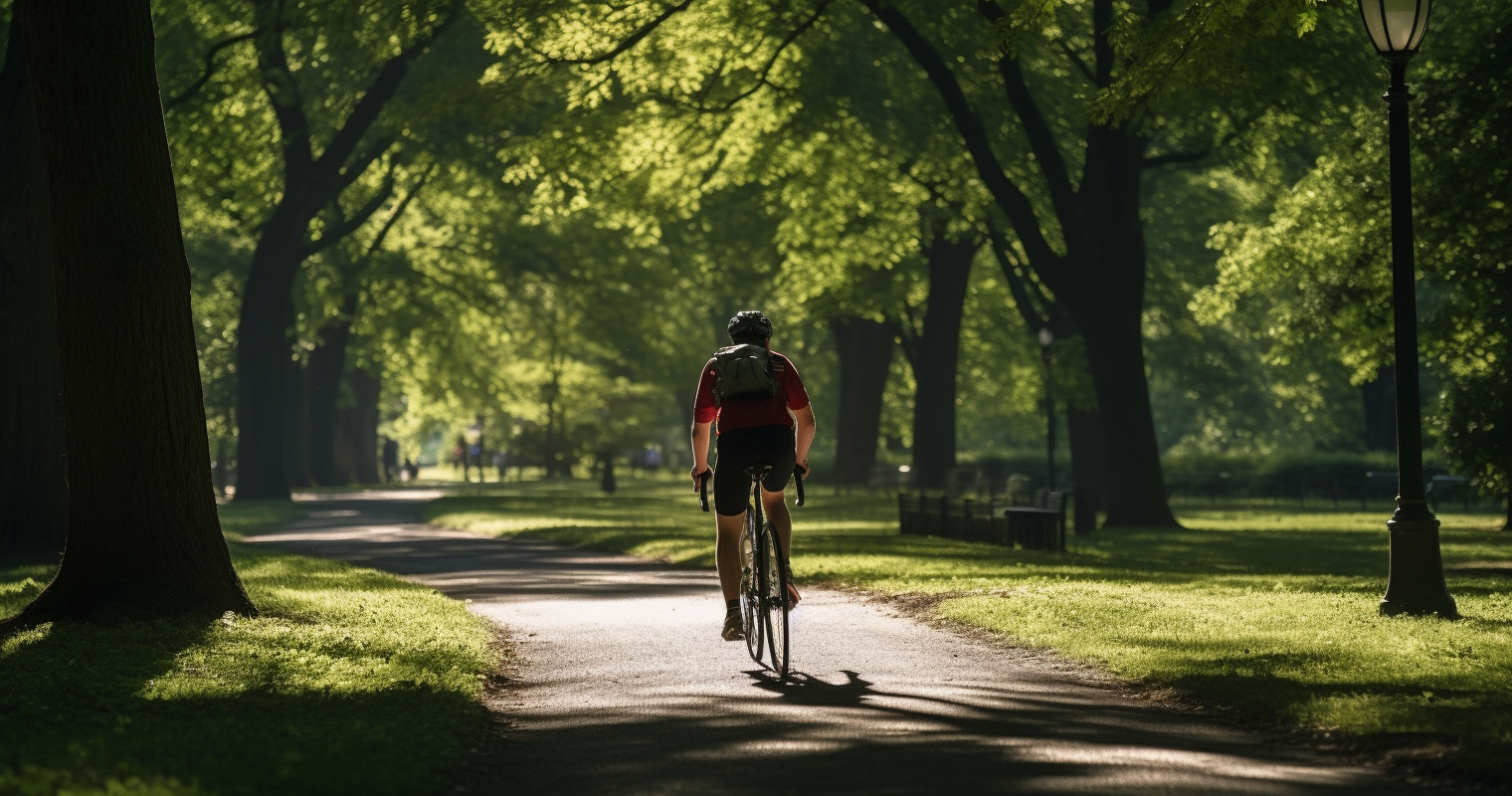
The Czech Republic is a genuinely rewarding country for those who love cycling, combining a broad network of clearly marked long-distance routes with scenic landscapes and an urban cycling scene that is steadily improving. Daily bike commuting has not yet reached the levels seen in the Netherlands or Denmark, but recreational riding enjoys wide popularity and conditions for cyclists are getting better all the time. For newcomers to the country, cycling represents a practical and pleasurable choice — especially beyond the largest cities.
| Item | Details |
|---|---|
| Helmet law | Mandatory for cyclists under 18; recommended but not required for adults (as of 2024) |
| Total cycle path network | Nearly 5,000 km of cycle paths and safety measures nationwide (as of 2024) |
| Prague’s cycle infrastructure | 178 km of protected cycle paths and routes; 48 km of bike lanes (as of 2017, expanding) |
| Bike-share (Rekola, Prague) | ~35 CZK for 30 minutes; monthly subscription ~245 CZK (as of 2024) |
| Bike-share (Nextbike, Prague) | ~35 CZK for first 20 minutes; available in 45+ cities and towns (as of 2025) |
| Alcohol limit for cyclists | Zero tolerance (0.00 ‰ BAC) applies to cyclists |
| Minimum overtaking distance | 1.5 m on standard roads; 1.0 m on roads with a 30 km/h limit |
| Bike registration | Not mandatory; voluntary registration available |
How popular is cycling in Czech Republic — is it a common way to get around?
Cycling in the Czech Republic is firmly established as a leisure pursuit, though it has not yet become a mainstream form of everyday transport — particularly in Prague. That said, the number of people choosing to cycle for utility purposes has been climbing steadily. This places the country in a similar bracket to Germany or France, where a strong recreational tradition coexists with an urban cycling culture that is still in the process of developing, rather than in the same league as the Netherlands or Denmark, where the bicycle is a principal commuting tool.
Data from 2018 showed that just 2% of Prague residents cycled to work, a share that climbed to around 4% in summer months before dipping below 2% in winter. While these figures fall well short of Amsterdam or Copenhagen, the direction of travel is positive. Outside the capital, several smaller cities and towns — particularly in Moravia and the Olomouc region — often offer cycling infrastructure that is disproportionately good for their size.
Cycling has grown considerably in popularity across the country as a whole. The COVID-19 pandemic gave a notable boost both to urban cycling and to recreational riding. For expats, this translates into a welcoming atmosphere for weekend trips and touring holidays, while commuting by bike is achievable with some advance knowledge of suitable routes, especially in bigger cities.
What is the cycling infrastructure like in Czech Republic?
The combined length of dedicated cycle paths and associated safety provisions for cyclists across the Czech Republic approaches five thousand kilometres. This network spans both city environments and rural corridors, though consistency of quality and continuity differs markedly from one region to the next.
Certain stretches pose genuine hazards where a cycle path merges unexpectedly onto a busy carriageway or terminates without a safe continuation. The CYKLOVIZE 2030 initiative is progressively cataloguing these risk points, with plans to eliminate them using a combination of European funding, national budget contributions, and regional resources. Work to complete the currently fragmented network is ongoing, though some vital connections between significant population centres remain absent.
Research by Nadace Partnerství indicates that CZK 13 billion has been channelled into cycle infrastructure across the country over the past two decades. Municipalities and cities are now dramatically scaling up their ambitions, with the same level of investment targeted for just the next six years — a clear signal of accelerating commitment to cycling provision.
Prague has committed CZK 137 million to upgrading its cycling network, covering both enhancement of existing infrastructure and the creation of new routes. The capital has adopted a refreshed development plan focused on protected and traffic-calmed cycle paths, to be rolled out progressively in tandem with wider construction activity across the city.
The CykloRank 2024 survey, produced in collaboration with the ‘Do práce na kole’ campaign and the ‘Plzeň na kole’ association, assesses all 127 Czech municipalities with populations exceeding 10,000 residents across metrics including cycle paths, lanes, parking stands, and road markings. The 2024 edition awarded first place to Uničov in the Olomouc Region, a town that has maintained its leading position through sustained investment in cycling amenities. Notably, several smaller regional centres outperform both Prague and Brno when measured against their population size.
Czechia is home to an impressive network of signed cycling routes, and it is something of a hidden gem for cycle touring — combining excellent waymarking, varied and appealing scenery, and a comparatively low cost of living. The Ministry of Transport and the CYKLOVIZE 2030 project — coordinated through the Association of Regions and the Partnership for Urban Mobility — are the principal authorities overseeing the development of national cycling infrastructure. Expats are encouraged to consult the CYKLOVIZE 2030 website and the Ministry of Transport for up-to-date route maps and information on planned improvements.
Is cycling safe in Czech Republic?
One of the most frequently cited barriers to cycling in Prague is the prospect of navigating among motor vehicles. Evidence from other countries consistently demonstrates that high-quality, safe infrastructure does far more to shift travel behaviour than conditions such as weather. Driver attitudes towards cyclists are becoming more considerate, but they remain a source of concern on busy main roads where protected cycling space is still incomplete.
The Global Bicycle Cities Index 2022 placed Prague 73rd out of 90 cities assessed, with a score of 25.87 out of 100. This suggests the city is making genuine efforts to become more cycle-friendly but still has considerable distance to cover. Prague’s position broadly mirrors that of other central and eastern European capitals rather than the high-performing cycling cities of Germany, the Netherlands, or Scandinavia.
Czech legislation stipulates that motorists must leave a minimum gap of 1.5 metres when overtaking a cyclist on a standard road. On streets where the speed limit is 30 km/h, this required distance is reduced to 1.0 metre. While this legal protection is meaningful, its enforcement in everyday conditions can be uneven. Tram rails in Prague and Brno represent a particular risk for cyclists, as narrow bicycle tyres can become lodged in the track grooves.
Wearing a helmet is a legal requirement for cyclists under the age of 18. Adults face no legal obligation to wear one, though doing so is strongly advised — especially for riding on country roads, mountain biking, or any journey involving heavier traffic. This approach is less stringent than the universal helmet laws enforced in countries such as Australia but is consistent with the practice found across most of continental Europe. The BESIP road safety authority (part of the Ministry of Transport) publishes current accident and fatality data and is the best source for the latest cycling safety statistics.
What are the rules of the road for cyclists in Czech Republic?
The primary legislation governing cycling in the Czech Republic is Act No. 361/2000 Coll. on Road Traffic. The provisions outlined below cover the main obligations for all cyclists. For the complete and current legal text, refer to the Ministry of the Interior or the Městem na kole cycling road code guide.
Key equipment requirements:
- Bicycles must be fitted with two independent and functioning brakes, a white front reflector and a red rear reflector, yellow reflectors on the pedals (which may be replaced by reflective clothing), and orange reflectors on the wheels (which may be replaced by reflective spokes).
- When riding at night, front and rear lights — white and red respectively, either blinking or steady — are obligatory. On unlit roads, the front light must be powerful enough to illuminate the road surface ahead.
- Helmets are mandatory for riders under 18. Adults are not legally required to wear one.
Road behaviour rules:
- Where a designated cycle path exists, cyclists must use it unless doing so would create a hazard — for instance, if the path has not been cleared of snow — or if the rider is a sport cyclist travelling at high speed.
- Cyclists do not have automatic priority at bicycle crossings unless the crossing is controlled by signals. At unsignalised bicycle crossings, cyclists must give way before proceeding. This differs from the rules in some neighbouring countries, where marked crossings grant cyclists right of way.
- Cyclists are required to ride on the right-hand side of the lane.
- Riding side by side is prohibited except within a designated cycling zone, where cyclists must travel in single file.
- Cycling on the pavement is not permitted. Some interpretations of the law permit children aged up to 10 to ride on the pavement.
- A zero-tolerance alcohol rule applies to cyclists — the same 0.00 ‰ BAC threshold that applies to motor vehicle drivers.
- Traffic offences committed while cycling do not result in penalty points being added to a driving licence, though fines may still be imposed.
In Czechia, cyclists may come across two distinct types of cycle lane. One is a wider, dedicated lane; the other is a narrower advisory lane found on streets with limited space. The difference is important to understand, as advisory lanes may lawfully be entered by motor vehicles in certain circumstances.
Do I need to register my bike or have insurance to cycle in Czech Republic?
The Czech Republic has no compulsory national bicycle registration scheme. Unlike motor vehicles, bicycles are not required to be formally registered with any government body before they can be ridden. That said, voluntary registration is available through certain local police stations and commercial providers, and is a worthwhile precaution — especially in larger cities such as Prague and Brno where bicycle theft is a recognised problem.
Third-party liability insurance is not a legal requirement for cyclists in the Czech Republic. Nevertheless, it is advisable for anyone cycling regularly in urban traffic. A number of Czech home insurance policies (pojištění domácnosti) incorporate personal liability cover that extends to incidents while cycling — it is worth checking the specifics of any home insurance you arrange after moving to the country. Dedicated cycling insurance products are also offered by major Czech insurers. The Czech National Bank, which oversees the insurance sector, or a licensed insurance broker can provide information on current products and pricing.
To guard against theft, it is sensible to photograph your bicycle, record the frame serial number, and enter the details on a voluntary database, such as those maintained by some municipal police forces. This substantially increases the likelihood of recovering the bike if it is stolen.
Are there public bike-sharing or rental schemes in Czech Republic?
Several bike-sharing operators are active in Czechia, with the most prominent being Rekola — recognisable by its pink bicycles — and Nextbike, which uses blue bikes. Both run app-based systems that are either dockless or semi-docked, and both are accessible to anyone with a smartphone and a payment card.
Prague does not yet have a fully municipally run bike-sharing scheme, but a pair of well-established private alternatives fill the gap. Together, Rekola and Nextbike make around 2,000 bicycles available across the capital as of 2025. E-bike options are also provided by Lime and Bolt, primarily in central parts of the city.
Rekola
Rekola launched its bike-sharing service in Prague in 2013 and has since expanded to operate across eight Czech cities, as well as Bratislava in Slovakia and Tallinn in Estonia, as of 2025. The minimum rental period of 30 minutes is priced at 35 CZK (roughly €1.40), while a one-month subscription costs 245 CZK (approximately €10), as of 2024. See rekola.cz for current pricing and service areas.
Nextbike
Nextbike’s reach extends well beyond the capital, covering 45 towns and cities throughout the country as of summer 2025. The first 20 minutes of a Nextbike ride are priced at 35 CZK (roughly €1.40), as of 2024. Visit nextbikeczech.com for current fares and station locations.
A pilot scheme linking bike-sharing with the Prague Lítačka travel card attracted over 7,200 participants who made more than 72,000 journeys in the first three months alone. Holders of the Lítačka card and MultiSport gym membership may qualify for free or reduced-price minutes — consult the relevant apps for up-to-date benefit details.
Visitors or those seeking off-road or touring bikes will find a good selection at dedicated rental shops in Prague, Brno, Olomouc, and in popular cycling regions. Czech Railways (České dráhy) also runs a bike hire service, making it straightforward to combine rail travel with cycling excursions. Check the Czech Railways website for current availability and booking details.
Where can I buy or service a bike in Czech Republic?
The bicycle retail sector in the Czech Republic is well established. Major urban centres — including Prague, Brno, Ostrava, Olomouc, and Plzeň — are served by a healthy combination of large specialist cycle retailers, national sports chains, and independent bike shops. Prominent names such as Koloshop, Bikezone, and authorised Specialized dealers operate across the country alongside numerous local independents.
Second-hand bicycles are widely available through online marketplaces such as Bazoš.cz, Sbazar.cz, and Facebook Marketplace groups — broadly comparable to Gumtree in some countries or Leboncoin in France. Used bike prices are generally reasonable by Western European standards, though quality varies widely, as it does anywhere. Before buying second-hand, always verify the frame number against a stolen bike register.
Cycle repair workshops (cykloservis or cykloopravna) are present in most towns and cities. In larger urban areas, bike shops typically offer comprehensive services including wheel truing, drivetrain maintenance, and brake work at competitive rates. During the busy spring and summer season, popular workshops can have waiting times of a week or more, so it pays to plan ahead.
Consumer protection in the Czech Republic follows EU standards, meaning new bicycles bought from registered retailers carry a statutory two-year warranty against manufacturing defects — the same coverage applicable across EU member states such as Germany or France. Keep your purchase receipt and all warranty paperwork. For any disputes with a retailer, contact the Czech Trade Inspection Authority (ČOI).
Can I bring my bike when I move to Czech Republic, and are there any import rules?
As an EU member state, the Czech Republic applies different rules depending on whether you are arriving from inside or outside the bloc.
Moving from within the EU: Relocating from another EU country means there are no customs formalities or import duties to contend with when bringing your bicycle. The free movement of goods within the single market means your bike accompanies you without restriction.
Moving from outside the EU: If you are coming from a non-EU country, EU customs regulations will apply when your bicycle enters the Czech Republic. Under the EU’s “transfer of normal residence” provisions, personal belongings — bicycles included — that you have owned and used for a minimum of six months before your move may be eligible for an exemption from customs duty and VAT, provided you apply for relief and satisfy the qualifying conditions. This is broadly analogous to personal effects exemptions available in countries such as Australia or Canada for people emigrating. You will need to supply documentation confirming your previous residence abroad and proof of ownership. As of 2024, the standard EU customs duty rate on bicycles is approximately 14–15%, and VAT in the Czech Republic stands at 21% — charges you may be able to avoid if you meet the personal effects relief criteria.
You should declare your intention to import personal effects upon arrival and submit your application to the relevant customs authority. The Czech Customs Administration is the definitive source for current import rules, exemption thresholds, and the documentation required. Always confirm the latest requirements before shipping, as regulations and thresholds are subject to change.
What are the best cycling routes or destinations in Czech Republic?
Czechia is an outstanding destination for cycle tourism, packing a remarkable density of attractions and historic settlements into a landscape that ranges from broad river plains to forested mountain borders. Whether you are rolling through the flatlands of the Elbe valley, gliding past vineyards in South Moravia, or tackling hillier terrain along the country’s border ridges, cycling here is anything but monotonous. The country is home to more than 2,000 castles, 17 UNESCO World Heritage Sites, and a wealth of natural heritage areas.
Several major EuroVelo routes thread through the country, positioning it as a natural waypoint on longer European touring journeys:
- EuroVelo 4 (Central Europe Route): Within the Czech Republic, EuroVelo 4 begins by tracing the Ohře/Eger River Trail from the German border, passing through the medieval town of Cheb and arriving at the celebrated spa resort of Karlovy Vary. From there it follows the Berounka-Střela Greenway through the protected Křivoklátsko landscape, skirting the iconic Karlštejn Castle before reaching its confluence with the Vltava in Prague.
- EuroVelo 9 (Baltic–Adriatic Route): Crossing the country from north to south, this route traverses some of Czechia’s finest scenery. It sees heavy use from international touring cyclists and links the Moravian heartland with the Austrian border near Vienna.
- EuroVelo 13 (Iron Curtain Trail): Passing through Czechia, Austria, Slovakia, Hungary, Slovenia, Croatia, and Serbia — covering 1,760 km in total — the Czech section of this route winds through former border landscapes rich in cultural and historical significance.
- The Elbe Cycle Route (Labská cyklostezka): Offering stretches of dedicated tarmac cycling path, the Elbe Radweg is a flagship route. It descends from the Krkonoše mountains in northern Bohemia, passes through Prague, and continues into Germany, threading together riverside panoramas and historic towns along the way.
- South Moravia Wine Trail: The valley of the Morava River and the wine-growing countryside around Mikulov, Lednice, and Valtice offer gentle gradients, stunning castle scenery, and outstanding local food and wine — a perfect itinerary for riders who prefer a leisurely pace.
Partnerství, o.p.s. serves as the National EuroVelo Coordinator in Czechia, and their platform maps the country’s top cycling routes — encompassing EuroVelo corridors, Greenways, and a directory of cycling-friendly businesses and accommodation operating under the “Cyklisté vítáni” (Cyclists Welcome) scheme. For route planning, also consult the CzechTourism official website and the EuroVelo Czech Republic page.
Frequently asked questions
Do I need to wear a helmet when cycling in Czech Republic?
Helmets are a legal requirement for cyclists under the age of 18. For adults, there is no legal obligation to wear one, though doing so is strongly recommended — particularly on rural roads, in traffic, or when cycling at higher speeds. The Czech approach is less prescriptive than countries such as Australia or New Zealand, which enforce universal helmet requirements for all ages, but it is consistent with the standard across most of continental Europe.
Can I cycle on pavements and pedestrian paths in Czech Republic?
Cycling on the pavement is generally not permitted. Some interpretations of Czech law allow children up to the age of 10 to ride on the pavement. Shared-use paths designated for both pedestrians and cyclists, identified by the appropriate blue sign, may be used by cyclists. Cycling in pedestrian zones is only lawful where a supplementary sign explicitly grants permission.
Is there a drink-driving law that applies to cyclists?
Yes. Czech law imposes a zero-tolerance alcohol policy (0.00 ‰ BAC) on cyclists, identical to the standard applied to motor vehicle drivers. Riding a bicycle while under the influence of alcohol or drugs is a traffic offence carrying the risk of a fine. This is more stringent than in some other European countries, where a modest legal limit applies to cyclists.
How practical is cycling for daily commuting in Prague or Brno?
Prague’s cycling infrastructure is gradually improving, but the absence of continuous cycle lanes and gaps in the route network continue to limit the attractiveness of cycling as a commuting option. Riding to work is feasible and growing in popularity, but careful route selection is essential. Brno presents similar challenges. Smaller cities that score highly in the CykloRank rankings tend to offer a considerably more cycle-friendly environment for everyday travel.
Are my bike and cycling gear covered by home insurance in Czech Republic?
This depends on the particular policy you hold. Many Czech home insurance policies (pojištění domácnosti) provide cover for bicycles kept at home and some include personal liability protection that extends to cycling-related incidents. Standalone cycling insurance and personal liability policies covering cyclists are also available. Always read the policy conditions carefully and confirm the details directly with your insurer. The Czech National Bank can provide information on regulated insurance providers.
Can I take my bike on Czech trains?
Czech Railways (České dráhy) allows bicycles on regional and intercity services, provided a bike reservation is made in advance. A separate bicycle ticket is required in addition to your passenger fare. This is especially convenient for one-way cycling tours, allowing you to ride in one direction and return by rail. Visit the Czech Railways website for current booking processes and fares.
Do I need to register or licence my bicycle in Czech Republic?
No. There is no legal requirement to register or licence a bicycle in the Czech Republic. Bikes do not need number plates or official registration documentation. However, voluntary registration through local police or commercial services is a sensible precaution against theft, which is a real concern in larger cities.
What are the best resources for planning cycling routes in Czech Republic?
Comprehensive route maps covering EuroVelo corridors, Greenways, river routes, and cultural cycling trails — along with listings of “Cyclists Welcome” (Cyklisté vítáni) accommodation and services — are available through several platforms. The most useful include the EuroVelo Czech Republic page, the CzechTourism website, the interactive City by Bike map at Městem na kole, and the CYKLOVIZE 2030 route map for information on planned infrastructure development.