
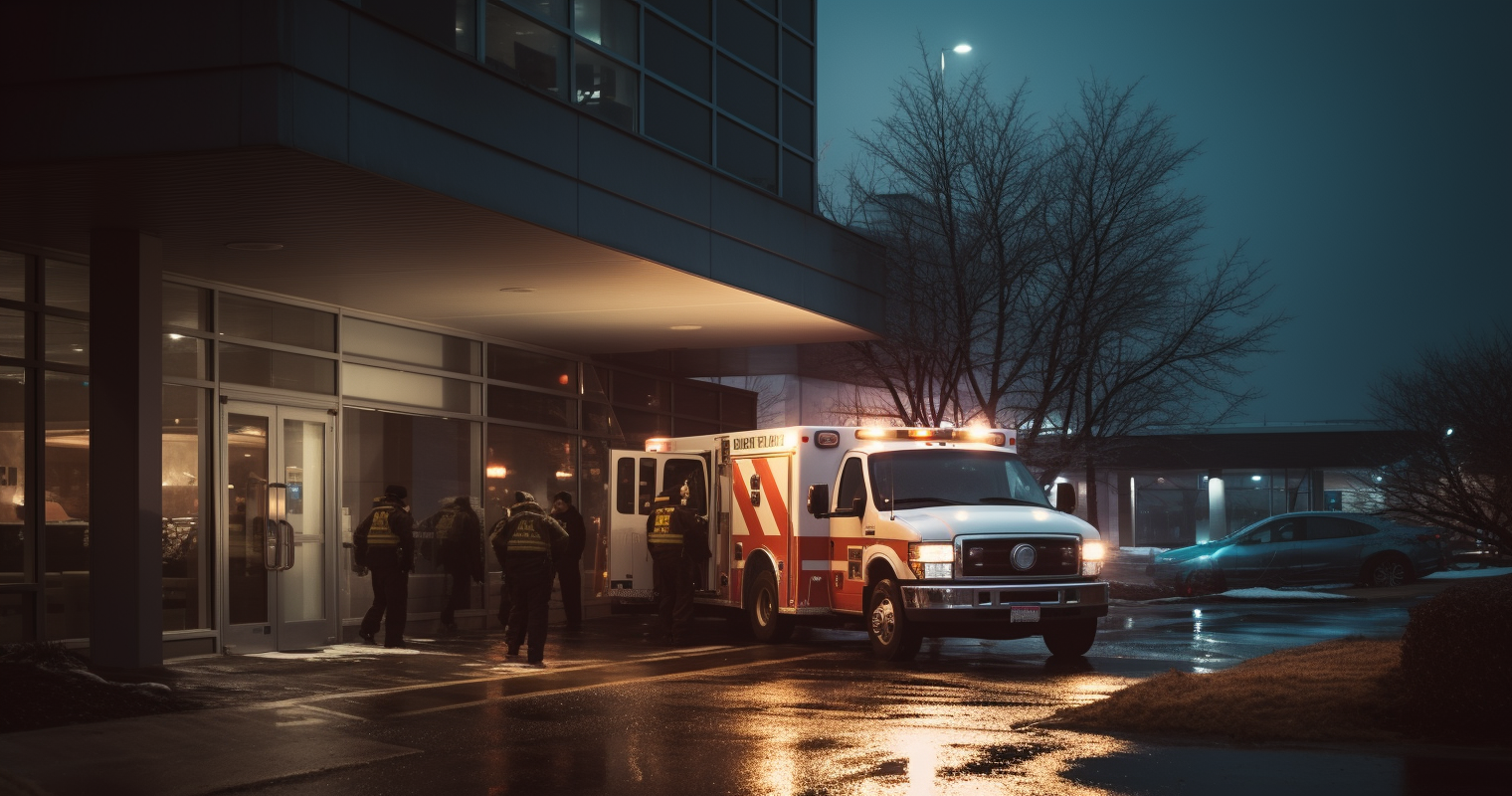
Malaysia operates a unified emergency number — 999 (or 112 from a mobile phone) — that routes callers through to police, ambulance, fire, and civil defence agencies. Public hospitals across the country will provide emergency treatment to anyone who needs it, including foreign nationals, but this care comes at a cost: non-citizens are billed at rates considerably higher than those paid by Malaysians, which makes taking out comprehensive health or travel insurance a practical necessity for expats and visitors alike.
| Item | Details |
|---|---|
| Primary emergency number | 999 (or 112 from mobile — works without credit or SIM unlock), as of 2025 |
| Services covered by 999 | Police, ambulance, fire and rescue, civil defence, maritime enforcement |
| Outpatient fee at public hospitals (foreigners) | RM 40 per visit, vs RM 1 for Malaysian citizens — as of 2024; verify with Ministry of Health |
| Public hospital emergency treatment | Available to all, including foreigners; payment required; not free for non-citizens |
| Private hospital emergency treatment | Typically requires deposit or insurance verification upfront |
| National disaster authority | NADMA (National Disaster Management Agency) — nadma.gov.my |
| Primary flood/weather warning portal | Malaysian Meteorological Department — met.gov.my |
What is the single emergency number in Malaysia, and does it cover all services?
On 1 October 2007, Malaysia merged its previously separate emergency lines — 991, 994, and 999 — into a single unified number. That consolidated number, 999, now connects callers to the Malaysian Civil Defence Department (JPAM), the Royal Malaysian Police (PDRM), the Ministry of Health (KKM), and the Malaysian Fire and Rescue Department (JBPM). There is no need to memorise different numbers for different types of emergency — a single call routes you to whichever agency is needed.
Operating under the name Malaysian Emergency Response Service (MERS) 999, this government initiative consolidates emergency access for police, fire and rescue, health, civil defence, and the Malaysian Maritime Enforcement Agency all under one hotline.
Calls are answered by trained professional emergency officers (PEOs) within ten seconds. Before transferring a caller to the relevant agency, the officer will ask three things: the type of emergency, the exact location of the incident, and a contact number to confirm the call is genuine.
Mobile phone users can alternatively dial 112, the internationally recognised emergency number. This works regardless of whether the phone has credit, is SIM-locked, or is barred — as long as a network signal is available. It is especially useful when a SIM card has been exhausted or an unfamiliar handset is being used. All 112 calls are automatically redirected to the 999 response centre.
Several supplementary numbers are also worth noting. The Fire and Rescue Department — known locally as Bomba — can still be dialled directly on 994, and Civil Defence on 991. A Tourist Police Hotline operates on 03-2149 6590, while a gas emergencies line is available on 995. Poisoning emergencies can be directed to the National Poison Centre at Universiti Sains Malaysia, reachable on 04-657 0099 during office hours, 012-430 9499 after hours, and via a toll-free number on 1-800-888-099. Always confirm these details through official channels, as contact numbers may be updated over time.
How do you call for emergency medical assistance, and what should you expect?
To request an ambulance anywhere in Malaysia, dial 999 or 112 from a mobile. The call handler will connect you to the Ministry of Health ambulance service and ask for your location, the nature of the medical situation, and your contact number.
Ambulance services in Malaysia are provided by Ministry of Health hospitals, St John Ambulance Malaysia, and the Malaysia Red Crescent Society, which between them offer both basic and advanced life support. A range of private ambulance operators also exists, principally for scheduled patient transfers and inter-facility transport rather than emergency response.
Emergency ambulance coverage is concentrated in major urban centres and operates on a tiered dispatch model that includes motorcycle responders and transport vehicles. In rural or remote regions — including much of Sabah and Sarawak — response times can be considerably longer than in Kuala Lumpur or Penang. For life-threatening situations where road access is severely limited, helicopter ambulances operated by the Royal Malaysian Police, the Armed Forces, and Malaysian Helicopter Services can be deployed, though this resource is not always readily available.
When making an emergency call, provide as much detail as possible: your full address or GPS coordinates, the closest recognisable landmark, how many people require assistance, and a brief description of the medical situation. Remain on the line and follow any instructions given by the dispatcher. If you are inside a large shopping complex, hotel, or office building, the security desk may also be able to help direct emergency services to your exact location.
What should you do in a mental health crisis in Malaysia?
Malaysia currently lacks a single dedicated national mental health emergency number comparable to, for example, the 988 Suicide and Crisis Lifeline in the United States or the Samaritans service in the United Kingdom. That said, several support lines are available to people in distress. The government’s Talian Kasih helpline (15999), run by the Ministry of Women, Family and Community Development, offers welfare and crisis assistance. Befrienders KL (03-7627 2929) provides confidential emotional support and is accessible at any hour. Always confirm that these numbers are still current by consulting the relevant official websites before relying on them.
Government hospital emergency departments are required to treat all patients irrespective of their ability to pay, and this applies equally to anyone presenting in a mental health emergency. If a person poses an immediate risk to themselves or others, calling 999 and travelling to the nearest hospital emergency department is the appropriate course of action. Any government hospital A&E can conduct a psychiatric assessment and, where necessary, arrange admission or onward referral.
Several private hospitals — particularly in Kuala Lumpur and Penang — operate dedicated psychiatric units and are able to accept mental health presentations, though their emergency departments will generally require a deposit or insurance confirmation. Where cost is a concern in an urgent situation, a government hospital A&E is the right first destination. Expats are well advised to identify the nearest facility with psychiatric services before any crisis situation occurs.
Where can you go for emergency medical treatment in Malaysia?
Malaysia’s public healthcare network encompasses more than 150 government hospitals and upwards of 3,000 clinics distributed across the country. These are arranged in three tiers — primary clinics, district hospitals, and tertiary or specialist hospitals — collectively providing emergency care, inpatient treatment, and most specialist services.
The private sector has grown considerably alongside the public system, with over 200 private hospitals now operating nationwide. Major hospital groups such as Pantai, Gleneagles, KPJ, and Sunway Medical Centre maintain well-equipped accident and emergency departments in Kuala Lumpur and other cities, typically with shorter waiting times than public facilities.
For situations that are urgent but not life-threatening, private clinics — referred to locally as klinik swasta — are plentiful in towns and cities and can deal with minor injuries, common infections, and urgent prescription requirements. They function broadly like urgent care walk-in clinics found elsewhere, though the complexity of cases they can manage varies from one clinic to another.
To locate the nearest government hospital or health clinic, the Malaysian Ministry of Health website (moh.gov.my) hosts a searchable directory of public health facilities. Mapping applications such as Google Maps are also a practical option when you are in an unfamiliar area. The major private hospital groups each maintain websites with location finders and emergency contact details.
Is emergency medical treatment free in Malaysia, or is there a charge?
Treatment at government hospitals is generally far less expensive than at private facilities, and some services are provided at near-zero cost, because public hospitals benefit from substantial state subsidies. However, these deeply subsidised rates apply primarily to Malaysian citizens.
Foreign nationals pay RM 40 for outpatient treatment at government hospitals and clinics, versus RM 1 for Malaysian citizens (figures as of 2024 — always check current charges with the Ministry of Health). For inpatient stays and specialist emergency care, charges rise significantly. The Fees Act (Medical) 1951 permits non-citizens to be billed between 24 and 100 times the citizen rate for care at public hospitals, meaning that in practice the cost of government hospital treatment for foreigners can approach that of a private facility.
Emergency departments at public hospitals will not turn anyone away in a life-threatening situation, regardless of their ability to pay. However, treatment will generate a bill that the patient is expected to settle. Private hospital emergency departments typically ask for a deposit or insurance confirmation either before or shortly after admission.
Without insurance cover or enrolment in the Foreign Worker Hospitalisation and Surgical Scheme (FWHS), expats must meet the full cost of their medical care. For serious emergencies involving surgery, intensive care, or extended hospitalisation, bills can run into tens of thousands of ringgit. For this reason, comprehensive international health insurance is strongly recommended for anyone living in or visiting Malaysia.
Do expats need insurance, and what happens if they cannot pay?
Malaysia does not universally require visitors and expats to hold health insurance as a condition of entry, although certain visa categories — such as the Malaysia My Second Home programme — do require applicants to demonstrate adequate financial capacity. In practice, the cost of emergency care without coverage, especially at private hospitals, can be extremely high.
Travel insurance that includes medical emergency and hospitalisation cover is considered essential for anyone in Malaysia, given the potential financial exposure should a serious medical situation arise.
Major private hospitals have dedicated international patient services teams that handle insurance verification and maintain direct billing arrangements with most international insurers. Anyone with a policy should keep their insurance details and the insurer’s emergency contact number on their person at all times. A Guarantee of Payment (GOP) letter from the insurer is typically required before elective or non-emergency procedures at private hospitals, though in a genuine emergency, treatment will usually commence before financial formalities are completed.
Patients who present at a public hospital without insurance and without the means to pay will still receive emergency treatment, after which a bill will be issued. The Malaysian Ministry of Health has contended with a substantial volume of outstanding debt owed by foreign patients for emergency treatment, outpatient consultations, and medicines dispensed at government facilities — demonstrating that unpaid bills become real debt obligations rather than being simply written off. Long-term residents should also enquire with their employer about the Foreign Worker Hospitalisation and Surgical Scheme (FWHS), which requires employer registration and provides an annual coverage ceiling of up to RM 20,000, including room and board and ICU benefits.
Are there bilateral health agreements that reduce costs for foreign nationals?
Malaysia does not maintain a network of reciprocal healthcare treaties that would entitle citizens of other countries to free or discounted emergency treatment, in the way that the European Health Insurance Card system functions between EU member states or as reciprocal Medicare arrangements work between Australia and a number of other nations.
There is no Malaysian equivalent of the UK-EU EHIC scheme or of bilateral Medicare agreements. Under the Fees Act (Medical) 1951, all foreign nationals — irrespective of their passport or nationality — are billed at the non-citizen rate when accessing public healthcare facilities, unless a specific bilateral treaty is in place. As of 2025, no widely applicable bilateral emergency healthcare agreement between Malaysia and another country has been confirmed through publicly available official sources. Readers should verify the current position directly with their home country’s embassy or high commission in Kuala Lumpur and with the Malaysian Ministry of Health, as arrangements can and do change.
This stands in marked contrast to the experience of expats moving between European countries, and further underlines why private health insurance serves as the primary form of financial protection against medical emergencies for foreign residents in Malaysia.
How does Malaysia’s emergency healthcare compare to systems expats may know?
Malaysia’s public healthcare system delivers near-universal coverage to citizens and permanent residents through a heavily subsidised model. For foreign nationals, public facilities remain accessible but at rates considerably above those paid by citizens. This differs fundamentally from a fully tax-funded universal model such as the UK’s National Health Service, under which overseas visitors can receive emergency treatment without upfront payment and face billing only in limited, defined circumstances.
Malaysia’s healthcare landscape is widely regarded as among the strongest in Southeast Asia, with a lower-cost public sector that primarily serves the local population and a well-resourced private sector that most expatriates use as their first point of care. In that respect, it bears more resemblance to systems in countries such as the United States or Singapore, where practical access to quality care for those with resources flows through private, insurance-backed channels rather than a single-payer public model.
The dual structure — a public system that will always treat emergencies and a private sector offering faster, more comfortable care — is the framework most expats navigate. Without insurance, costs in either setting are substantial, and waiting times in public hospitals can stretch to several hours, with priority given to Malaysian citizens. With insurance, access to high-standard private emergency care in urban centres is generally straightforward.
Malaysia has deliberately cultivated a reputation as a medical tourism destination in Southeast Asia, which has driven investment in internationally accredited private hospitals with multilingual staff across major cities. For expats based in Kuala Lumpur or Penang, the quality of private emergency facilities is generally high and broadly on a par with leading private hospitals in Western Europe or Australia.
What emergency services exist beyond medical — police and fire in Malaysia?
The MERS 999 system encompasses the Royal Malaysian Police (PDRM) and the Malaysian Fire and Rescue Department (JBPM) alongside medical and civil defence services. Both can be reached via 999 or 112, and 994 continues to function as a dedicated direct line for fire and rescue.
The Royal Malaysian Police handles criminal incidents, road accidents, missing persons cases, and general public order matters in much the same way as national police forces elsewhere. Victims of theft, assault, or any other crime should dial 999 or attend a police station (Balai Polis) to file a formal report — known locally as a laporan polis. A copy of this report is commonly required when making an insurance claim. Kuala Lumpur also maintains a dedicated Tourist Police presence in high-traffic visitor areas such as Bukit Bintang, KLCC, and Chinatown, with a hotline on 03-2149 6590 — confirm this number is current before travel.
The Fire and Rescue Department — Jabatan Bomba dan Penyelamat Malaysia, universally known as Bomba — responds to structural fires, road traffic extrication, flood rescue operations, and industrial accidents. Its role is broadly equivalent to a national fire service. It is worth noting that under Malaysian law, making a false emergency call to 999 can result in a fine of up to RM 50,000, a custodial sentence of up to one year, or both.
One practical consideration that may differ from what some expats are accustomed to: police in Malaysia do conduct identity checks, and expats are advised to carry their passport or relevant visa documentation when out in public. In the event of a serious legal matter, the first call should be to your embassy or consulate.
Are there country-specific emergency risks in Malaysia?
Malaysia lies outside the Pacific Rim of Fire, which means it faces a lower risk of earthquakes, volcanic eruptions, and typhoons than several of its neighbours. It is not, however, without hazard: floods, landslides, man-made calamities, and haze all present recurring challenges.
The country’s tropical climate makes flooding and landslides a consistent seasonal threat, particularly when the monsoon brings prolonged heavy rainfall. According to NADMA, approximately nine per cent of Malaysia’s land area is susceptible to flooding, affecting around 4.8 million people, with an estimated 29,800 square kilometres inundated each year. The northeast monsoon, which typically runs from November through to March, brings the heaviest rainfall to the east coast of Peninsular Malaysia and to Sabah and Sarawak. Expats in low-lying or coastal areas should be particularly alert to flood risk during this period.
As of March 2023, Malaysia’s natural disaster risk index placed tsunamis as the highest-rated threat at 7.1 out of 10, followed by flooding at 6.6, earthquakes at 5.8, landslides at 5.7, and drought at 4.8. Haze generated by forest and land fires — primarily originating in neighbouring Indonesia — is a recurring seasonal issue that can degrade air quality severely and poses genuine health risks, particularly for those with respiratory conditions.
Among communicable diseases, dengue fever is endemic and constitutes a significant public health concern. Expats and visitors should use effective mosquito repellent, wear appropriate clothing, and eliminate any standing water around their home. Other diseases of note include typhoid, hepatitis A and B, and — in rural settings — leptospirosis and malaria. Consult both the Malaysian Ministry of Health and your home country’s official travel health guidance for current vaccination and prophylaxis recommendations.
Malaysia maintains an early warning system for earthquake, flood, and tsunami events, including SMS-based alerts and other technologies designed to notify communities ahead of impending hazards. NADMA has developed online platforms providing early warning information covering floods, weather forecasts, emergency shelters, and landslide risks. The Malaysian Meteorological Department (met.gov.my) publishes official weather warnings and forecasts.
What should expats do to prepare for emergencies before they arise?
- Register with your home country’s embassy or consulate. Upon arriving in Malaysia, expats are strongly advised to register with their nearest embassy or consulate. This allows your government to reach you during a major emergency, natural disaster, or period of civil unrest, and helps consular officials locate nationals who may require assistance. Most embassies provide this registration service at no cost through their official websites.
- Save key emergency numbers. Programme 999 and 112 into your phone, alongside the direct numbers for your nearest public and private hospitals, your insurer’s emergency helpline, your embassy’s emergency contact, and the National Poison Centre. Confirm all numbers through official sources before storing them.
- Obtain comprehensive health insurance. Given the potentially significant costs involved in both public and private medical facilities, comprehensive international health insurance is strongly recommended for expats living in Malaysia. Ensure your policy includes emergency evacuation and repatriation cover, as many international health plans extend to these benefits.
- Familiarise yourself with local flood and disaster procedures. If your home is in a flood-prone location, find out where the nearest officially designated evacuation shelter is situated. NADMA’s portal (nadma.gov.my) provides disaster preparedness information. Register for alerts from the Malaysian Meteorological Department.
- Identify your nearest hospital and clinic. Before any medical situation arises, find out where the nearest government hospital with an A&E department is located, as well as the nearest reputable private hospital, and save both direct contact numbers.
- Carry identification at all times. Keep your passport, visa documentation, and insurance details on your person or readily accessible. Store digital copies securely in cloud storage in case the originals are lost or stolen.
- Understand your visa and residency obligations. Certain visa categories carry specific health insurance or financial requirements. Check with the Immigration Department of Malaysia (imi.gov.my) for the current requirements applicable to your visa type.
Where can expats get official and up-to-date emergency information for Malaysia?
The sources listed below are the most authoritative for current emergency information in Malaysia. Consult them directly rather than relying on third-party websites, as fees, procedures, and contact numbers are subject to change.
| Organisation | What it covers | Website |
|---|---|---|
| Malaysian Civil Defence Department (JPAM) | MERS 999 system, emergency response | civildefence.gov.my |
| Ministry of Health Malaysia (KKM) | Hospitals, treatment costs, disease alerts | moh.gov.my |
| National Disaster Management Agency (NADMA) | Floods, natural disasters, shelters | nadma.gov.my |
| Malaysian Meteorological Department | Weather warnings, storm alerts, forecasts | met.gov.my |
| Royal Malaysian Police (PDRM) | Crime reporting, public safety | rmp.gov.my |
| Immigration Department of Malaysia | Visa conditions, residency requirements | imi.gov.my |
Your home country’s embassy or high commission in Kuala Lumpur is an equally important resource. Most major embassies publish travel advisories and emergency guidance tailored to Malaysia. Relevant bodies include the UK Foreign, Commonwealth and Development Office, the US Department of State’s travel portal, and their counterparts in other countries — all of which maintain regularly updated Malaysia-specific safety pages. Locate your country’s official foreign ministry travel advice portal and bookmark the Malaysia section.
Frequently asked questions: emergencies in Malaysia
What number do I call in any emergency in Malaysia?
Dial 999 for any emergency — whether you need police, an ambulance, fire and rescue, or civil defence. From a mobile phone, 112 is equally valid and functions even without airtime credit or a PIN unlock, connecting directly to the same 999 response centre. As of 2025, these are the correct numbers — check the Malaysian Civil Defence Department’s official website if you want to verify this independently.
Will a Malaysian public hospital treat me in an emergency if I have no money or insurance?
Emergency departments at government hospitals will treat all patients regardless of their financial situation. In a life-threatening emergency, you will not be refused treatment at a public A&E. However, a bill will be raised once treatment has been delivered, and as a foreign national you will be charged at the non-citizen rate — significantly higher than what a Malaysian citizen would pay. Any unpaid balance becomes a legal debt obligation.
How much does emergency treatment cost for foreigners at a Malaysian government hospital?
As of 2024, foreign nationals pay RM 40 per outpatient visit at government hospitals and clinics, compared to RM 1 for Malaysian citizens. For emergency inpatient care, surgery, or treatment in an intensive care unit, costs rise substantially. The Fees Act (Medical) 1951 allows non-citizens to be charged between 24 and 100 times the citizen rate, which means that in serious cases the bill at a public hospital can approach that of a private facility. Always check the current fee schedule with the Ministry of Health.
Is there a reciprocal healthcare agreement between Malaysia and my country?
Malaysia does not operate a broad network of mutual healthcare agreements that would entitle foreign nationals to free or reduced-cost emergency care — there is no Malaysian equivalent of the European Health Insurance Card system or Australia’s reciprocal Medicare arrangements. Foreign nationals are generally billed at the full non-citizen rate. Contact your home country’s embassy in Kuala Lumpur and the Malaysian Ministry of Health to establish whether any bilateral arrangement applies to your specific nationality, as this situation can change.
What are the main natural disaster risks I should prepare for in Malaysia?
Although Malaysia’s position outside the Pacific Rim of Fire reduces its exposure to earthquakes and typhoons relative to some neighbouring countries, it remains significantly vulnerable to flooding, landslides, and haze. Seasonal flooding during the monsoon is the most frequent and widespread hazard, with nine per cent of the country’s land area at risk. Keep an eye on the Malaysian Meteorological Department (met.gov.my) and NADMA (nadma.gov.my) for official alerts and warnings.
What should I do if I lose my passport or documents in an emergency?
Get in touch with your home country’s embassy or consulate in Kuala Lumpur as quickly as possible. Consular staff can issue emergency travel documents and provide assistance. This is one of the primary reasons to register with your embassy on arrival in Malaysia. It is also wise to keep digital copies of your passport, visa, and insurance documents stored securely in cloud-based storage so they remain accessible even if the originals are lost.
Is there a mental health crisis line I can call in Malaysia?
Malaysia does not yet have a single nationally designated mental health emergency number equivalent to dedicated crisis services in some other countries. The government’s Talian Kasih line (15999), operated by the Ministry of Women, Family and Community Development, offers welfare and crisis support. Befrienders KL (03-7627 2929) provides confidential around-the-clock emotional assistance. In any life-threatening mental health emergency, call 999 or go straight to the nearest hospital A&E. Always verify helpline numbers through official sources before relying on them, as they may change.
Do I need travel insurance specifically, or will standard health insurance cover me in Malaysia?
The answer depends on what your existing policy covers. Domestic health insurance from your home country will typically not extend to overseas medical treatment. Visitors to Malaysia should take out dedicated travel insurance that includes medical emergency and hospitalisation cover. Long-term residents are best served by an international health insurance plan — many of which include provision for medical evacuation and repatriation, benefits that can prove critical in parts of Malaysia with limited access to specialist care. Review your policy terms carefully for exclusions relating to pre-existing conditions and particular activities.