
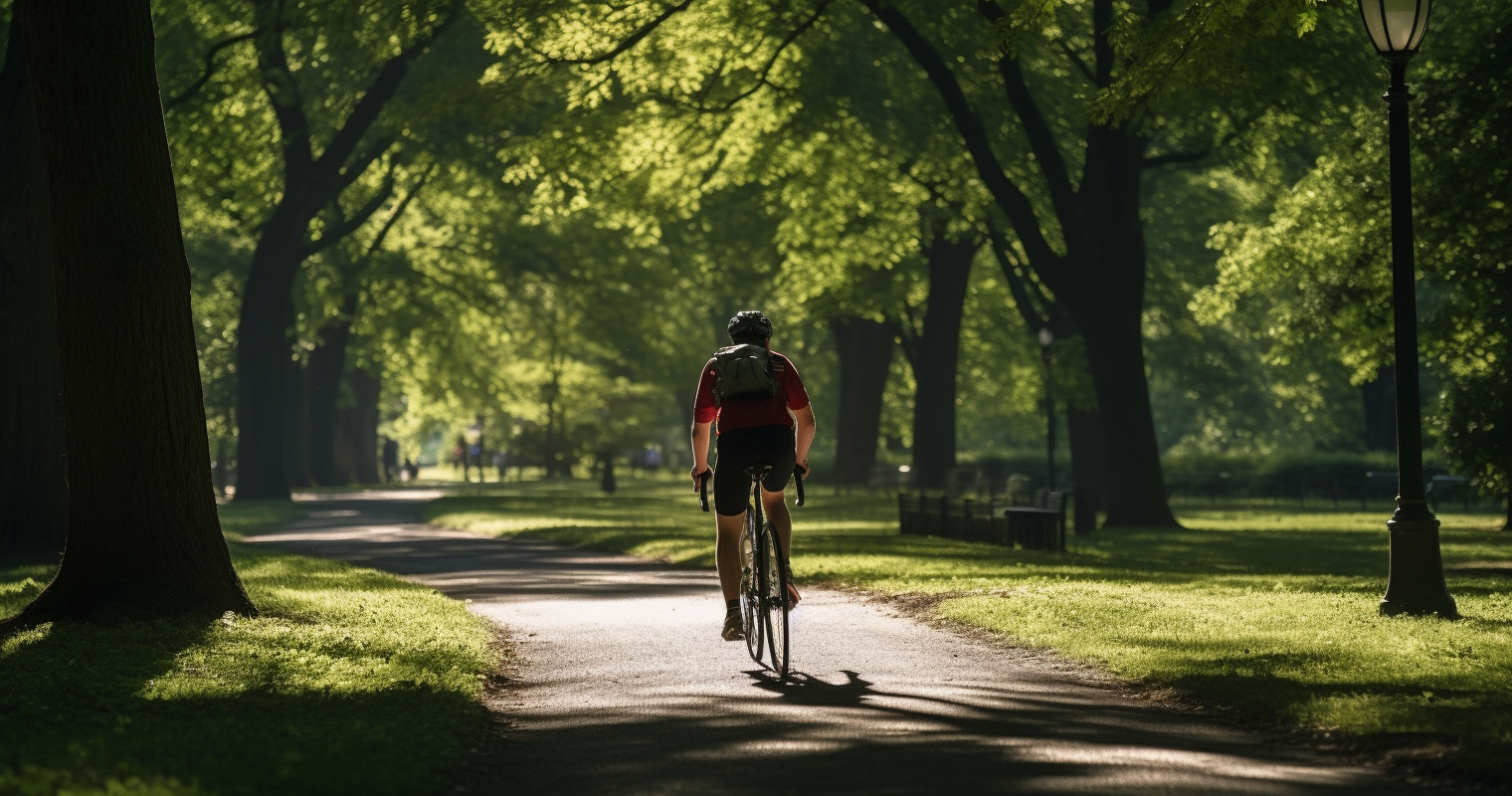
Malaysia is steadily gaining recognition as a cycling destination, though the activity remains largely recreational and sport-focused rather than a routine means of getting around. Dedicated cycling infrastructure is expanding — most noticeably in Kuala Lumpur, Putrajaya, and Penang — but coverage is uneven and inconsistent across the country. The combination of tropical heat, high humidity, busy traffic, and a shortage of protected lanes makes urban cycling a genuine challenge, even as scenic touring routes, park trails, and long-distance journeys stand out as real draws for active expats.
| Item | Details |
|---|---|
| Helmet law for cyclists | Not legally mandatory (as of 2025) — strongly recommended; mandatory for motorcyclists |
| Lighting requirement | Front white light and rear red light legally required between sunset and sunrise (Road Traffic Rules, Rule 35) |
| Fine for lighting/brakes/bell violations | Up to RM 2,000 or up to 6 months’ imprisonment (as of 2025) |
| Bike registration | Not mandatory for standard bicycles |
| Bike insurance | Not legally required for cyclists; recommended |
| Cyclist fatalities as % of road deaths | Approximately 2% of total road crash fatalities (as of 2018 police statistics) |
| Key infrastructure authority | Ministry of Transport Malaysia (MOT); local city halls (DBKL, MBPP) |
How popular is cycling in Malaysia — is it a common way to get around?
Cycling in Malaysia has been enjoying a renewed wave of interest, primarily as a sporting and leisure pursuit. As a daily commuting option, however, it remains far from the norm. In contrast to countries like the Netherlands or Denmark — where cycling accounts for a substantial proportion of all daily journeys — Malaysia’s deeply car-oriented transport culture means the vast majority of residents rely on private vehicles or public transport to reach work and run errands. Using a bicycle for everyday travel is still relatively uncommon in urban areas.
The dominance of the private car has deep historical roots. Kuala Lumpur’s rapid urbanisation from the 1960s onwards, combined with the government’s strong promotion of domestic car manufacturing — most notably through the launch of Proton in 1983 — entrenched personal vehicle ownership as the default mode of transport for generations of Malaysians. As a consequence, non-motorised forms of transport, including cycling, were largely marginalised. While attitudes are gradually shifting, cycling as an everyday activity is still something of a novelty for many people in the country.
Cycling advocates in Kuala Lumpur draw inspiration from cities like Copenhagen and Stockholm, envisioning a transport culture where cycling is seen as a healthy, affordable, and environmentally responsible alternative to driving. Malaysia remains at an early stage in realising that vision. Its cycling culture has more in common with other car-dominated Southeast Asian countries — such as Thailand or Indonesia — than with the well-established cycling societies of northern Europe. Expectations should reflect this reality.
Despite these structural challenges, enthusiasm for recreational cycling and sport riding is on the rise, and both the government and local authorities have responded by expanding bicycle tracks and dedicated lanes to make riding safer. Cycling clubs are active and accessible in most major cities, and weekend group rides and competitive events have become a lively fixture on the sporting calendar.
What is the cycling infrastructure like in Malaysia?
Kuala Lumpur has historically offered few cycling-friendly routes, and the city’s road network was designed overwhelmingly around motor vehicles. Proposals for a proper cycling infrastructure programme were laid out under the Kuala Lumpur Structure Plan 2020, supported by advocacy from groups such as Cycling Kuala Lumpur, which pushed for greater provision for riders in the urban environment. While conditions have improved in the years since, meaningful gaps in the network persist.
A landmark development was the construction of the 10 km Southwest Dedicated Bicycle Highway, designed to link Merdeka Square with Mid Valley Megamall. The 5.5 km first phase of this route was built at a cost of RM 700,000 and opened to the public in April 2015. Although this represented a significant step forward, the overall network still falls well short of what cyclists accustomed to mature cycling infrastructure — such as that found in the Netherlands or Germany — would consider adequate.
Bicycle lanes have been painted on roads across the Klang Valley and other cities for a number of years, yet these have not been formally recognised through legislation. The public transport advocacy organisation Transit Malaysia has highlighted concerns about the legal status of the blue and green lane markings in Kuala Lumpur and George Town, with one committee member noting that many are unaware that city halls and relevant authorities have yet to gazette the lanes or incorporate them into road bylaws.
Penang has shown more ambition, with government plans in progress to establish cycling lanes along the island’s coastal perimeter. Putrajaya — Malaysia’s purpose-built federal administrative capital — is generally considered the country’s most cycling-friendly urban environment, benefiting from wider dedicated paths and a more orderly traffic environment. Park and hill areas such as Bukit Kiara and FRIM (Forest Research Institute Malaysia) in Kuala Lumpur are also popular destinations for both road cyclists and mountain bikers.
Away from the major cities, dedicated cycling infrastructure is largely absent. Rural roads may offer wide shoulders but no separated lanes, and the upkeep of existing urban infrastructure can be unreliable — faded lane markings, incomplete networks, and construction works often intrude on designated cycling areas. Expats relocating from cities with extensive cycle lane networks should anticipate a substantial adjustment. The Ministry of Transport Malaysia and local authorities — including Kuala Lumpur City Hall (DBKL) and Penang’s MBPP — are the relevant bodies to approach for current route maps and information on planned improvements.
Is cycling safe in Malaysia?
Road safety is a significant national concern in Malaysia. Approximately 600,000 road accident cases were recorded in 2023, resulting in 6,443 fatalities — an average of 18 lives lost every day. Motorcyclists made up 65% of those killed, with riders and pillion passengers aged 16 to 35 particularly over-represented. The sheer volume of motorcycles on Malaysian roads is a defining feature of its traffic environment and one that cyclists must constantly bear in mind.
When it comes to pedal cyclists specifically, the data tells a somewhat different story. Based on 2018 police statistics, cyclist fatalities accounted for roughly 2% of the total 6,284 road crash deaths recorded that year. Nonetheless, readers should consult the Malaysian Institute of Road Safety Research (MIROS) for the most up-to-date figures, as road safety statistics are periodically revised and updated.
Because cycling culture is still in its formative stages in Malaysia, many motorists have limited experience sharing the road with cyclists, which creates real hazards. Cyclists are strongly advised to obey traffic rules at all times and to remain highly alert, particularly in urban environments where fast-moving traffic, motorcycles weaving unpredictably between lanes, and uneven road surfaces compound the dangers.
Additional hazards include roads with lanes widened to the point where drivers feel comfortable travelling at 70 km/h rather than 40 km/h, and the common practice of double-parking, which disrupts the flow of traffic and forces other road users — including cyclists — into more dangerous positions. The speed differential between cars and bicycles alone represents a substantial risk. Wearing high-visibility clothing is strongly encouraged: evidence suggests that cyclist conspicuity plays a meaningful role in crash prevention, and fluorescent colours are a straightforward and effective safety measure.
Helmets are not a legal requirement for cyclists (see the rules section below), but they are universally recommended and are standard practice within organised cycling groups. The Malaysia Road Safety Plan 2022–2030 sets out a strategic framework for reducing road casualties, and the latest developments can be tracked through MIROS and the Ministry of Transport website.
What are the rules of the road for cyclists in Malaysia?
The principal legislation governing cycling in Malaysia is the Road Transport Act 1987 and the Road Traffic Rules 1959. Together, these provide clear definitions of what constitutes a bicycle and who qualifies as a cyclist under Malaysian law. A bicycle is legally defined as a human-powered vehicle fitted with pedals, capable of being used both on and off road.
The key rules every cyclist must be familiar with include:
- Lights: From sunset to sunrise, all bicycles must display a white light at the front and a red light at the rear, each visible from a reasonable distance. This obligation is set out in Rule 35 of the Road Traffic Rules.
- Brakes and bell: Every bicycle must be fitted with a functioning brake for each wheel, as required under Rule 42(1)(a) of the Road Traffic Rules. A bell must also be fitted to the bicycle.
- Single file: Rule 42(3) of the Road Traffic Rules requires cyclists to ride in single file on public roads at all times. This rule is absolute — riding two abreast is not permitted regardless of the road type — and breach of this requirement can lead to a charge under Section 119 of the Road Transport Act.
- No hands-free rule: Rule 42(1)(c) of the Road Traffic Rules prohibits any person from riding a bicycle on a road while holding any object in either hand.
- Fines: Conviction for breaching these rules carries a penalty of up to RM 2,000 or a maximum custodial sentence of six months (as of 2025).
Helmets: While the Motorcycle (Helmet) Rules 1973 make helmets compulsory for motorcyclists, Malaysian law contains no equivalent requirement for cyclists. This stands in marked contrast to countries like Australia and New Zealand, where helmet use is legally mandated for all riders. In Malaysia, wearing a helmet is strongly encouraged but remains a personal choice in the eyes of the law. In practice, cycling groups almost universally enforce a “no helmet, no ride” policy.
E-bikes: The Malaysian government categorises electric bicycles according to specific technical criteria: the electric motor must not exceed 250 watts, the bicycle must not be capable of exceeding 25 km/h under motor power alone, and most e-bikes must require the rider to pedal in order to engage the motor. For comprehensive details on micromobility regulations, refer to the Ministry of Transport Malaysia and the Road Traffic (Prohibition of Use of Certain Micromobility Vehicles) Rules 2021.
It is worth noting that enforcement of these rules varies considerably by location. The level of attention paid by traffic police depends greatly on the area. Putrajaya’s district police chief, for instance, has taken cycling-related offences seriously following a fatal accident involving a cyclist in the area. Before riding in an unfamiliar location, always verify the latest legal requirements with the Ministry of Transport Malaysia or the Royal Malaysian Police.
Do I need to register my bike or have insurance to cycle in Malaysia?
Standard pedal bicycles do not need to be registered in Malaysia. Unlike motor vehicles and motorcycles, which must be formally registered with the Road Transport Department (JPJ), bicycles are exempt from this requirement. That said, the Ministry of Transport’s Safe Cycling Guide advises all cyclists to record their bicycle’s serial number. Most bikes carry a unique identification number, and keeping a note or photograph of this can prove invaluable if the bicycle is stolen, as it gives police a means of identifying and potentially recovering it.
There is equally no legal obligation to hold insurance in order to ride a bicycle in Malaysia. This is a meaningful distinction from the motorcycle insurance regime, under which every rider is legally required to hold a valid insurance policy — no such rule applies to cyclists. Nevertheless, personal accident cover and third-party liability insurance are sensible precautions for anyone cycling regularly, particularly in traffic.
Many expats already hold travel insurance or international health insurance policies that include provision for cycling-related injuries. It is worth reviewing the terms of any existing policy carefully before purchasing additional cover. For authoritative guidance on insurance products available in Malaysia, the Bank Negara Malaysia — the country’s central bank and insurance regulator — and licensed insurers operating in the country are the appropriate points of contact.
Are there public bike-sharing or rental schemes in Malaysia?
Malaysia has made several attempts at public bike-sharing, with mixed results. Kuala Lumpur hosted the launch of oBike — a dockless sharing scheme — around 2017, but the operator subsequently exited the market, mirroring the fate of numerous dockless bike-share ventures worldwide. More recent initiatives have generally been smaller in scale and more geographically focused.
Putrajaya operates a bike rental service that fits well with the city’s broad, purpose-built cycling paths and attracts both leisure riders and visitors. Penang has a range of tourist-oriented rental shops concentrated around Georgetown and the Balik Pulau cycling area, offering bikes on an hourly or daily basis. Langkawi, with its relatively flat terrain and attractive coastline, also has rental services aimed at tourists and expats.
When it comes to combining cycling with public transport, only foldable bicycles are permitted on buses and rapid transit services, and even these are banned during peak hours. On the Ampang Line, a maximum of five cyclists may board at any one time; on the Kelana Jaya Line, the limit is two; and only one cyclist is permitted on a bus. This is an important consideration for anyone planning a multi-modal commute involving cycling.
For the most current information on bike-sharing schemes, pricing structures, and operating zones, it is advisable to contact local municipal transport authorities directly, including Kuala Lumpur City Hall (DBKL) and Prasarana/RapidKL, as operators and services change frequently. As of 2025, no single city-wide bike-sharing system comparable to London’s Santander Cycles or Paris’s Vélib’ is in operation in Kuala Lumpur.
Where can I buy or service a bike in Malaysia?
The bicycle retail market in Malaysia is reasonably well established, especially in the larger urban centres. Kuala Lumpur, Petaling Jaya, Penang, and Johor Bahru all have dedicated bike shops spanning the full price range, from budget-friendly outlets to premium retailers carrying international brands such as Trek, Giant, Specialized, and Merida. Giant, in particular, maintains a strong retail and after-sales presence throughout the country.
Prices for quality road bikes and mountain bikes are broadly in line with other Southeast Asian markets, though high-end imported components may carry import duties that push costs above what buyers might expect to pay in Europe or parts of East Asia. Mid-range and entry-level bikes are widely available and offer solid value. The country’s active cycling community also sustains a lively second-hand market, with Facebook Marketplace and dedicated cycling forums serving as the primary platforms for trading used equipment.
Volunteers have produced detailed cyclist maps of Kuala Lumpur, carefully charting road-by-road the location of cycling lanes, off-street connectors, bike parking facilities, and bicycle shops — a practical resource for anyone seeking repairs or servicing in the city. In smaller towns and rural areas, bike shops tend to stock lower-cost utility bicycles rather than performance-oriented models. Expats who ride high-specification road or mountain bikes should plan to source specialist components in the city or through international online retailers, as rural outlets are unlikely to carry what is needed.
Consumer rights in Malaysia are protected under the Consumer Protection Act 1999, which provides a statutory basis for claims related to faulty goods. Reputable retailers routinely offer manufacturer warranties on new bicycles. Keeping your receipt and purchase documentation is always advisable, regardless of where you buy.
Can I bring my bike when I move to Malaysia, and are there any import rules?
Bringing a bicycle into Malaysia as part of an international relocation is generally straightforward, and personal belongings — including sports equipment such as bicycles — may qualify for relief from import duty under certain conditions. The Royal Malaysian Customs Department (JKDM) administers these rules, and it is essential to consult them directly for current requirements before shipping anything.
Under Malaysia’s personal effects exemption, items that have been owned and used for a qualifying period (check JKDM’s official guidance for the current threshold) may be imported duty-free when an individual is relocating permanently. A bicycle that is clearly second-hand and forms part of a household goods shipment is generally treated more favourably by customs than a brand-new bicycle in its original factory packaging, which may be assessed differently.
Where import duties do apply, standard bicycles are classified under HS Code 8712 in the Malaysian customs tariff. Applicable rates and taxes — including Sales and Services Tax (SST) — are subject to change, so current figures should always be confirmed with the Royal Malaysian Customs Department or a licensed customs broker before shipping. Providing thorough documentation of the bicycle’s age, estimated value, and intended use will help ensure a smooth clearance process. Airlines and freight companies typically require bicycles to be packed in a cardboard box or hard-sided case; airline handling fees for bicycles vary widely, so check directly with your carrier before travelling.
What are the best cycling routes or destinations in Malaysia?
Despite the limitations of urban cycling infrastructure, Malaysia has a great deal to offer those seeking memorable rides — particularly for touring, mountain biking, and leisurely exploration of its scenic landscapes.
- Penang Island: Many routes start from the Penang esplanade, threading past the island’s rich colonial architectural heritage. A much-loved ride takes cyclists out to Balik Pulau in the island’s southwest, where quieter roads pass traditional shophouses and offer a glimpse of a more rural, unhurried side of Penang.
- Cameron Highlands: Situated roughly 3.5 hours from Kuala Lumpur, the Cameron Highlands offer a variety of routes suited to cyclists of differing abilities. The significantly cooler temperatures at altitude make this an especially appealing destination for those put off by the intense heat of the lowlands.
- Singapore to Penang (West Coast Tour): This long-distance touring route follows the west coast of Peninsular Malaysia, passing through palm oil plantations and rice paddies for much of its length. Though demanding, it provides a vivid and immersive cross-section of the peninsula’s landscapes and communities.
- Borneo (Sabah and Sarawak): The Malaysian states on the island of Borneo — shared with Brunei and Indonesia — offer a diverse range of routes for mountain bikers and recreational cyclists alike, with lush jungle and highland terrain providing a dramatic backdrop.
- Putrajaya: Malaysia’s planned federal capital is the most cycling-friendly urban environment in the country, with wide dedicated paths skirting its lakes and government precincts — perfect for a relaxed and unhurried ride.
- FRIM and Bukit Kiara (Kuala Lumpur): These park and hillside areas on the fringes of Kuala Lumpur are popular with both road cyclists and mountain bikers, offering a green escape from the city without travelling far.
For route planning and information on upcoming events, the Malaysian Cycling Federation (MCF) and Tourism Malaysia are useful starting points. Road surfaces in Malaysia are generally in reasonable condition compared with much of Southeast Asia, and some dedicated cycling lanes alongside major roads even include sheltered rest stops providing some protection from heavy downpours.
Frequently asked questions about cycling in Malaysia
Is cycling a practical way to commute to work in Malaysia?
For the majority of expats based in major cities, using a bicycle as the primary mode of commuting presents real difficulties rather than being outright impossible. The tropical climate, congested roads, and fragmented cycling infrastructure make it a demanding proposition in Kuala Lumpur and similarly large urban centres. Short-distance commutes — particularly in Putrajaya or in neighbourhoods near dedicated cycling paths — are considerably more feasible. A popular solution is combining cycling with public transport, using a foldable bike on the rail network during off-peak hours.
Do I legally have to wear a helmet when cycling in Malaysia?
No Malaysian law requires cyclists to wear a helmet. However, helmets are strongly recommended in light of road conditions and traffic behaviour. Cycling clubs and organised group rides almost universally apply a “no helmet, no ride” policy. This contrasts with countries such as Australia and New Zealand, where helmet use is legally compulsory for all cyclists at all times.
What lights do I need on my bike in Malaysia?
Under Rule 35 of the Road Traffic Rules, all bicycles must be fitted with a white front light and a red rear light between sunset and sunrise, with both lights visible from a reasonable distance. Breaching this requirement can attract a fine of up to RM 2,000 (as of 2025). Even in daylight conditions, running lights remain a sensible safety measure given the way many drivers interact with cyclists on Malaysian roads.
Is it safe to cycle on Malaysian roads?
Malaysia’s overall road accident rate is high, and the safety of cycling depends greatly on where and how you ride. Many motorists have limited experience sharing the road with cyclists, which introduces genuine risk. Cycling in dedicated parks, along river corridors, or within Putrajaya’s road network is considerably safer than navigating heavy traffic on busy urban arterials. High-visibility clothing, functioning lights, and a preference for quieter routes are all advisable precautions.
Can I take my bicycle on public transport in Malaysia?
Only foldable bicycles are permitted on buses and rapid transit services, owing to their compact dimensions, and even these are prohibited during peak hours. On the Ampang Line, up to five cyclists may board at once; on the Kelana Jaya Line, the maximum is two; and only one cyclist is permitted on a bus at any given time. Always confirm the latest rules with RapidKL before travelling, as policies are subject to change.
Do I need to register my bicycle or buy insurance to ride in Malaysia?
No — there is no legal requirement to register a standard pedal bicycle in Malaysia, nor is there any obligation to hold insurance as a cyclist. That said, it is sensible to record your bicycle’s serial number in case of theft, and ensuring you have personal accident or travel insurance that covers cycling incidents is a wise precaution for anyone riding regularly.
Where is the best place for recreational cycling in Malaysia?
Putrajaya’s lakeside and parkway paths are widely regarded as the finest urban cycling environment in the country. Penang Island offers rewarding coastal and heritage rides, while the Cameron Highlands provide a cool-climate alternative for road cyclists. For off-road enthusiasts, FRIM and Bukit Kiara on the outskirts of Kuala Lumpur, and the jungle trails of Borneo, are among the most popular destinations. The Malaysian Cycling Federation is a good resource for finding organised events and mapped routes.
What should I know about the heat when cycling in Malaysia?
During the dry season, temperatures can climb to between 30°C and 37°C with humidity levels around 70%, making sustained physical effort genuinely taxing. Riding before 9am or after 5pm offers considerably more comfortable conditions. Staying well hydrated, wearing light-coloured and breathable fabrics, and protecting yourself from direct sun exposure are all essential. The monsoon season brings heavy and sometimes sudden rainfall — particularly on the East Coast — so careful route planning and timing are important during these months.