

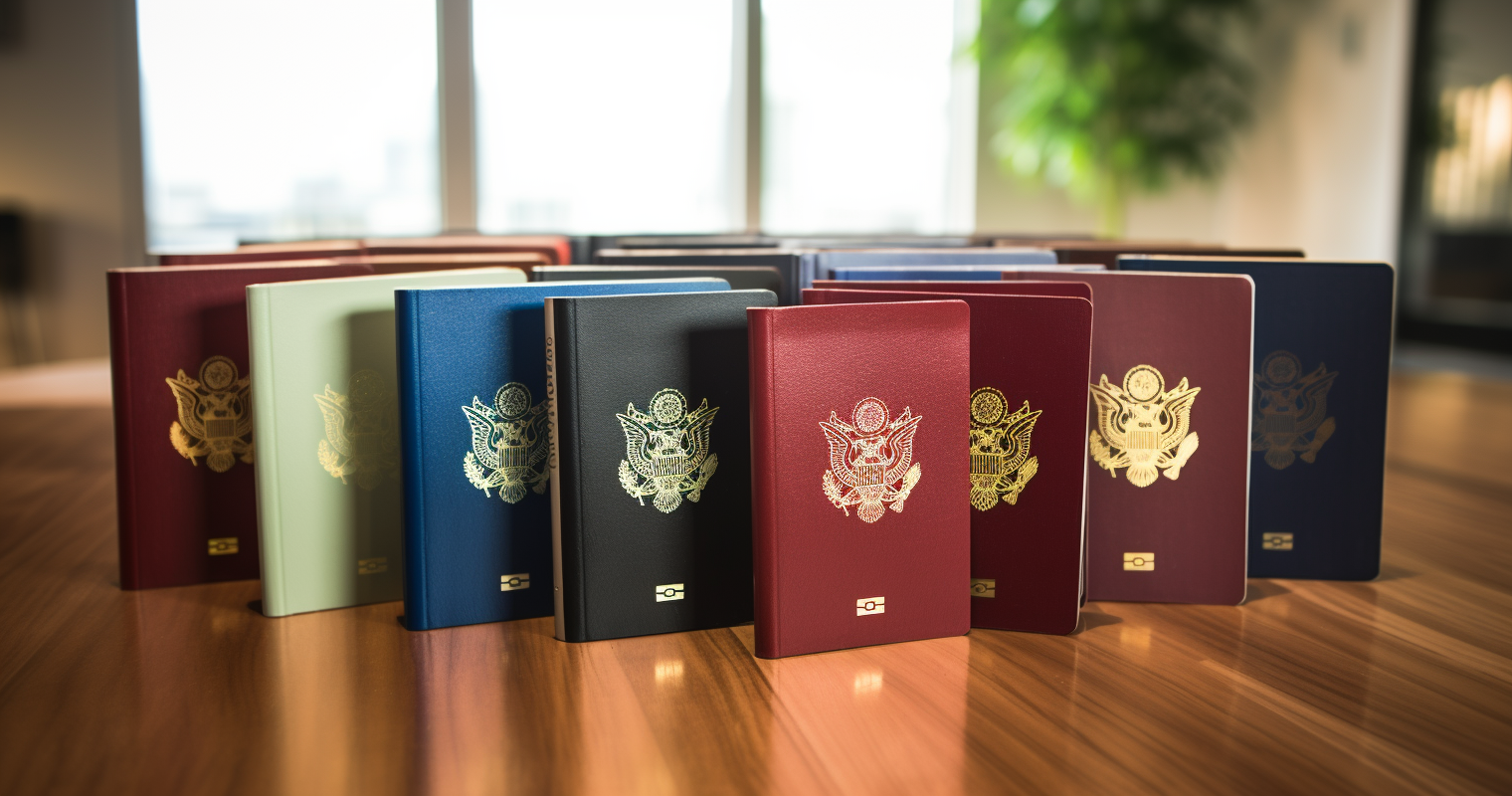
Romanian citizenship may be acquired through naturalisation following a period of lawful residence, through ancestry from a Romanian forebear, through marriage to a Romanian national, or through outstanding contributions to Romanian culture or civic life. The standard residency threshold stands at eight years, lowered to five years for those married to Romanian citizens. Romania fully embraces dual citizenship, so the vast majority of applicants are not required to give up their existing nationality.
| Item | Details |
|---|---|
| Standard residency requirement | 8 years of lawful residence (as of 2025) |
| Reduced residency for spouses | 5 years, if married to a Romanian citizen (as of 2025) |
| Language requirement | B1 level Romanian (CEFR) — mandatory from 2025 |
| Application processing time | Up to 2 years (official legal deadline, as of 2025) |
| Application fee (indicative) | Approximately €220 for adults; €100 for minors — check ANC for current figures |
| Dual citizenship | Permitted — no renunciation required |
| Official authority | National Authority for Citizenship (Autoritatea Națională pentru Cetățenie — ANC) |
| Passport travel access | Visa-free or visa-on-arrival to 178 countries (as of 2026, Henley Passport Index) |
Who is eligible to apply for citizenship in Romania?
Romanian nationality law is grounded primarily in the principle of jus sanguinis — “right of blood.” This means that citizenship passes through family lineage rather than being determined simply by the place of birth. There are several clearly defined pathways to citizenship, each carrying its own set of conditions.
Citizenship by naturalisation
Foreign nationals may naturalise as Romanian citizens after residing lawfully in Romania for a minimum of eight years, or five years in the case of those married to Romanian nationals. These are the baseline thresholds. For context, countries such as Germany and Austria similarly require roughly eight to ten years of residence before naturalisation is possible, while the UK requires five years of qualifying leave followed by one year of settled status — placing Romania’s standard timeline broadly in line with much of central Europe.
Applicants must be at least 18 years of age and must demonstrate a working knowledge of the Romanian language and culture. They are also required to show they have lawful means of financial support, a fixed place of residence in Romania, no criminal convictions, and that they present no threat to national security or public order.
The residency threshold can be reduced under certain circumstances. The standard eight-year period may be shortened by up to three years where an applicant has made a meaningful contribution to Romania’s economic life, pursued relevant educational achievements in the country, or rendered an exceptional contribution to Romanian culture, the promotion of human rights, social engagement, or voluntary work.
Citizenship by descent
Applicants may pursue Romanian citizenship through ancestry if they can trace their lineage to a forebear who was born either in present-day Romania or in a historically Romanian territory — encompassing what is now Bukovina, Bulgaria, Hungary, Moldova, and Ukraine. This route carries particular weight given the territorial changes Romania experienced throughout the twentieth century, and its ancestry pathway is among the most far-reaching in Europe, having attracted a large volume of repatriation applications from diaspora communities and neighbouring countries alike.
Direct descendants up to the second degree of a persecuted ancestor are eligible to apply, as are descendants up to the third degree of an ancestor born in Romania or a formerly Romanian territory. Crucially, applicants seeking citizenship through descent do not need to live in Romania in order to qualify. Children born outside Romania to Romanian parents acquire the right to Romanian citizenship at birth, with no requirement to submit a full application or satisfy any language proficiency conditions.
Citizenship by marriage
Marrying a Romanian citizen does not confer citizenship automatically, but it does reduce the required period of residency. Spouses of Romanian nationals benefit from a lower threshold of five years of marriage. The marriage must be genuine and ongoing — fraudulent or sham marriages entered into for the purpose of obtaining citizenship constitute criminal offences.
Exceptional contribution route
Two relatively recent provisions — Articles 8¹ and 8² — now open a pathway for stateless persons or foreign nationals to apply for citizenship irrespective of how long they have resided in Romania, provided they have made a significant contribution to the protection and promotion of Romanian culture, civilisation, and spiritual heritage, or have advanced Romania’s international profile through outstanding achievements, notably in sport. Eligibility under Article 8¹ must be confirmed by the Ministry of Foreign Affairs, which evaluates cultural contributions based on activities such as teaching, research, publishing in Romanian, or supporting Romanian communities abroad.
No citizenship by investment
Romania does not offer a citizenship by investment programme. While sizeable economic investment in Romania may help reduce the residency waiting period under certain provisions, it does not constitute an independent route to citizenship in its own right.
What are the steps involved in applying for citizenship in Romania?
The authority responsible for all citizenship applications is the National Authority for Citizenship (Autoritatea Națională pentru Cetățenie — ANC). The ANC’s official website at cetatenie.just.ro provides access to application forms, appointment booking, and the latest procedural guidance. This should always be your first port of call for current fees and requirements, as these are subject to change.
- Determine your eligibility and assemble your documents. Before submitting anything, identify which citizenship route applies to your situation. You will need a certificate confirming lawful residence in Romania for at least eight years (or five years if married to a Romanian citizen), issued by the General Inspectorate for Immigration. Further required documents include an apostilled and translated birth certificate, evidence of income or financial means covering the preceding three years, proof of accommodation, a criminal record certificate from your country of origin (apostilled and translated), and a notarised personal declaration confirming that you have not engaged in activities against national security.
- Obtain a Romanian language certificate. With effect from 2025, all persons applying for Romanian citizenship — whether through naturalisation or descent — must demonstrate B1-level proficiency in Romanian. The examination must be taken at an accredited institution within Romania. Exemptions are available for former Romanian citizens reapplying, applicants aged 65 or over, and minor children included within a parent’s application.
- Provide biometric data. Since 1 September 2024, the submission of biometric data has been a compulsory element of every citizenship application. Applicants must furnish fingerprints, a facial photograph, and an electronic signature.
- Schedule an appointment and lodge your application. Citizenship applications are handled by the ANC. You may submit your application in person at the central office in Bucharest or at one of the regional offices in Suceava, Galați, or Iași. Appointments must be reserved in advance, though available slots are frequently taken within hours of release. If you are applying through the descent route, you may also submit your application and supporting documents at the Romanian embassy in your country of residence.
- Application review and Official Gazette publication. The Citizenship Commission arranges, at the applicant’s cost, the publication of a summary extract of the application in the Official Gazette of Romania. The commission may only begin its substantive examination of the request once 30 days have elapsed from the date of publication. During this review window, the commission may request supplementary information or invite the applicant to attend for clarification.
- Attend the citizenship interview. Every applicant must participate in an official interview designed to assess their command of the Romanian language, as well as their knowledge of Romanian history, geography, culture, and the Constitution. Successfully completing this interview is a mandatory requirement.
- Receive the citizenship order. Where all conditions have been satisfied and the file is complete, the Citizenship Commission of the ANC will recommend approval. The President of the National Authority for Citizenship will then issue a formal order granting Romanian citizenship.
- Take the oath of allegiance. Persons whose citizenship applications have been approved must take the oath of allegiance within three months of being notified of the approval order. The oath is administered in a formal ceremony before the Minister of Justice and the President of the National Authority for Citizenship. It may be taken at the ANC in Bucharest or at a Romanian consulate abroad.
- Collect your citizenship certificate and apply for identity documents. Once the oath has been taken, you will receive your citizenship certificate. Sixty days after taking the oath, your Romanian citizen ID card will be issued, at which point you may apply for both the internal identity card and an international passport.
Regarding fees: the application fee for an adult is approximately €220 and for a minor approximately €100, payable in Romanian lei. Additional expenditure on translations, apostilles, language examinations, and notarised document copies will also be incurred. Always consult cetatenie.just.ro for the current official fee schedule, as these amounts are liable to change.
What tests, interviews, or ceremonies are required as part of the citizenship process in Romania?
Language proficiency requirement
Applicants must demonstrate intermediate proficiency in Romanian at B1 level under the Common European Framework of Reference (CEFR), either by presenting a language certificate from an accredited institution or by providing evidence of at least three years of education conducted in Romanian. The B1 standard — broadly corresponding to a functional conversational level — is the same minimum benchmark applied across many EU naturalisation processes. For comparison, both the UK’s Life in the UK test and the German naturalisation process similarly require functional language ability at a comparable level.
Citizenship interview
Language ability is assessed through an official interview, which goes beyond testing communication skills to examine the applicant’s understanding of Romanian culture, civilisation, and the Constitution of Romania. Without passing this interview, the citizenship application cannot proceed. Candidates must show practical command of the Romanian language alongside familiarity with the country’s history, culture, and constitutional framework. The ANC revised its test in 2025 to incorporate additional questions on civic participation and EU membership.
It is worth noting that there are presently no formal exemptions or adapted procedures for applicants who, due to illness, age-related cognitive decline, or disability, are unable to complete the standard interview. There are individuals who, for entirely objective reasons — illness, advanced age, disability — cannot pass the interview despite meeting all the substantive conditions for citizenship. No exception or specialist procedure currently exists for such cases, a gap that has been highlighted as a concern by advocacy groups.
Background checks
All applicants are subject to security and background vetting. Prior to the document review date, the president of the Citizenship Commission may seek information from any relevant authority regarding whether the applicant meets the requirements relating to loyalty to the Romanian state and good conduct. A clean criminal record from both Romania and the applicant’s home country is an essential prerequisite.
Oath of allegiance ceremony
During the ceremony, applicants must recite the oath in Romanian before the Minister of Justice and the President of the ANC, or two of the authority’s deputy officials. On completion, applicants receive a temporary citizenship certificate valid for two months. Romanian citizenship does not take effect from the date the order is signed, but from the moment the applicant takes the oath of allegiance — a structure comparable to the naturalisation ceremonies used in countries such as Australia and the United States, where the formal oath-taking is the legal point at which citizenship is conferred.
What are the benefits of citizenship in Romania?
EU citizenship and freedom of movement
Every Romanian citizen is simultaneously a citizen of the European Union. For many applicants, this is the most compelling advantage of acquiring Romanian nationality. By virtue of the right of free movement and residence enshrined in Article 21 of the EU Treaty, Romanian citizens are entitled to live and work in any EU member state. Romanian citizenship therefore confers the right to reside, work, study, and retire anywhere across the EU without restriction.
Passport strength and global travel
As of 2026, Romanian passport holders enjoy visa-free or visa-on-arrival access to 178 countries and territories, placing the Romanian passport 11th globally for travel freedom according to the Henley Passport Index. This includes the United States, which admitted Romania to its Visa Waiver Program in early 2025, enabling Romanian passport holders to travel to the US for tourism or business purposes for up to 90 days without a visa. Romania also became a full member of the Schengen Area in January 2025, further enhancing the passport’s utility for travel throughout Europe.
Right to vote and civic participation
Romanian citizens acquire the full right to participate in national, local, and European Parliament elections. They are additionally entitled to vote in European Parliament elections and local elections when residing in another EU member state. Citizens may also stand as candidates for elected public office and are eligible for certain public sector positions that are restricted to nationals.
EU consular protection
As EU citizens, Romanians travelling in countries where Romania has no diplomatic representation may turn to the embassy or consulate of any other EU member state for assistance. This is a practical safeguard when visiting destinations where Romanian consular coverage is limited or absent.
Access to healthcare, education, and social services
Romanian citizens are entitled to access public healthcare and education within Romania, as well as the right to own property in Romania without restriction. As EU citizens, they can also access healthcare and social systems in whichever EU member state they choose to reside in. Higher education qualifications obtained in any EU member state are recognised and valid across all other EU countries.
Business and property rights
Romanian — and by extension EU — citizenship makes it considerably easier to establish businesses, acquire property, and invest anywhere within the EU’s single market. Restrictions on land ownership or company formation that may apply to non-EU nationals do not extend to EU citizens.
Does Romania allow dual citizenship, or will you have to renounce your existing nationality?
Romanian citizenship law expressly permits the holding of dual nationality, so applicants are not required to surrender their current citizenship. This is a deliberate and notably inclusive feature of Romanian nationality policy. Romania’s approach contrasts sharply with countries such as Austria, Japan, and India, which generally require incoming nationals to renounce any previously held citizenship upon naturalisation.
Romania recognises dual citizenship, meaning applicants may retain their existing passport. Romanian dual citizens enjoy identical rights to those held by single-nationality citizens: they may vote, pay taxes, and are subject to the same legal obligations.
The position for those seeking to reacquire lost citizenship is particularly clear. Article 10 of the relevant law provides that Romanian nationality may be restored to a person who previously held and lost it, upon request, while that person retains any foreign nationality they currently hold. This provision has made Romania’s descent programme especially appealing to diaspora communities around the world.
It is essential to understand, however, that Romania’s permissive stance on dual nationality does not automatically protect your existing citizenship from the policies of your home country. Although Romania raises no objection to dual nationality, your country of origin may take a different view. Before embarking on the Romanian citizenship process, you should verify with the relevant official immigration or foreign affairs authority in your home country whether holding a second passport is permitted under its laws.
How long does it typically take to become a citizen of Romania?
The overall timeline from starting your Romanian residency to receiving citizenship varies considerably according to the route chosen. For those pursuing naturalisation, the qualifying period alone is substantial — and the application process only begins once that threshold has been met.
| Route | Minimum qualifying period | Typical processing time | Total indicative timeline |
|---|---|---|---|
| Naturalisation (standard) | 8 years’ lawful residence | Up to 2 years | 10+ years |
| Naturalisation (married to Romanian citizen) | 5 years’ lawful residence | Up to 2 years | 7+ years |
| Citizenship by descent | No residence required | 6 months to 2 years | 6 months to 2 years |
| Exceptional contribution | No fixed period | Variable | Variable |
On the subject of processing times: following recent amendments to the Romanian Citizenship Law, the officially prescribed processing period for a citizenship application is now set at two years. The National Authority for Citizenship, which is responsible for handling applications to acquire and reacquire Romanian citizenship, now has this extended timeframe within which to resolve cases submitted by foreign nationals.
In practice, many applicants report waiting longer than the statutory limit. The time required to obtain Romanian citizenship remains considerable, with numerous applicants describing waits of two to three years for a decision and no marked improvement in the pace of processing in recent times.
For citizenship through descent, the process generally takes anywhere from six months to two years, depending on the National Authority for Citizenship’s current workload and the time required to verify documents with other institutions in Romania or abroad.
Once citizenship has been granted and the oath taken, the internal ID card is ordinarily issued within five working days, after which a passport application can be submitted. Always check cetatenie.just.ro for the most current processing timelines, as these are subject to change in line with application volumes.
What are the main reasons an application for citizenship in Romania might be refused?
Knowing the grounds on which applications are refused allows prospective applicants to ensure their file is as robust as possible before submission. The most frequently encountered reasons include the following:
- Failure to satisfy the residency requirement. All naturalisation applications are contingent on the applicant having resided lawfully in Romania throughout the qualifying period, with a valid residence permit in force. Gaps or irregularities in residency documentation are a recurring source of difficulty.
- Failure to meet the language requirement. One of the most significant recent legislative changes is the introduction of Romanian language proficiency as a mandatory requirement for all applicants seeking to acquire or reacquire citizenship by naturalisation. Failing the language interview will result in the application being rejected.
- Unjustified absence during the application process. An unaccounted absence of two consecutive years from Romania while a naturalisation application is pending will render that application untenable.
- Criminal record or security concerns. Applicants who have been convicted of serious offences, or who are assessed as posing a risk to public order or national security, will be refused citizenship.
- Incomplete or defective documentation. Absent apostilles, missing translations, expired documents (civil status documents must generally have been issued within two years of the application date), or documents that cannot be independently verified may all result in delays or outright refusal.
- Insufficient evidence of financial means. Applicants must demonstrate that they have legal means of sustaining a decent standard of living in Romania, including proof of income earned in Romania over the preceding three years.
- Fraudulent application. Any misrepresentation of facts, submission of forged documentation, or entry into a sham marriage for the purpose of obtaining citizenship will result in refusal and may attract criminal liability.
Is there an appeals process?
If an application is rejected, a fresh application may be submitted no sooner than six months after the date of the rejection decision. That decision may also be challenged by way of appeal before the Bucharest Tribunal within 15 days. Applicants experiencing prolonged delays rather than a formal rejection also have legal recourse: under Romanian administrative law, it is possible to seek a court order compelling the ANC to issue a decision where the statutory processing time has been exceeded.
Where can you find reliable, up-to-date information about citizenship in Romania?
Given that requirements, fees, and processing times shift frequently — as illustrated by the substantial legislative reforms introduced in 2024 and 2025 — it is vital to consult official government sources directly rather than placing reliance on third-party blogs or aggregator websites.
- National Authority for Citizenship (ANC) — cetatenie.just.ro: The primary official resource for all citizenship-related matters, including application forms, appointment scheduling, fee schedules, and procedural guidance. This is the definitive first stop for any query relating to naturalisation, descent applications, or reacquisition of citizenship.
- General Inspectorate for Immigration (IGI) — igi.mai.gov.ro: The authority responsible for residence permits and immigration matters in Romania. This is the relevant body for confirming your residency history and obtaining the residence certificate required for a naturalisation application.
- Ministry of Internal Affairs (MAI) — mai.gov.ro: The supervising ministry with overarching responsibility for immigration and citizenship matters in Romania.
- Romanian embassies and consulates abroad: For applicants based outside Romania who are applying via the descent route, the relevant Romanian embassy or consulate serves as an authorised submission point. A full directory of Romania’s diplomatic missions can be found via the Ministry of Foreign Affairs (mae.ro).
Official government websites remain the only dependable source for accurate, current requirements, fees, and processing times. If you engage a legal adviser or immigration specialist, verify that they are directing you to official sources rather than outdated information.
Frequently asked questions
Do children born in Romania automatically receive Romanian citizenship?
Under Romanian law, individuals born on Romanian territory automatically acquire Romanian citizenship, except in certain specific cases provided for by law. Since Romanian nationality law is founded primarily on jus sanguinis, citizenship through birth on Romanian soil principally applies in situations where the parents’ nationality cannot be established, as is the case with foundlings. Children found in Romania are treated as Romanian citizens unless and until the contrary is demonstrated.
Do children born abroad to Romanian parents automatically receive citizenship?
Children born outside Romania to Romanian parents acquire the right to Romanian citizenship by birth, without any requirement to submit a full citizenship application or meet language proficiency conditions. Although citizenship is conferred automatically, the child’s birth abroad should be registered with Romanian authorities — either at a consulate or in Romania itself — in order to obtain a Romanian birth certificate and passport. This typically requires the submission of the foreign birth certificate, the parents’ identity documents, and a marriage certificate where applicable.
Can Romanian citizenship be lost or revoked?
Romanian citizenship may be voluntarily renounced by a Romanian citizen. It may also be revoked in cases of fraud, misrepresentation, or where citizenship was obtained on the basis of documentation subsequently found to be falsified. Between 2013 and 2022, the National Agency for Citizenship received 64 applications for revocation of Romanian citizenship, of which 11 were granted. Citizenship is not automatically forfeited upon acquisition of another nationality, as Romania permits dual citizenship.
What happens if I move abroad during the application process?
An unjustified absence of two consecutive years from Romania during a naturalisation application will render that application untenable. However, for applicants pursuing the citizenship by descent route, once the file has been submitted, it is permissible to return abroad and await the outcome remotely. The rules differ depending on which route is being followed, so you should confirm with the ANC exactly which conditions apply to your particular application.
Can minors be included in a parent’s citizenship application?
Children under the age of 18 at the time of the application may be included in a parent’s citizenship file. Where minor children are granted Romanian citizenship together with one or both parents, they are registered in the parents’ citizenship certificate and are not required to take the oath of allegiance separately.
Can I apply for Romanian citizenship from abroad, without living in Romania?
Yes — but exclusively through the citizenship by descent route. The application must be lodged in person, but if you are a descendant of a Romanian citizen, you may submit the application and all supporting documents at the Romanian embassy in your country of residence. The naturalisation route is not available remotely, as it requires actual lawful residence in Romania for the full qualifying period.
Does holding Romanian citizenship mean I have to live in Romania?
Holding a Romanian passport carries no obligation to reside in Romania. You remain free to maintain your existing place of residence or to relocate to any EU country. Citizens by descent in particular acquire the full range of citizenship rights regardless of where in the world they live, and may access Romanian consular services from any country.
Can I track the status of my citizenship application?
Application progress can be monitored via the National Authority for Citizenship website. When you submit your file, you will be given a “dosar” registration number confirming that your application has been officially received. This number can subsequently be used to check the current status of your application through the ANC’s online tracking facility.
Are there fees for applying for Romanian citizenship, and what do they cover?
The application fee for an adult is approximately €220 and for a minor approximately €100, both payable in Romanian lei. Beyond the application fee itself, further costs are incurred for document translations, apostilles, language examinations, and notarised copies of documents, which may together add several hundred euros to the overall expense. Always verify the current fee schedule directly with the ANC at cetatenie.just.ro, as these figures are subject to change.
What is the citizenship situation for people who lost Romanian citizenship before 1989?
Former Romanian citizens who lost their nationality before 22 December 1989 for reasons beyond their control, or whose citizenship was withdrawn without their consent, are able to apply for its reacquisition. The same procedure is open to their second-degree descendants. This provision reflects Romania’s commitment to restoring the bond between the state and those whose connection to it was severed under the policies of the communist era.
Is there a fast-track or priority route for any applicants?
Citizenship applications are generally processed in the order in which they are registered. However, meaningful exceptions exist: files submitted under Articles 10 and 11 — covering former Romanian citizens and their descendants — are accorded priority in processing, as are files submitted by stateless persons. Applicants whose exceptional contributions to Romanian culture, or whose internationally recognised achievements, are assessed under the 2025 provisions may also have their cases considered outside the standard residency-based processing queue.