

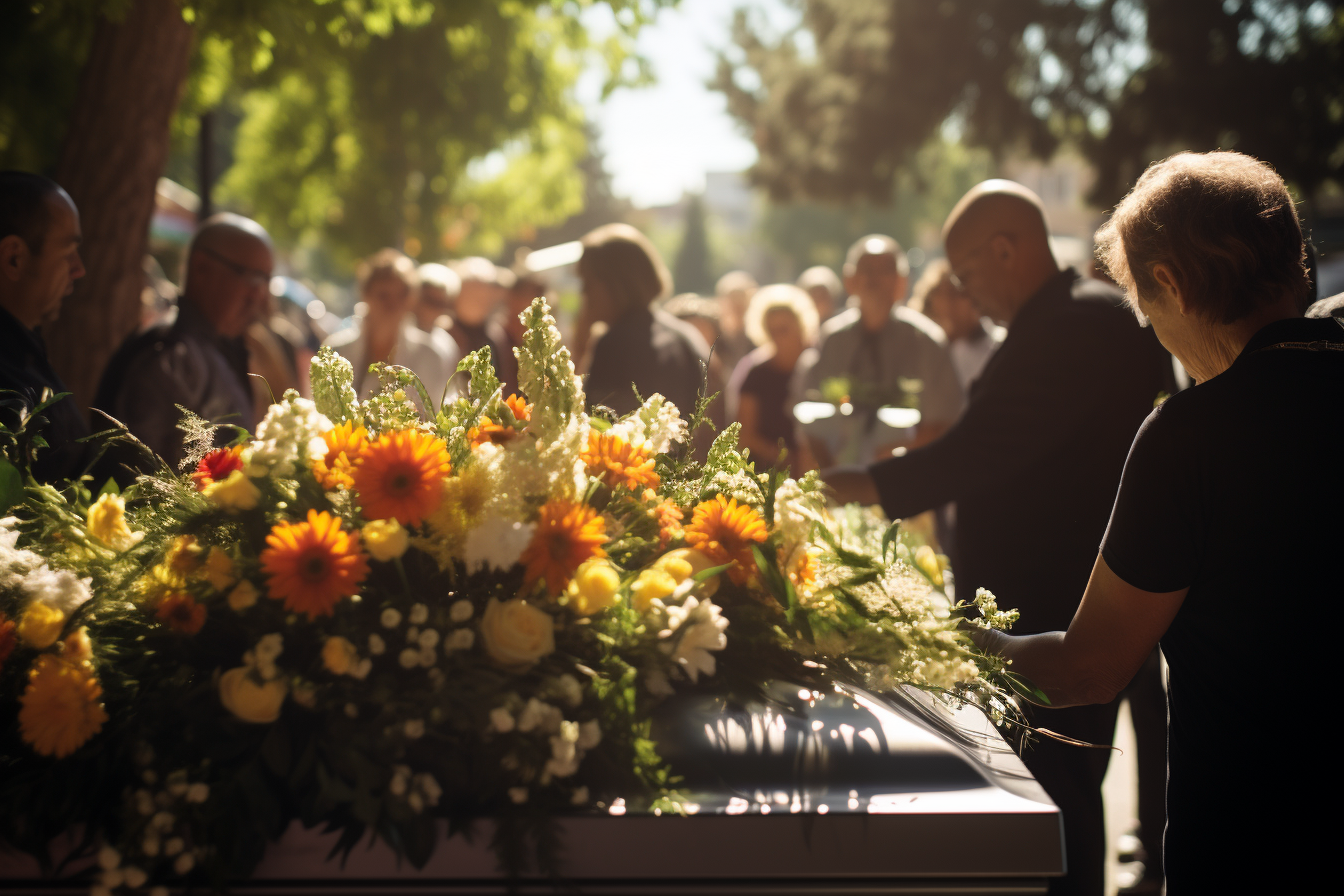
End of life care in Peru is delivered through a combination of public hospitals, private medical facilities, and a modest hospice sector concentrated largely in Lima and the country’s other main urban centres. While palliative services are gradually expanding, they remain insufficient relative to the level of need. Expats are advised to prepare relevant legal documentation well ahead of time, to understand that death administration in Peru runs through RENIEC (the national civil registry), and to contact their home country’s embassy without delay when a foreign national passes away.
| Item | Details |
|---|---|
| Death registration authority | RENIEC (Registro Nacional de Identificación y Estado Civil) |
| Death registration timeframe | Within a few days of death; prompt notification required |
| Palliative care coverage (public) | Limited; EsSalud provides some coverage for insured workers; SIS covers some low-income patients |
| Euthanasia / assisted dying | Illegal in Peru as of 2025 |
| Advance directives | Not formally legislated in Peru; a notarised document is strongly recommended |
| Repatriation timeframe | Typically 1–3 weeks depending on paperwork and destination country |
What end of life care options are available in Peru, and how does the system work?
End of life care in Peru is channelled through three principal routes: the public health system, which operates primarily through EsSalud and the Ministry of Health’s hospital network; private hospitals and clinics; and a small but gradually expanding group of specialist palliative and home-care providers. The standard of care and its availability differ markedly between Lima and rural regions, and between patients with private cover and those who depend entirely on public services.
Where palliative services do exist, they are typically delivered by interdisciplinary teams made up of physicians, nurses, and often psychologists, social workers, or other allied health professionals. In practice, the great majority of deaths in Peru occur in general hospital wards rather than in purpose-built end of life facilities, reflecting the early stage of development of the country’s hospice sector.
Specialist services are mostly located in major cities, and programmes are predominantly oriented towards adult patients — paediatric palliative care remains especially scarce. Expats residing outside Lima or Arequipa are likely to find access to specialist end of life support quite restricted and should take this into account when making long-term plans.
Across Latin America, cancer care is marked by pronounced inequalities both between and within individual countries, and end of life provision reflects this broader pattern. Limited access to advance care planning, inadequate palliative infrastructure, and restricted availability of pain-relieving medications are recurring concerns across the region. For expats seeking reliable access to specialist services, private care or comprehensive international health insurance is strongly recommended.
What is palliative care in Peru, and who is eligible for it?
Palliative care is an approach to medicine centred on alleviating pain and enhancing quality of life for those living with serious or terminal conditions, rather than on pursuing treatments aimed at cure. It addresses the physical, psychological, social, and spiritual dimensions of suffering through early identification, thorough assessment, and appropriate intervention — encompassing both the patient and their family throughout the illness journey.
As is common across Latin America, palliative care in Peru tends to be closely associated with oncology services, with roughly a quarter of programmes reportedly restricted to patients with cancer diagnoses. This means that individuals with other life-limiting conditions — such as advanced heart failure, chronic obstructive pulmonary disease, or dementia — may encounter considerable difficulty accessing dedicated palliative support.
A 2024 study carried out at a public hospital in Tacna highlighted the extent of unmet need: only 3.8% of patients had previously received palliative care, yet using the Murtagh method, 82.9% of those who died were identified as requiring it. The leading diagnoses among those needing palliative care were neoplasms (33.5%), chronic obstructive pulmonary disease (15.1%), and renal disease (11.3%).
In principle, any patient — whether a Peruvian citizen or a foreign resident — receiving care within the EsSalud or Ministry of Health system may be referred for palliative support wherever it is available. In reality, access depends heavily on what a particular facility can offer. Private hospitals in Lima are the most likely settings in which structured palliative care programmes will be found.
Are there hospices in Peru, and how do you access them?
The World Health Organization placed Peru in group 3 of its global palliative care capacity assessment — a category characterised by uneven palliative care activism, heavy reliance on donor funding, restricted morphine availability, and a small number of hospice and palliative care services that tend to be home-based and modest in scale relative to the population they serve.
Among the 35 countries in Latin America, Peru is one of ten with a national palliative care association. The Sociedad Peruana de Cuidados Paliativos (SPCP) is Peru’s professional body for those working in palliative medicine and can serve as a useful first point of contact for expats looking for referrals or information about specialist providers in their area.
Key challenges include low public awareness of hospice care as an option, and cultural attitudes towards end of life services that can affect demand. There is room to expand both awareness and access — particularly in rural areas where specialist care is virtually absent. Some private providers, including home healthcare companies operating in Lima and Arequipa, offer palliative-style home care that may be accessible to expats holding private insurance.
The standard route to accessing hospice or specialist palliative care in Peru is through a referral from a treating doctor, whether within the public system or via a private clinic. Expats should raise the subject of palliative care options explicitly with their physician and, if necessary, request onward referral to one of the larger Lima hospitals or private providers with dedicated units.
Is palliative or hospice care covered by public health insurance in Peru, or does it need to be funded privately?
Peru’s public health system is structured around two main programmes: EsSalud (Seguro Social de Salud), which covers formally employed workers and their eligible dependants, and the Seguro Integral de Salud (SIS), which is designed for lower-income or uninsured Peruvians. EsSalud is the social health insurance agency that provides health coverage for workers in Peru. Expats who are in formal employment in Peru and make contributions to EsSalud may be able to access whatever palliative care services exist within that network.
However, given the limited state of Peru’s hospice and palliative care infrastructure, the gap between what is theoretically covered and what is actually available in practice can be considerable. Unlike systems with more clearly defined benefit packages — such as the NHS in the United Kingdom, where hospice care is predominantly publicly funded, or Australia’s Medicare system, which includes a structured palliative care benefit — Peru has no nationally defined and funded palliative care entitlement.
The majority of expats in Peru rely on private international health insurance to fund palliative and end of life services. It is essential to review your policy carefully to confirm whether it explicitly covers palliative care, hospice services, home nursing, and sustained pain management within Peru, as the terms differ substantially between insurers. Private specialist palliative care in Lima can be costly, and it is advisable to clarify any financial exposure with your provider before care begins.
What legal documents should expats have in place before the end of life in Peru — such as a living will, advance directive, power of attorney, or healthcare proxy — and how do these work?
Every expat living in Peru should give serious thought to assembling a set of key legal documents well before they are ever required. The most important of these are: a will (testamento), a general power of attorney (poder notarial), a healthcare power of attorney designating someone to take medical decisions on your behalf, and an advance directive or living will setting out your preferences in relation to life-sustaining treatment.
Peru does not have a single, standardised national law governing advance directives in the way some other countries do. In practice, however, a document prepared in Spanish, notarised by a Peruvian notary, and clearly expressing your healthcare wishes is likely to carry the most weight with medical staff and institutions. The document should address your views on resuscitation, mechanical ventilation, artificial nutrition and hydration, and palliative care preferences.
A power of attorney (poder notarial) executed in Peru is a vital document that designates a trusted individual to handle your legal, financial, and potentially medical affairs should you become unable to do so yourself. This should be drawn up with a qualified Peruvian notary and, for expats, ideally in consultation with a bilingual Peruvian lawyer who has familiarity with both Peruvian law and the legal system of your home country.
If you hold assets in Peru, your will should also be prepared in accordance with Peruvian law, since Peruvian inheritance rules (discussed below) will bear on how your estate is administered. Keeping authenticated copies of all documents somewhere safe but accessible, and ensuring that your next of kin and home country’s embassy are aware of their existence, is strongly advisable.
Are documents such as advance directives or powers of attorney made in another country legally recognised in Peru?
Documents executed in a foreign country — including powers of attorney, advance directives, and wills — can in principle be recognised in Peru, but they must pass through a formal authentication process before they carry legal effect. The standard international mechanism for this is the Apostille, and Peru is a signatory to the Hague Convention of 1961, meaning it recognises apostilled documents.
In Peru, the Ministry of Foreign Affairs is the competent authority for issuing apostilles on public documents. Documents commonly requiring apostille include birth, marriage, and death certificates, as well as notarial and judicial instruments. A foreign power of attorney or notarised document will generally need to be apostilled in its country of origin before Peruvian authorities or institutions will accept it.
Once apostilled, foreign documents will typically also need to be officially translated into Spanish by a certified legal translator (traductor público juramentado) accredited in Peru. Even with both apostille and translation in place, some Peruvian institutions — particularly hospital staff during emergencies — may not be equipped to act on a foreign advance directive. For this reason, preparing a separate Peruvian-law document locally, alongside any foreign document, provides an important additional safeguard.
Expats should seek advice from a Peruvian notary or lawyer to confirm the current requirements for recognition, as these may be subject to change. Your home country’s embassy or consulate in Lima may also be able to suggest bilingual legal professionals with experience in cross-border matters.
What are the laws around euthanasia or assisted dying in Peru?
As of 2025, both euthanasia and assisted dying are unlawful in Peru. Under Peru’s Penal Code, causing the death of another person — even at that person’s explicit request and with the intention of ending their suffering — constitutes a criminal offence. The concept of “homicidio piadoso” (mercy killing) is recognised in the Penal Code as a lesser category than homicide, but this does not render the act legal.
Peru has no legislation establishing a legal framework for physician-assisted dying, and no meaningful parliamentary initiative to introduce such a law has advanced in recent years. The country’s strong Catholic cultural and institutional heritage has historically been a significant influence on policy in this domain. Medical professionals in Peru are prohibited from assisting a patient in bringing about their own death, and doing so would expose the practitioner to criminal prosecution.
Patients do retain the right to decline unwanted medical treatment, and the withdrawal or withholding of burdensome or futile life-sustaining interventions is broadly accepted within medical ethics in Peru, even if not always explicitly codified in law. Palliative sedation — the controlled use of sedative medication to relieve otherwise unmanageable suffering in the final stages of life — is a recognised and accepted practice within palliative medicine, and is considered legally and ethically distinct from assisted dying. Expats with particular concerns about end of life decision-making should discuss their wishes openly with their medical team and ensure their preferences are recorded in writing.
What are the local customs, traditions, and religious practices around death and dying in Peru?
Peru is a predominantly Catholic country, and Catholic traditions exert a strong influence on how death and dying are experienced across much of the population. When someone is approaching death, it is customary for family and close friends to gather at the bedside, to pray together, and for a priest to administer the Anointing of the Sick (last rites). The presence of family at the moment of death is deeply valued, and loved ones will often maintain a continuous vigil through the final hours.
After a death, a wake (velorio) is typically observed, usually lasting one to two nights, during which relatives, friends, and community members come together to pray, share memories, and grieve collectively. The body is generally laid out in the family home or at a funeral parlour during the wake. Catholic funeral Masses are customary, followed by interment in a cemetery. Cremation is available and growing in use, though it remains less traditional and may be viewed with some reservation in more conservative or indigenous communities.
In the Andean highlands and among indigenous populations, death is often understood through a spiritual framework that weaves together Catholic and pre-Columbian beliefs. In certain communities, death is conceived as a passage to another realm rather than a final conclusion, and associated rituals may include offerings of food and drink placed for the deceased. The Día de los Muertos (Day of the Dead), observed on 1–2 November, is a significant occasion on which families visit cemeteries to decorate graves and pay tribute to departed relatives — a tradition that intertwines indigenous and Catholic practice.
Expats from different religious backgrounds will find that Lima and other large cities host a variety of faith communities — Protestant, Jewish, Islamic, and others — that can offer appropriate pastoral care. Communicating specific religious or cultural preferences to the hospital or care provider in advance helps ensure that these are honoured.
What must you do when someone dies in Peru? Who do you notify, how quickly, and in what order?
The period immediately following a death in Peru requires swift action across a number of administrative and practical fronts. Below is the recommended sequence of steps for family members or next of kin.
- Obtain a medical death certificate. A physician, hospital, or morgue must formally certify the cause of death. The certificate is issued by the doctor, hospital, or morgue at the time of death. Where the death is sudden or the cause is uncertain, the body must be reported to the police, who may refer the matter to the forensic medical service (Instituto de Medicina Legal).
- Notify the police (if death was sudden or unattended). If a person dies outside a medical facility without medical supervision, Peruvian law requires that the police be notified. Police will liaise with forensic authorities to establish the cause of death before a death certificate can be issued.
- Register the death with RENIEC or the local civil registry. RENIEC (Registro Nacional de Identificación y Estado Civil) is an autonomous constitutional body of the State of Peru responsible for maintaining records of births, marriages, divorces, and deaths. Registration should be completed as promptly as possible — within a few days of the death — at a RENIEC office or a local municipal civil registry.
- Obtain the official Peruvian death certificate (Acta de Defunción). Death certificates are issued by the Provincial Council, the District Council, or by RENIEC where civil registries have been absorbed into that body. Obtain multiple certified copies, as several institutions will each require one.
- Notify the home country’s embassy or consulate. Where the deceased is a foreign national, their embassy or consulate should be contacted as soon as possible — ideally within 24 to 48 hours. Most embassies operate an emergency out-of-hours line specifically for situations of this kind.
- Engage a licensed funeral home. A reputable funeral home (funeraria) will attend to the preservation and transport of the remains, coordinate burial or cremation arrangements, and — where necessary — oversee the repatriation process. The responsibility for engaging and contracting with a local Peruvian funeral home rests with the family.
- Notify insurers and relevant institutions. The deceased’s health insurer, life insurer, bank, and employer (where applicable) should all be informed promptly. Each will require certified copies of the death certificate.
- Begin estate administration. Seek advice from a Peruvian lawyer (abogado) to initiate the probate or succession process, particularly if the deceased held assets in Peru.
How is a death officially registered in Peru, and what documents are needed?
In 2015, RENIEC — working in partnership with the Ministry of Health and the National Statistics Institute (INEI) — launched the Sistema Informático Nacional de Defunciones, a national computerised death certification platform designed to streamline the certification process online. Despite this modernisation, the formal registration of a death must still be completed in person at a RENIEC office or an authorised civil registry.
The documents typically required to register a death in Peru include: the medical death certificate signed by the attending physician or forensic doctor; the identity document of the deceased (a passport in the case of a foreign national, or a DNI for those with Peruvian residency); a valid identity document belonging to the person registering the death (next of kin or their representative); and documentation confirming the registrant’s relationship to the deceased, such as a birth or marriage certificate.
A person cannot register the death of a close family member without a recognised national identity document. For foreign nationals acting as next of kin, a valid passport serves as the accepted equivalent. Once registered, the death certificate is among the documents that will require an Apostille if it is to be used in legal proceedings outside Peru; this is issued by Peru’s Ministry of Foreign Affairs.
It is advisable to obtain at least five or six certified copies of the Peruvian death certificate at the point of registration, as banks, insurance companies, embassies, and courts will each require an original certified copy for their own administrative purposes.
What happens if a foreign national dies in Peru — what are the specific steps for notifying their home country’s embassy or consulate, and what role does the consulate play?
When a foreign national dies in Peru, their home country’s embassy or consulate in Lima assumes a central coordinating role. Notification should be made as early as possible — ideally within 24 to 48 hours of the death. Most embassies maintain a 24-hour emergency line for exactly these situations. Contact details for major embassies can be found on their official websites and through Peru’s Ministry of Foreign Affairs directory.
The consulate’s function is principally advisory and documentary rather than operational. For instance, the American Citizen Services Unit at the US Embassy will produce a Consular Report of Death Abroad (CRDA) — a document derived from the Peruvian death certificate that can be used in most legal proceedings in the United States as evidence of a death overseas. Most other embassies issue equivalent formal notifications to the appropriate authority in the deceased’s home country.
To produce a consular report of death, embassies typically require: a death report from RENIEC; the death certificate issued by the doctor, hospital, or morgue; an identity document belonging to the next of kin; evidence of the relationship between the next of kin and the deceased; and the deceased’s passport.
The consulate will also advise families on Peruvian legal requirements and locally available resources for managing their loved one’s remains and personal possessions. However, an embassy cannot act as a funeral agent and bears no financial responsibility for related costs. Families must make their own direct arrangements with a Peruvian funeral home.
How are funerals typically arranged in Peru, and what are the usual options for burial or cremation?
Funerals in Peru are arranged through private funeral homes (funerarias), which manage everything from body preparation and the wake through to transportation to the cemetery or crematorium. No state-run funeral service exists. In Lima, several well-established funeral homes offer services in both Spanish and, increasingly, other languages, with some providers having particular expertise in international cases and repatriation.
Burial in a Catholic cemetery remains the most prevalent choice. Many families observe a wake (velorio) lasting one or two nights before the funeral Mass and burial take place. In urban areas, niches or mausoleum spaces are widely used, with costs varying according to the location and standing of the cemetery. Some cemeteries offer permanent burial rights; others operate on a renewable lease arrangement, so it is important to clarify the terms of any agreement before committing.
Cremation is available in Lima and other major cities and is becoming more accepted, particularly among non-Catholic communities and those who plan to repatriate remains. Ashes may be kept by the family, scattered in a permitted location, or interred in a cemetery niche. Expats who wish to have their ashes returned to their home country should establish the destination country’s import requirements in advance, as these vary considerably between jurisdictions.
What are the approximate costs of a funeral in Peru, and are there any state or insurance-based funds that can help cover them?
Funeral costs in Peru vary significantly depending on the services selected, the funeral home engaged, and the location. A basic funeral with burial in Lima might cost in the range of approximately USD 800 to USD 2,000 (as of 2024), while more comprehensive arrangements — including a private cemetery plot, an extended wake, and a full Catholic funeral Mass — can cost considerably more. Cremation is generally somewhat cheaper than burial, though this varies by provider.
For those enrolled in EsSalud, some financial assistance is available. EsSalud is responsible for providing a subsidy towards funeral costs. This subsidy is directed at insured workers and their immediate dependants, however, and the amount is modest. The current subsidy level should be confirmed directly with EsSalud, as figures are periodically revised.
Expats holding life insurance — whether through a Peruvian or international policy — may be entitled to a death benefit that can contribute to funeral costs. Some international health insurance policies also include a repatriation benefit covering the cost of returning remains to the policyholder’s home country. Policy documents should be reviewed carefully, and your insurer notified as promptly as possible.
Peru has no general state funeral fund available to the broader public or to uninsured foreign nationals. Families without insurance cover should plan to meet funeral costs from their own resources and may wish to set aside funds for this purpose in advance.
What is the process for repatriating the remains of a foreign national from Peru to another country?
Repatriating remains from Peru to another country is a complex logistical and documentary undertaking that typically takes between one and three weeks from the date of death, depending on the documentation required and the procedures of the receiving country. Families are strongly encouraged to engage a funeral home with demonstrated experience in international repatriation as early as possible.
The principal steps involved in repatriation from Peru are as follows. The death must first be registered with RENIEC and a certified Peruvian death certificate obtained. The body must then be embalmed and placed in a hermetically sealed, zinc-lined coffin that meets international standards for air transport. A no-objection certificate or permission for the export of remains must be obtained — typically processed through the relevant Peruvian authorities and the deceased’s home country embassy.
The embassy plays an important part in this process: it can assist in preparing the shipment of the deceased’s personal effects to their home country and can provide families with a list of Lima-based funeral homes experienced in international repatriation. Peru’s Ministry of Foreign Affairs is the competent authority for apostilling public documents such as the death certificate, which will typically need to accompany the remains.
Airlines transporting human remains require specific documentation, including an embalming certificate, a sealed coffin certificate, the Peruvian death certificate, and any relevant permits. The overall costs of repatriation — covering embalming, the specialised coffin, air freight, and documentation — can be considerable, often ranging from USD 3,000 to USD 10,000 or more depending on the destination. An international insurance policy with a repatriation benefit can substantially offset these expenses.
What happens to the estate of someone who dies in Peru — how does probate or estate administration work, and are there inheritance taxes?
When a person dies leaving assets in Peru, those assets must pass through a formal legal succession process. Peru operates under a civil law system — broadly comparable to those found across much of Europe and Latin America — in which succession is governed by the Código Civil (Civil Code). The process may be handled through a notary for uncontested estates, or through the courts where the estate is disputed or more complex.
If the deceased left a valid will, that document is presented to a notary or the relevant court, authenticated, and used as the basis for distributing the estate. Where no will exists, assets are allocated according to Peru’s intestacy rules (see below). In either case, heirs must obtain a formal declaration of succession (declaratoria de herederos) — whether notarially or judicially — before any assets can be transferred to them.
Assets registered in Peru — including real estate, bank accounts, vehicles, and business interests — must be transferred through SUNARP (Superintendencia Nacional de los Registros Públicos) in the case of property, or directly through the relevant financial institution for bank accounts. Foreign heirs will need certified, apostilled copies of documents from their home country — such as birth or marriage certificates — to establish their entitlement.
Peru does not currently impose a dedicated inheritance or estate tax (impuesto a la herencia). However, capital gains arising from the subsequent sale of inherited assets may attract income tax. Tax rules are subject to change; the current position should be confirmed with a Peruvian accountant or lawyer (as of 2025).
If an expat dies without a will in Peru, what happens to their assets under local intestacy laws?
If an expat dies intestate (without a valid will) while holding assets in Peru, the forced heirship provisions of the Peruvian Civil Code will apply to those assets. Peru follows a reserved portions system (legítima), under which certain close relatives — principally children and the surviving spouse — are entitled to fixed shares of the estate regardless of any other expressed wishes.
Under Peruvian intestacy law, the order of inheritance is broadly: first, descendants (children and grandchildren); second, ascendants (parents and grandparents); and third, the surviving spouse, who inherits alongside the first two groups in certain circumstances. Siblings and more distant relatives inherit only in the absence of closer relatives. If no legal heirs exist at all, the estate passes to the Peruvian state.
For expats with assets in more than one country, the situation can become considerably more complicated. Peruvian law will govern assets located within Peru, while the legal framework of another country may govern assets held there. Without a will, the process of identifying heirs and transferring assets through the Peruvian succession system can be protracted and costly, requiring legal proceedings that may extend over many months. This highlights the importance of preparing a valid Peruvian will — ideally alongside a corresponding will in your home country — well before the need arises.
Frequently Asked Questions
Is private or foreign health insurance accepted at private hospitals in Peru for end of life care?
Many private hospitals in Lima and other major cities accept international health insurance, but acceptance must be confirmed in advance with both your insurer and the specific hospital. Certain facilities may require a written guarantee of payment (carta de garantía) from the insurer before agreeing to admit a patient for extended palliative or end of life care. Always keep your insurance documents and your insurer’s emergency contact number readily accessible, and verify in advance whether your policy expressly covers palliative care and hospice services in Peru.
Do documents in languages other than Spanish — such as a power of attorney or advance directive — need to be translated to be valid in Peru?
Yes. Foreign-language documents intended for use in Peru must be formally translated into Spanish by a certified legal translator (traductor público juramentado) recognised by the Peruvian Ministry of Foreign Affairs. They will also generally need to carry an Apostille from the country of origin. In a medical emergency, it is unlikely that hospital staff will be able to act on a document written in a foreign language, which is why preparing a Spanish-language version executed under Peruvian law is strongly advisable.
How long does repatriation of remains from Peru typically take?
Repatriation generally takes between one and three weeks from the date of death, depending on how quickly documents are processed, the requirements of the receiving country, and the availability of suitable flights. Cases involving forensic investigation or deaths in very remote locations may take longer. Contacting an experienced repatriation specialist and the relevant embassy promptly after the death helps keep delays to a minimum.
What support is available to bereaved family members in Peru after a death?
Practical guidance can be sought from your home country’s embassy or consulate in Lima, which can advise on Peruvian administrative procedures and direct you to suitable local legal and funeral professionals. Some private hospitals and hospice providers have social workers or psychologists available to offer bereavement support. International faith communities in Lima — including Catholic, Protestant, Jewish, and Islamic congregations — frequently provide pastoral care to bereaved members regardless of their nationality. Expat community networks in cities such as Lima and Arequipa can also be a valuable source of informal support and practical knowledge.
Can a foreign national be buried in Peru permanently?
Yes. There is no legal prohibition on burying a foreign national in Peru. Cemetery plots or niches may be purchased by the next of kin. It should be noted, however, that some cemeteries grant burial rights on a renewable lease basis rather than in perpetuity, so families should clarify the terms before entering into any agreement. Those whose surviving relatives will not be living in Peru long-term should also consider how the grave site will be maintained over time.
Is a will made in another country valid for assets held in Peru?
A foreign will may be recognised in Peru, but it must be authenticated — typically through the Apostille process — and translated into Spanish. Peruvian courts and notaries will nonetheless apply Peruvian law to assets situated in Peru, including the mandatory reserved portion provisions of the Civil Code. A will that conflicts with Peru’s forced heirship rules may be partially overridden by a Peruvian court. To ensure clarity and legal certainty, expats with assets in Peru are advised to have a separate Peruvian will drafted by a local lawyer, coordinated with their wider estate planning at home.
What happens if someone dies in a remote area of Peru, far from Lima?
Deaths in remote locations — such as the Amazon basin or the high Andes — present significant logistical difficulties. The death must still be reported to the nearest police station, and a physician or forensic doctor must certify the cause of death. Preservation of the body and its transport to the nearest city with adequate mortuary facilities will be required before registration and funeral arrangements can proceed. In particularly remote areas, death registration may fall to the nearest local municipality rather than a RENIEC office. Families in this situation should contact their embassy and a repatriation specialist without delay.
Does EsSalud’s funeral subsidy apply to foreign residents enrolled in the system?
EsSalud’s funeral subsidy is primarily available to registered insured workers (asegurados) and their immediate dependants within the EsSalud system. Some foreign nationals in formal employment who contribute to EsSalud may meet the eligibility criteria, but the conditions and the current subsidy level should be verified directly with EsSalud, as these details are updated from time to time. Expats who are not enrolled in EsSalud — for example those on tourist visas or self-employed individuals without formal enrolment — will not be entitled to this benefit. Current information is available on the official EsSalud website (www.essalud.gob.pe).