
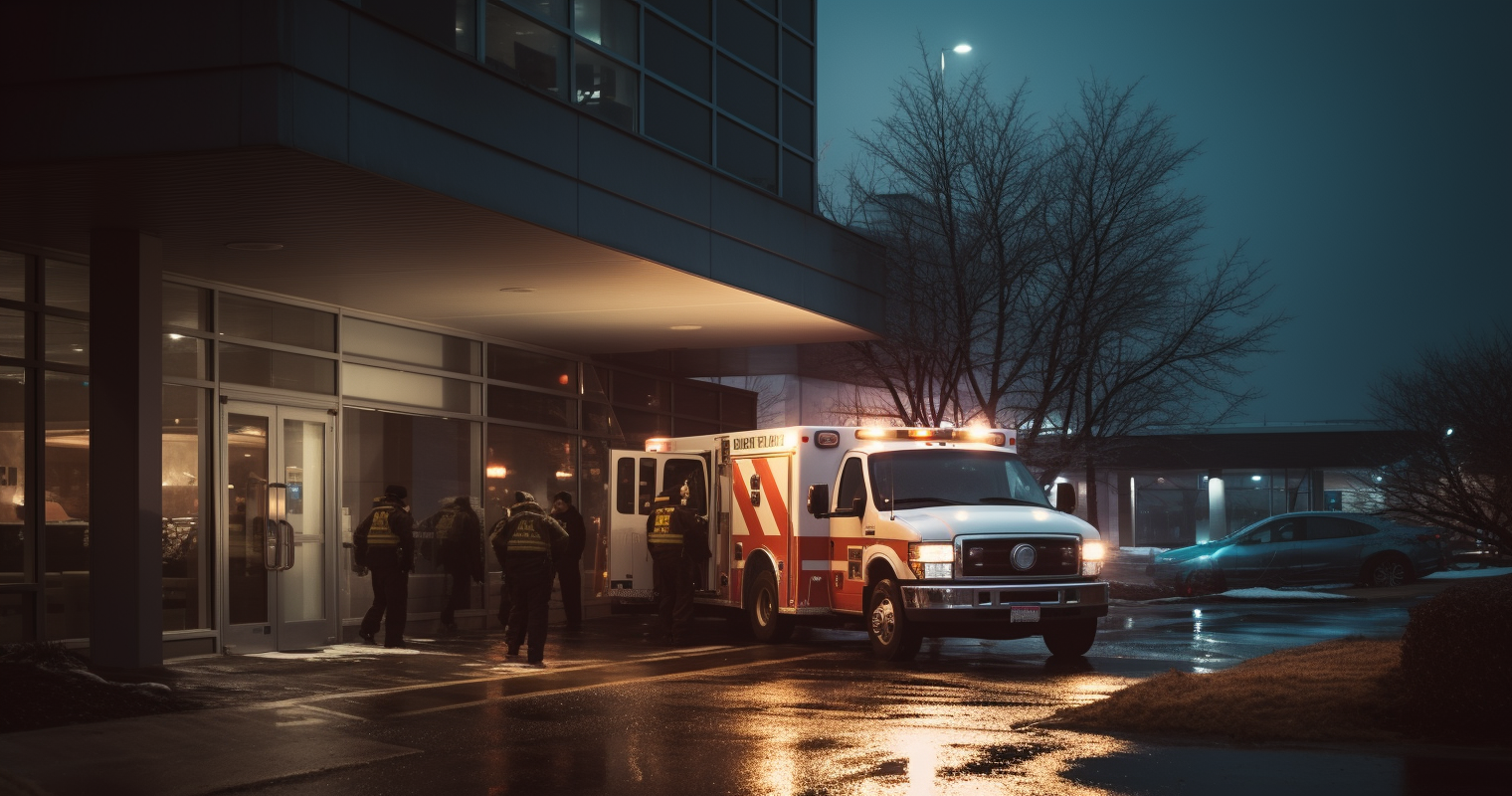
Saudi Arabia maintains a set of dedicated emergency numbers for distinct services — the essential ones to memorise are 999 or 911 for police, 997 for ambulance, and 998 for fire. Initial stabilisation treatment is broadly available to all patients irrespective of their ability to pay, but continued and non-urgent care at public hospitals is not provided free of charge to expats: comprehensive health insurance is a legal requirement for all foreign residents, and visitors arriving on a tourism visa must hold tourism health insurance.
| Item | Details |
|---|---|
| Police emergency number (as of 2024) | 999 or 911 |
| Ambulance number (as of 2024) | 997 |
| Fire / Civil Defence number (as of 2024) | 998 |
| Traffic police (as of 2024) | 993 |
| Emergency care costs for expats | Stabilisation generally provided; ongoing care requires valid health insurance or out-of-pocket payment |
| Health insurance requirement | Mandatory for all foreign residents; tourists must carry tourism health insurance |
What is the emergency number for Saudi Arabia, and are there separate numbers for each service?
In contrast to countries like the UK, which channels all emergency calls through a single number (999), or the European Union, which standardises everything under 112, Saudi Arabia operates a system where individual dedicated lines exist for each category of emergency — though some numbers serve overlapping functions. Two primary emergency numbers are in operation: 911 and 999. Dialling either will route you to police, fire, and medical services.
112 functions as a catch-all general emergency number, while 999 and 911 are the principal numbers for Saudi police. That said, many residents prefer to dial the dedicated service-specific lines for more direct routing. The fire emergency number (Civil Defence) is 998, and the dedicated ambulance line is 997.
For road-related incidents, separate numbers apply. Traffic accidents should be reported to the traffic police by calling 993. The anti-narcotics line is 995, Coast Guard is reachable on 994, and the Traffic Police (Muroor) are also on 993. It is always wise to confirm that these numbers remain current by consulting the Saudi National Portal’s official emergency contacts page before you ever find yourself needing them.
| Service | Number |
|---|---|
| Police (general) | 999 / 911 |
| General emergency | 112 |
| Ambulance | 997 |
| Fire / Civil Defence | 998 |
| Traffic Police (Muroor) | 993 |
| Highway Traffic Police | 996 |
| Coast Guard | 994 |
| Anti-Narcotics | 995 |
How do you call for emergency medical assistance in Saudi Arabia?
The public ambulance service in Saudi Arabia is reached by dialling 997. This line runs around the clock, every day of the year. In genuine emergencies, you can proceed directly to a facility and insurance authorisation follows automatically. Emergency treatment is delivered first, with insurance formalities handled afterwards.
Emergency operators typically answer in Arabic, though assistance in other languages is available upon request. The multilingual service covers English, French, German, Bahasa Indonesia, and Urdu. Even so, having your location ready in Arabic — or using a location-sharing application on your phone — will meaningfully shorten the time it takes help to reach you.
When placing a call to 999 or another emergency line, be ready to clearly communicate your name, the nature of the incident, the precise address of the emergency, and your assessment of how serious the situation is. It is also worth asking for an estimated arrival time and confirming whether qualified medical personnel will be accompanying the response.
Expats should keep in mind that ambulance services may not always match the standards they are used to at home. That said, stabilisation treatment is broadly provided without charge, and ambulances are not permitted to refuse to take patients to the nearest hospital. Because response times can vary considerably depending on location, travelling independently — by car or taxi — to the nearest hospital may sometimes be the faster option, especially in more remote areas.
What should you do in a mental health crisis in Saudi Arabia?
Mental health continues to carry a degree of social sensitivity in Saudi Arabia, and specialist crisis services are less developed than in many other countries. There are no standalone emergency lines dedicated specifically to mental health in Saudi Arabia. If you or someone nearby is experiencing a psychiatric emergency, the recommended approach is to call the ambulance line (997) or proceed directly to the emergency department of the nearest hospital.
The Saudi National Family Safety Program runs a support line at 800 122 2777, providing emotional support and counselling, available between 8 AM and 10 PM, Sunday through Thursday. This service is primarily oriented towards child and adolescent mental health but can offer guidance to those in distress. Always verify this number is still active before placing your trust in it.
Saudi Arabia has incorporated suicide prevention within its National Mental Health Strategy, with an emphasis on accessibility, awareness, and reducing the stigma attached to mental illness. Part of this strategy involves expanding mental health services across hospitals and primary healthcare centres. The National Center for Mental Health Promotion (NCMH) offers resources for those seeking further support.
If you have an existing mental health condition, it is well worth building a relationship with a private psychiatrist or psychologist before any crisis situation develops. Major cities such as Riyadh and Jeddah have private hospitals with dedicated psychiatric units, and your insurer should be able to supply a list of covered providers. Discussing a crisis plan with your doctor in advance is advisable. If immediate stabilisation is required, call 997 or contact your hospital’s own emergency line directly.
Where can you go for emergency medical treatment in Saudi Arabia?
Saudi Arabia has a broad hospital network. The Kingdom operates 287 public hospitals and 167 private hospitals, and the majority have round-the-clock emergency units equipped for critical care. In practice, expats are expected to use private facilities for routine treatment but are able to access government hospitals in a genuine emergency.
Foreign nationals may use any public or private hospital in the country. Unlike Saudi citizens, however, you will be liable for costs at a government hospital, meaning you are likely to turn to one only in a true emergency. Private hospitals are generally more straightforward to navigate. At the reception desk, present your iqama (residence permit), your health insurance card, and a credit or debit card to cover any expenses not included under your policy.
Among the most highly regarded facilities, Newsweek and Statista ranked King Faisal Specialist Hospital and Research Centre in Riyadh — which specialises in oncology, organ transplants, cardiovascular diseases, and neurosciences — and King Saud Medical City among the top hospitals in 2024, the latter covering emergency care, trauma, burns, and critical care.
Well-regarded private hospitals include Al Jazeera Hospital, Kingdom Hospital, and Abha International Private Hospital. Dr Sulaiman Al Habib Hospital has a presence in multiple cities, and Saudi German Hospital operates in Jeddah, Riyadh, and Dammam. Emergency numbers and hospital services are consistent across the major cities: Riyadh, Jeddah, Dammam, Khobar, Dhahran, Mecca, and Medina.
To locate the nearest hospital or clinic, the Saudi Ministry of Health website hosts a searchable hospital directory. Google Maps and apps such as Sehhaty — the official MOH health application — can also help you identify the closest facility when time is short.
Is emergency medical treatment free in Saudi Arabia?
The answer depends substantially on your residency status. Saudi citizens benefit from free medical services. This entitlement extends to general consultations, surgeries, and emergency care. Expats may access public healthcare during genuine emergencies, but costs apply for any treatment that is not urgent in nature.
Initial stabilisation treatment is broadly provided without charge, and ambulances cannot legally refuse to convey patients to the nearest hospital. Once a patient has been stabilised, however, public hospitals generally expect expat patients to transfer to a private facility where they hold registration. This reflects a “stabilise and transfer” approach rather than a system in which all subsequent care is delivered free of charge.
For tourists and short-stay visitors, a Tourism Health Insurance scheme is compulsory for those arriving on a tourism visa, providing basic medical coverage. Emergency medical situations are covered under this arrangement up to approximately SAR 100,000 (around USD 27,000 as of 2024).
Citizens of Gulf Cooperation Council countries — Bahrain, Kuwait, Oman, Qatar, and the UAE — generally receive preferential rates, while expats from all other countries must hold private health insurance, which employers commonly provide. If you are uninsured and require treatment beyond initial stabilisation, you should expect to be billed directly, and costs at private hospitals can be considerable. Always carry your insurance card and iqama with you.
Do expats need insurance to access emergency care, and what if they arrive without it?
The Saudi government makes private health insurance compulsory for all foreign nationals living in the country. A visa will not be issued to applicants who lack adequate health insurance coverage. This places Saudi Arabia in a distinct category compared to many other destinations — insurance is not merely a sensible precaution but a legal requirement built directly into the visa application process.
Healthcare is provided free of charge to Saudi citizens and to expatriates employed in the public sector, primarily through the Ministry of Health. For expatriates working in the private sector, the government requires their employers to arrange a level of healthcare coverage on their behalf.
The majority of expats in Saudi Arabia will have employer-provided health insurance, though these plans are structured around a co-payment model. Most Saudi insurance arrangements require patients to contribute copayments for consultations, medicines, and sometimes treatment — for example, around SAR 20–30 for consultations and 20–30% of prescription costs (as of 2024; verify current figures directly with your insurer).
If you arrive at a hospital without insurance or the financial means to pay, emergency stabilisation will generally still be administered — hospitals are not legally permitted to turn away someone in immediate danger. Private hospitals are, however, very expensive, and treatment at one without insurance coverage is inadvisable wherever it can be avoided. For those planning extended stays, checking that your policy includes overseas medical evacuation is particularly important if you live or work away from a major city.
Are there bilateral health agreements entitling some nationals to reduced-cost treatment?
Saudi Arabia does not participate in the kinds of broad reciprocal health arrangements that exist between EU member states under the European Health Insurance Card (EHIC) scheme, or between certain Commonwealth nations. There is no arrangement comparable to the S1 certificate used within Europe that would grant foreign nationals the same access to Saudi public healthcare as citizens receive.
Nationals of Gulf Cooperation Council states — Bahrain, Kuwait, Oman, Qatar, and the UAE — typically benefit from discounted rates at Saudi public healthcare facilities under regional agreements between GCC member states. This represents the closest equivalent to a reciprocal arrangement currently in place. For all other nationalities, private health insurance or direct out-of-pocket payment is the only means of accessing non-emergency care.
If you hold a passport from a country that has entered into a bilateral social security or health agreement with Saudi Arabia, it is worth checking with your home country’s social security authority and your embassy in Riyadh before you travel or relocate, as limited specific arrangements may apply. Never assume that any such agreement exists without verifying it with official sources directly, as these arrangements are subject to change.
How does Saudi Arabia’s emergency healthcare system compare to systems expats may know?
Healthcare in Saudi Arabia is structured around two parallel systems: a government-funded branch serving Saudi nationals, and a private pay-based branch that also serves foreign residents. Because the government-funded system is reserved primarily for citizens, this differs markedly from a fully universal model such as the NHS in the United Kingdom, under which all residents — whatever their nationality — are generally entitled to free emergency care at the point of need.
In broad terms, the Saudi model bears the closest resemblance to systems found in countries such as the United States or Singapore, where insurance is the central mechanism for accessing care, costs are typically settled through an insurer rather than by the state, and uninsured patients can face steep bills. One important distinction, however, is that Saudi Arabia makes employer-provided insurance compulsory for working expats, meaning that most foreign residents arrive with coverage already in place.
A considerable number of healthcare facilities in Saudi Arabia are modern, well-equipped, and staffed by internationally trained medical professionals. Top-tier hospitals in the Kingdom are capable of managing virtually any emergency or complex condition. Quality at leading private hospitals is generally regarded as high, and private facilities tend to offer shorter waiting times and greater levels of comfort than their public counterparts.
Emergency response times have improved as part of Vision 2030 reforms. Nonetheless, expats should bear in mind that ambulance provision may not always match what they are accustomed to at home; because response times can vary widely depending on location, travelling independently to the nearest hospital can sometimes be the more practical choice, particularly outside the major cities.
What emergency services exist beyond medical — how do police and fire services work?
999 and 911 are the primary numbers to call for immediate police assistance. Whether you are a resident or a visitor, knowing these contact numbers in advance is essential for your safety and peace of mind in Saudi Arabia. These lines can be used to report crimes in progress, request assistance in emergencies, or make general police enquiries.
Fire emergencies fall under the jurisdiction of the General Directorate of Civil Defence. Beyond responding to fires, its remit includes conducting risk assessments and developing solutions to natural, industrial, and domestic safety hazards. The number for fire emergencies is 998. The Saudi Civil Defence Authority (SCDA) is the primary body responsible for protecting the public in emergency incidents across the Kingdom.
The procedure for road traffic accidents differs from what many expats will be familiar with. If you are involved in a collision in Saudi Arabia, call the traffic police on 993 and remain at the scene until officers arrive and complete their assessment — departing beforehand is not permitted. It is also advisable to download the Najm app, which lets you document a traffic accident and contact the traffic police directly through an integrated camera function. Once you have recorded the scene, you may move your vehicle to reduce congestion while waiting for a Najm officer to reach you.
Alongside the regular police, who handle general law enforcement and public security, the mabahith deals with domestic security and counterintelligence, and the mutawa enforces Islamic codes of conduct. Following significant reforms in recent years, the mutawa’s scope has been substantially curtailed, and expats no longer face the same risk of inadvertently falling foul of its operations. Further information is available on the Saudi Ministry of Interior website.
Crimes can also be reported through the Kollona Amn smartphone application. Having key applications downloaded and emergency numbers stored in your phone before they are needed is among the most practical steps any expat can take.
Are there country-specific emergency risks in Saudi Arabia?
Saudi Arabia carries a number of environment-specific risks that expats ought to understand before arriving. Extreme heat is among the most immediately pressing: summer temperatures in inland regions such as Riyadh routinely exceed 45°C, and heat stroke constitutes a genuine medical emergency. Those coming from cooler climates should acclimatise gradually, drink water consistently, and avoid vigorous outdoor activity during peak heat hours.
Flash flooding is a recurring hazard, particularly in Jeddah and other cities along the western coast, where intense bursts of rainfall can overwhelm drainage systems within minutes. Sandstorms — known locally as haboob — can reduce visibility to almost nothing and trigger respiratory complications; monitoring local weather forecasts during storm-prone seasons is strongly advised.
The Saudi government has established a cross-ministerial structure for disaster risk reduction and emergency management, built around a multidisciplinary framework intended to raise risk awareness across all government ministries and agencies. This framework brings together the Ministry of Health (MOH), the National Crisis and Disasters Control Centre (NCDCC), the Ministry of Interior, the General Directorate of Civil Defence, the Ministry of Defence, and public-private emergency preparedness partnerships.
The National Crises and Disasters Control Centre of the Ministry of Health operates as a health information hub for decision-makers during crises of varying severity. It is connected to all regions of the Kingdom through 20 branches, linked via the Emergency Operations Centre (EOC) system.
Saudi Arabia’s position in a geopolitically complex region means expats should also track travel advisories issued by their home country’s foreign ministry, which offer regularly updated assessments of regional security conditions. The Ministry of Interior and the General Directorate of Civil Defence are the authoritative bodies to follow for national alerts and civil protection guidance.
What should expats do to prepare for emergencies before they arise?
Advance preparation is far more effective than having to improvise under pressure. The following steps are strongly recommended for anyone moving to or living in Saudi Arabia:
- Register with your home country’s embassy or consulate. Most countries offer a registration scheme — such as the UK’s FCDO LOCATE service, the US STEP programme, or equivalent systems — that enables officials to reach you during a national emergency or evacuation. Identify your nearest embassy in Riyadh, Jeddah, or Dhahran and register before you require their help.
- Save all key emergency numbers to your phone. Enter 997 (ambulance), 998 (fire), 999/911 (police), and 993 (traffic police) into your phone contacts before you arrive. Also save your employer’s HR emergency contact and your insurer’s 24-hour assistance line.
- Carry your insurance card and iqama at all times. Once your expatriate health insurance is arranged, you will be issued an insurance card. Make it a habit to carry both your insurance card and your iqama (residence permit) at all times.
- Confirm your insurance covers medical evacuation. Check that your policy includes overseas medical evacuation for serious emergencies, particularly if you live or work in areas outside the main cities.
- Download relevant apps. Install the Najm app for traffic incidents, the Kollona Amn app for reporting crimes, and the Sehhaty app (Saudi MOH) for health-related guidance. Keep all applications up to date.
- Identify your nearest hospitals. Before any emergency arises, find out where the nearest public and private hospitals are relative to both your home and your workplace. Record their emergency department numbers and addresses in Arabic as well as your own language.
- Establish a relationship with a GP or clinic. Having a regular doctor gives you a point of contact for guidance before turning to emergency services, and they can advise on specialist referrals when a crisis develops.
- Prepare for environmental hazards. Keep adequate supplies of water, sun protection, and any prescription medicines you depend on. Ensure your home has functioning air conditioning and that you have a clear plan for how to respond to a flash flood or sandstorm.
Where can expats get official and up-to-date emergency information for Saudi Arabia?
For the most reliable and current emergency information, always go directly to official sources rather than relying on third-party guides — including this one — for specific numbers and fees, as these are subject to change without notice.
- Saudi National Portal (my.gov.sa): The official government portal lists current emergency contact numbers and links to key ministries and public services.
- Saudi Ministry of Health (MOH): The MOH website provides a searchable hospital directory, health alerts, and guidance on the insurance system for expats.
- General Directorate of Civil Defence: The Civil Defence authority publishes guidance on fire safety, natural disaster preparedness, and civil protection procedures.
- Ministry of Interior: The MOI website covers policing, residency regulations, and matters of public security.
- Your home country’s embassy in Saudi Arabia: Your embassy’s website will carry travel advisories, registration schemes, and emergency consular contact details, updated regularly to reflect current conditions.
- National Centre for Mental Health Promotion (NCMH): The NCMH website provides resources on the mental health support services available across the Kingdom.
All official Saudi government agency websites use the .gov.sa domain. This is a useful checkpoint for confirming whether a source is genuinely authoritative. Always cross-reference any phone number or fee you encounter against the relevant .gov.sa source before relying on it.
Frequently asked questions
What is the most important emergency number to remember in Saudi Arabia?
112 serves as the general emergency number, while 999 and 911 are the main police numbers. For a medical emergency specifically, 997 connects you directly to the ambulance service. Storing all three — 112, 999, and 997 — in your phone before they are needed is strongly advisable. Always verify they remain current through the official Saudi government portal.
Will I be refused emergency treatment if I don’t have health insurance?
Initial stabilisation treatment is broadly provided regardless of insurance status, and ambulances in Saudi Arabia are not permitted to refuse to transport patients to the nearest hospital. However, once a patient has been stabilised, expats without insurance are likely to face significant out-of-pocket costs for any further treatment and may be transferred to the private sector for continued care.
Is health insurance really compulsory for expats in Saudi Arabia?
Yes — private health insurance is a legal requirement for all foreign nationals residing in Saudi Arabia. A visa will not be granted without proof of adequate coverage. Employers in the private sector are required by law to arrange healthcare coverage for their expatriate employees.
Do tourists visiting Saudi Arabia need to arrange health insurance?
Yes. A Tourism Health Insurance scheme is mandatory for visitors arriving on a tourism visa, providing basic medical coverage. Emergency medical situations are covered under this arrangement up to approximately SAR 100,000 (around USD 27,000 as of 2024). Check the Saudi tourism authority’s current requirements before travelling, as the specifics of this scheme may be updated.
Are ambulances in Saudi Arabia free to call?
Calling the ambulance line (997) is free of charge. Emergency stabilisation treatment is generally provided without cost. However, transport and subsequent treatment may carry charges depending on your insurance coverage. Always review your policy carefully to understand what is and is not included.
What should I do if I am involved in a road traffic accident?
Call the traffic police on 993 and remain at the scene until officers arrive and complete their assessment. Downloading the Najm app before you need it is advisable — it enables you to document the incident and contact the traffic police quickly using an integrated camera feature. If anyone has been injured, call 997 for an ambulance as well.
Is there a mental health crisis line in Saudi Arabia?
There is no dedicated standalone emergency line for mental health crises in Saudi Arabia. In such a situation, call the ambulance service on 997 or go directly to the nearest hospital emergency department. The Saudi National Family Safety Program runs a support line at 800 122 2777 (available 8 AM–10 PM, Sunday to Thursday), with a focus on young people’s emotional and mental wellbeing. Confirm this number is still active before relying on it.
Can GCC nationals access Saudi public healthcare at a reduced cost?
Nationals of GCC member states — Bahrain, Kuwait, Oman, Qatar, and the UAE — typically receive preferential rates at Saudi public healthcare facilities under regional agreements. This is the only meaningful reciprocal arrangement currently in place. There are no broad bilateral health agreements with other regions comparable to the European Health Insurance Card (EHIC) system. All other foreign nationals should ensure they hold valid private health insurance before entering the Kingdom.